21 August 2026
At Chelsea’s Cobham training ground, players have already pointed to one clear sign that Xabi Alonso is matching his reputation. Training sessions seldom stick to one fixed routine, which means the squad are being made to think far more about every detail. They are being kept constantly alert, even if not quite to the same extent as at Liverpool. Andoni Iraola, meanwhile, has been getting his new players used to different “physiological demands”. There has been a definite jolt.
At Newcastle United, Matthias Jaissle did not arrive with quite the same profile, but he has produced a similar reaction. People at the club have already been impressed, to the extent that some have described it as near “sacrilege”. There has been talk that the coaching level is of a higher standard than under Eddie Howe.
Matthias Jaissle has replaced Eddie Howe at Newcastle.
If Howe had for a long time been regarded as a possible “next England manager”, Jaissle is being spoken about in much bigger terms, as “the next big coach”.
And despite the very different circumstances around the Premier League, there is a thread connecting all of this, especially when set against the obvious contrast with the summer of 2016.
Back then, when Pep Guardiola was arriving rather than departing, the Premier League was not really about emerging names.
It was instead about the biggest names in the game at that moment, with Guardiola joining Jurgen Klopp, Jose Mourinho, Antonio Conte, Arsene Wenger and Mauricio Pochettino.
The Premier League became known as the “league of star managers”, a label that suited England’s long tradition of dominant managerial patriarchs.
Jurgen Klopp and Pep Guardiola came into the Premier League as the biggest managers in world football.
The absence of such figures now stands out even more in the middle of the debate about a shortage of “star players”, because a much longer tradition has now been interrupted.
This is the first Premier League season featuring none of Ferguson, Wenger, Mourinho or Guardiola. In other words, none of the great title-winning symbols of previous eras are involved.
Mikel Arteta is actually the only current manager to have won the English league at all, having only just secured his first title.
Mikel Arteta turned Arsenal into Premier League champions.
That triumph came from what has been described as “almost complete control” at Arsenal, a degree of authority that mirrors the “big beasts” of the past, as they were once known, and which is becoming ever rarer in the modern game.
That it is Arteta feels especially fitting because he also belongs to one of the themes that has been discussed in a similar way to the star-manager era of 2016.
If that period was about the biggest names, this one is about Basque names.
The one talking point you have probably seen more than Alonso’s superior technical work on the training ground this pre-season is the fact that the Chelsea manager is one of three coaches — alongside Iraola and Arteta — to have come through the same side, Antiguoko, while Unai Emery also comes from the same area around San Sebastian.
Unai Emery is one of several Basque coaches in the top flight.
It is easy to say this is an extraordinary overrepresentation from such a small region, but it is also unfashionable to point out that some of it may simply be coincidence. Similar things have happened in many cities and many professions across history, and there is no need to reach for examples as lofty as Vienna and its cluster of great composers. One only has to think of the documentaries explaining how the industrial hardships of Glasgow helped produce Jock Stein, Sir Matt Busby and Bill Shankly at the same time, and later Ferguson.
Even so, the remarkable coincidence of producing coaches of such quality can still be linked to broader cultural influences. The Basque country shares Spain’s wider football philosophy, and now Salamanca-born Alvaro Arbeloa also has a place in the Premier League. His first Fulham game will be against former teammate Alonso on Monday.
Alvaro Arbeloa and Xabi Alonso are former teammates and now managerial rivals in west London.
English soul-searching is justified when a quarter of the Premier League’s managers are Spanish at the same time as Spain are reigning European and world champions, and when their national side has shown a tactical depth that England have not come close to matching. England appear so far behind in that respect that they ended up turning to another big-name coach in Thomas Tuchel, rather than someone like Howe.
England may be the home of the old-style managerial patriarch, but right now it is not a breeding ground for elite modern coaches. Something has been lacking, even though the country continues to produce outstanding playing talent.
And it is in that gap that the most revealing link between this season’s managers can be found.
More significant than the fact that a fifth of the coaches are Basque is that two of them are among nine managers who are new in their roles.
More than half of the Premier League — and including Michael Carrick and Roberto De Zerbi, making it 11 — are now going through their first pre-seasons with their current clubs. The 33-year-old Fabian Hurzeler is, meanwhile, the joint fourth longest-serving manager, while newly appointed Marco Rose is 12th on that list.
Roberto De Zerbi and Tottenham have spent heavily this summer.
Those numbers offer a sharp contrast to the situation 10 years ago, when status and legacy were the defining features.
Compared with the 28 league titles won by eight managers across eight different countries in 2016, only five of the current group have won league titles at all — and four of those seven titles came in Austria, Bosnia and Herzegovina, and Croatia.
Apart from Arteta, only Emery and Alonso have experience of winning a major league.
Some figures in football have been referring to a collection of “unknowns” and “randoms” who are supposedly heading for multiple sackings, apparently overlooking the useful lesson of Pochettino’s appointment at Southampton in 2013.
And that is where the situation takes on a twist, almost like an especially inventive training-ground exercise.
This current group may be nowhere near as famous as the class of 2016, but many more people within football are convinced that the Premier League as a whole is now coached to a much higher standard.
That is simply what the competition has become, with years of broadcast wealth gradually allowing almost every club to invest seriously in football intelligence. They are just appointing the brightest minds.
And if the short tenures of these managers also speak to the major theme of last season — the growing power of directors and executives — they also reflect how quickly everything is changing. This is now a game that moves fast, just as it is defined by physical intensity.
Andoni Iraola is at the tactical cutting edge.
Clubs now actively favour low-maintenance managers who focus primarily on coaching, and Iraola is a rare ideal example of that. The irony is that successful management often still requires stronger personalities, but even that feeds into the intense emphasis on coaching work.
Veteran football figures have been astonished by the level of it all.
What is now relatively standard is for coaches to work from 6am until deep into the night, presenting fresh plans every single morning. The manager will then make sure every cone is placed exactly where it should be so that everything is carried out to the required level, and afterwards all of it is analysed for hours on video.
It has been written before that pressing systems are now so sophisticated that they create the invisible map shaping matches, usually developed through drill programmes in which even the positions of water bottles are marked out.
In other words, the obsessiveness that once elevated Guardiola has now become ordinary.
It is no surprise that coaches describe this as the most competitive Premier League ever, because of how much thought and preparation is required from everyone. This constant struggle for space is one reason there has been an almost inevitable slide into wrestling-style battles for position at set-pieces.
The neural networks created by all of this — a little like Vienna in the 1700s — have at least ensured that football tactics, certainly at the micro level, are evolving faster than ever before.
Grappling at set-pieces has now become commonplace.
As one example, Alonso’s core ideas were viewed as brilliantly innovative five years ago, but many across the Premier League have now pushed those concepts even further. It is fortunate for him that he is so strong as a pure manager. That, though, is another constant challenge, one that Arteta is known to obsess over. It is no longer enough to think only about coaching your own side well; you also have to judge whether you yourself are still keeping up with the game’s most advanced ideas.
As one club insider puts it, the game has changed enormously even compared to three or four years ago.
And that is almost an entirely different world from the one that existed 10 years ago.
It is no longer about the big names. It is about better ideas, carried out down to the finest detail.
-
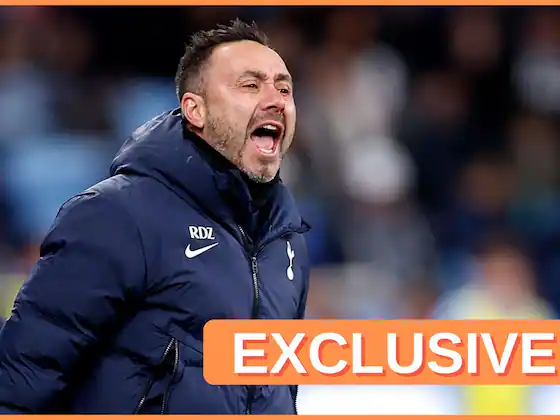
Fabrizio Romano exclusive: Tottenham reach agreement in principle for £85m Savinho move as fifth signing comes into focus
-
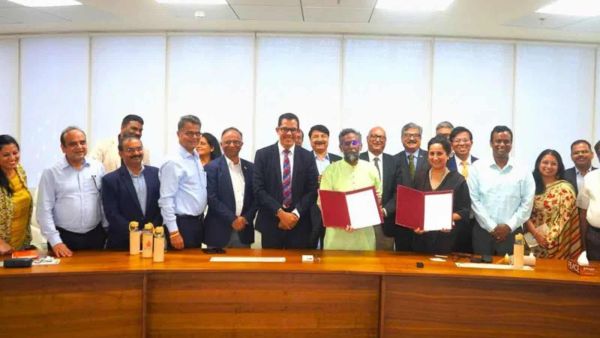
Jindal Steel to build Centre of Excellence at IIT Hyderabad
-
Gyanesh Kumar’s trip details ‘personal info,’ ECI denies disclosure
-
AMU manipulated its placement records to boost ranking: Report
-
Jharkhand HC stays cancellation of recruitment through JSSC-CGL