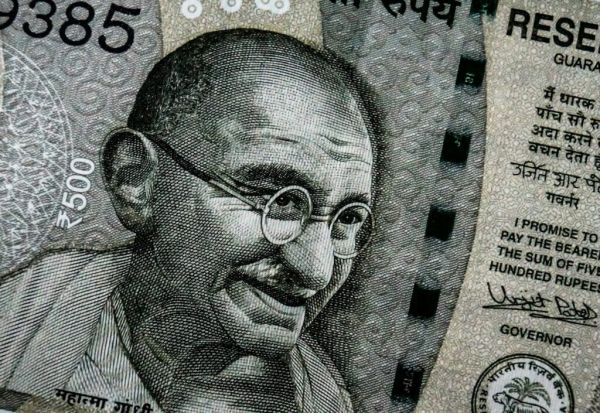
The buyer did not simply purchase 688 pieces of old paper. The collection preserves nearly two years of Gandhi thinking, grieving and teaching during the final turbulent years of British rule in India.
You may be wondering how several hundred short handwritten messages could possibly sell for US$1.7 million. After all, these are not royal jewels, ancient sculptures or previously unknown declarations of independence. Many of the entries contain only a brief reflection on truth, faith, work, self restraint or nonviolence.
But that is precisely what makes them so important.

The 688 reflections provide something history rarely preserves: the private thoughts of one of the twentieth century’s most influential figures, recorded almost continuously over twenty three months and directed toward one grieving individual. They show Mahatma Gandhi not simply as the leader photographed at political meetings or remembered from history books, but as a friend, teacher and moral philosopher attempting to help another human being survive profound loss.
A Record Setting Auction
The collection, titled A Thought for the Daysold at a Saffronart auction held on August 18 and 19, 2026. The winning bid was ₹16.2 crore, or approximately US$1.7 million, including the buyer’s premium. Saffronart had estimated its value at between ₹15 crore and ₹25 crore, meaning the eventual price was extraordinary but still within the range anticipated by specialists.
The auction house described the sale as a record for an Indian historical document sold at auction. The identity of the buyer has not been revealed. The lot was classified as nonexportable, and the BBC reported that the collection would remain in India.
The price was not paid for a single famous signature. It was paid for a near continuous intellectual archive written in Gandhi’s own hand between November 20, 1944, and October 10, 1946.
The first 519 reflections were written on individual leaves from an album supplied to Gandhi. Once those pages were exhausted, Gandhi continued the project in a notebook, producing another 169 entries. Many of the pages contain dates and places of composition, allowing historians to follow the work through time and connect it with Gandhi’s movements during a critical period in Indian history. Saffronart’s catalogue describes the complete physical sequence and provenance of the manuscripts.
The Personal Tragedy Behind the Notes
The story began with Anand T Hingorani, a freedom fighter, Gandhian scholar and publisher who maintained a close relationship with Gandhi for many years. Hingorani, born in 1907, published the influential Gandhi Series in Karachi and became one of Gandhi’s most dedicated correspondents and collectors.
His wife, Vidya, also shared a close relationship with Gandhi. Following her death, Anand became overwhelmed by grief, loneliness and despondency. He was also undergoing treatment for deafness, adding to the isolation he was experiencing.
Gandhi responded in an unusual way. Instead of offering Anand a single letter of condolence, he began writing one thought for him at a time. The first reflection was dated November 20, 1944, and began with three words that summarized Gandhi’s moral philosophy: “Truth is God.”
The notes were not conventional messages of sympathy. Gandhi did not tell Anand simply to wait for the pain to disappear. He encouraged him to transform grief into discipline, prayer, physical labour, service and moral development. In Gandhi’s view, remembrance became meaningful when it inspired someone to live more truthfully and serve others.
Over time, the project expanded into a complete curriculum for life. Gandhi wrote about truth, ahimsa, religious equality, prayer, poverty, education, courage, forgiveness, hunger, duty, labour, Swaraj, conscience, anger, attachment and the search for God.
Read individually, the entries can appear to be short sayings. Read together, they reveal Gandhi repeatedly returning to the same questions from different directions: How should a person respond to suffering? Can political freedom exist without personal discipline? Is prayer meaningful if it does not change behaviour? Can nonviolence survive without courage? What responsibilities come before rights?
Who Was Gandhi and Why Do His Words Carry Such Weight?
Mohandas Karamchand Gandhi was born in Porbandar, Gujarat, in 1869. After studying law in London, he travelled to South Africa in 1893, where his experiences with racial discrimination helped shape the political and moral philosophy that would later define his life.
In South Africa, Gandhi developed satyagraha, commonly understood as nonviolent resistance but more literally associated with holding firmly to truth. It was not intended to be passive submission. Gandhi believed injustice could be confronted through organized resistance, civil disobedience and a willingness to accept suffering without retaliating against an opponent.
After returning to India in 1915, he became one of the central leaders of the independence movement. His campaigns included the Champaran struggle of 1917, the Non Cooperation Movement beginning in 1920, the Salt March of 1930 and the Quit India Movement of 1942.
The Salt March demonstrated Gandhi’s ability to transform an everyday object into an instrument of political resistance. By challenging Britain’s control over salt, he connected colonial rule to the daily lives of ordinary Indians. On March 12, 1930, Gandhi and his followers left Sabarmati Ashram for Dandi, beginning a campaign that attracted international attention and expanded India’s civil disobedience movement. The Gandhi Heritage Portal records the planning and launch of the historic march.
Gandhi’s importance, however, extends beyond India’s independence. His philosophy became a global reference point for movements challenging oppression through nonviolent action. The United Nations observes Gandhi’s birthday, October 2, as the International Day of Non Violence.
His legacy is also debated and continually examined. Scholars and activists continue to scrutinize his political decisions, personal practices and evolving views on race, caste and social reform. That debate makes original documents even more valuable because they allow Gandhi to be studied through his own developing words rather than reduced to either worship or condemnation.
Why the Years 1944 to 1946 Matter
The timing of the reflections is one of the most important reasons for their historical value.
Gandhi had been arrested in August 1942 following the launch of the Quit India Movement. He was detained at the Aga Khan Palace in Pune with Kasturba Gandhi, his secretary Mahadev Desai and several close associates.
During that imprisonment, Gandhi suffered enormous personal losses. Mahadev Desai died in August 1942. Kasturba, Gandhi’s wife and companion through more than six decades of life, died at the palace on February 22, 1944, after a prolonged illness. Gandhi was released on health grounds on May 6, 1944. These events are documented by the Gandhi Heritage Portal’s history of the Aga Khan Palace imprisonment.
The first reflection for Anand Hingorani was written only months later. That context gives the project a deeper emotional significance. Gandhi was counselling another bereaved man while carrying his own recent experience of imprisonment, illness and loss.
At the same time, India was moving toward a historic and dangerous transformation. Gandhi held talks with Muhammad Ali Jinnah in 1944. The Simla Conference followed in 1945. In 1946, the British Cabinet Mission arrived to negotiate the transfer of power, while relations between the Indian National Congress and the Muslim League deteriorated.
Communal violence was also intensifying. The killings in Calcutta during August 1946 exposed how quickly political division could become mass bloodshed. Independence was approaching, but so was Partition.
This makes the contrast within the manuscripts especially powerful. While the country around him confronted political breakdown, religious division and violence, Gandhi continued writing privately about religious equality, conscience, forgiveness, nonattachment and mastery over anger.
The notes are not a traditional political diary. They rarely describe major negotiations or political personalities directly. Instead, they preserve the ethical standards by which Gandhi believed political action should be judged. For him, Swaraj meant more than replacing British government with Indian government. It also meant developing the ability to govern oneself.
Why the Original Pages Matter When the Words Were Published
Anand Hingorani later transcribed the Hindi writings, translated them into English and compiled them for publication as A Thought for the Day. That raises an obvious question: if the reflections can be read in a book, why should the original pages be worth so much?
The answer is that a publication preserves the words, but a manuscript preserves the act of writing.
The dates, changes in paper, places of composition and movement from individual album leaves into a notebook show that this was a sustained personal commitment. Gandhi continued writing while travelling, answering correspondence and participating in negotiations that would shape India’s future.
The manuscripts reveal the rhythm of the undertaking. They demonstrate that the reflections were not assembled later from familiar Gandhi quotations. They were written consecutively for a particular person confronting a particular crisis.
Their provenance is equally important. The materials were preserved by the Hingorani family across generations. That direct line of ownership connects the documents to their original recipient and greatly strengthens their historical authenticity.
The value therefore lies in the combination of authorship, continuity, personal intimacy, historical timing and documented preservation. A single Gandhi autograph may be collectible. A nearly complete sequence showing Gandhi’s philosophy unfolding over almost two years is an archive.
More Than Expensive Memorabilia
The sale also raises an important question about public access. A historical document can remain inside India and still disappear into a private collection. Its long term public value will depend on whether the owner permits scholarly research, digitization, exhibition or institutional loans.
The record price should therefore be viewed as both a celebration and a responsibility. The buyer now controls an object of private property, but also a record carrying national and international historical significance.
Ultimately, the importance of the 688 notes cannot be measured only by the amount paid at auction. They reveal Gandhi attempting to practise his philosophy on the smallest human scale.
He was not addressing a nation, negotiating with the British or speaking before a crowd. He was writing to one grieving friend.
That may be the most important reason the pages became so valuable. They capture the connection between Gandhi’s largest political ideas and the private discipline of everyday life. The collection shows that, for Gandhi, truth and nonviolence were not merely strategies for defeating an empire. They were habits meant to guide a person through grief, anger, loneliness and uncertainty.
The buyer paid US$1.7 million for 688 handwritten reflections. What was actually purchased was something far rarer: nearly two years of Gandhi’s mind at work during the final, turbulent approach to Indian independence.
With information from Saffronart, the Gandhi Heritage Portal and BBC News.
-
Indian national arrested in US over multi-million-dollar fraud targeting elderly

-
After Jantar Mantar, Jaipur Next? Dipke Gives 48-Hour Ultimatum Over School Clash

-
Devendra Mahto To Launch Recruitment System Reform Yatra On Aug 24

-
Beating two children all the time, not the fault of the parent? If you keep 6 things in mind, you will have a good relationship

-
Maharashtra to implement project based on AI and 'Digital Twin Learning' to increase farming productivity