
Mahindra is preparing another compact SUV, and the latest test cars have now answered one of the biggest questions around it: diesel is definitely part of the plan.
The production model previewed by the Vision S concept has been spotted repeatedly on Indian roads, and an AdBlue filler cap on the test vehicle confirms that Mahindra is developing a diesel version.
Other prototypes have also revealed manual and automatic transmissions, while camera and radar hardware seen on the front points towards ADAS on at least the higher variants. That makes the Vision S much more interesting than another heavily camouflaged test mule.
Mahindra appears to be taking a formula that has worked exceptionally well for the company and shrinking it into a more affordable package: upright SUV styling, strong road presence and a diesel engine. At a time when several manufacturers are reducing their diesel line-ups, Mahindra seems determined to keep giving SUV customers the option.
The “Baby Scorpio” description fits the design and likely positioning, but it is important to make one thing clear. Mahindra has not officially announced that name, nor has it confirmed that the production SUV will carry the Vision S badge.
Image courtesy Krishan Sarkar
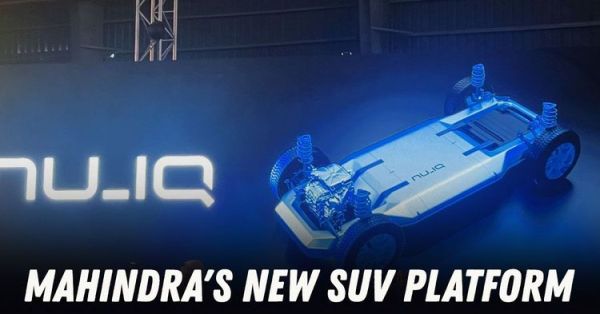
When Mahindra first showed the Vision S concept in August 2025, the company confirmed that its new NU_IQ platform could support petrol, diesel, hybrid and electric powertrains. That meant diesel was technically possible, but it did not confirm what would actually reach showrooms. The test programme has changed that.
An AdBlue filler has been clearly visible alongside the fuel filler on prototypes. Modern BS6 diesel vehicles use AdBlue as part of their emissions-control system, making this one of the strongest possible clues short of an official engine announcement.
Spy images have also shown diesel test cars with both manual and automatic transmissions. Mahindra has not announced the production engine, but the obvious candidate is a version of the 1.5-litre four-cylinder diesel already used in the XUV 3XO. In the 3XO, this engine produces 117 Bhp and 300 Nm – class leading outputs.
Petrol is also expected. The NU_IQ architecture has been designed around multiple energy types, and Mahindra has access to the 1.2-litre turbo-petrol family already used in the XUV 3XO. Reports have also pointed towards a future hybrid version, although very little is known about that powertrain today. What matters right now is the diesel. It gives the upcoming SUV a clear point of difference in a market where diesel choices are gradually becoming thinner.
There is a reason Mahindra is not walking away from diesel. The Scorpio N, Scorpio Classic, Thar, Thar Roxx and XUV 3XO all show that a large section of Mahindra’s customer base still values strong low-end torque, highway range and the character of a diesel SUV. Mahindra has also built considerable credibility around diesel engines over decades.
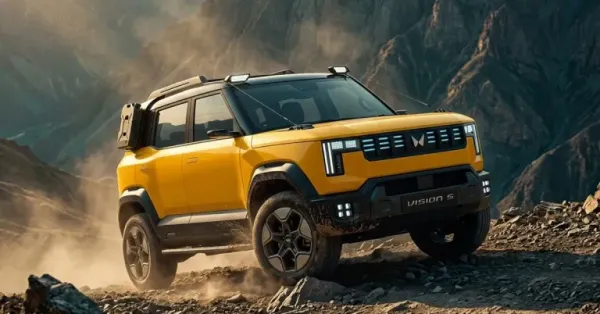
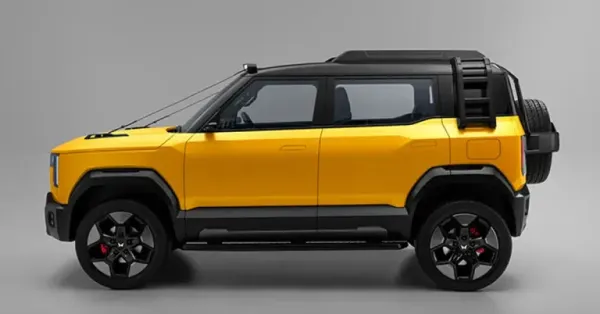
That is particularly relevant for a compact SUV styled to look tougher than the average urban crossover. The Vision S concept has a tall, upright stance, squared-off proportions and a nearly vertical nose.
The production prototypes retain much of that character. Recent mules have shown a slatted grille, blocky headlamps, pronounced wheel arches and a tailgate-mounted spare wheel.
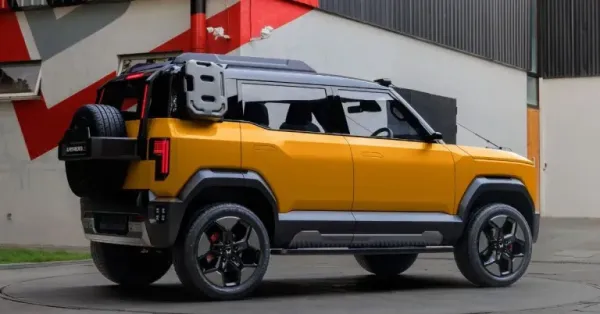
That spare wheel is especially significant. It gives the vehicle a more traditional SUV look and separates it visually from other compact SUVs such as the Tata Nexon, Hyundai Venue, Kia Sonet and Skoda Kylaq.
This is why “Baby Scorpio” is such an easy description to understand. It looks like Mahindra is trying to bring some of the Scorpio’s visual toughness and road presence into a smaller, more accessible SUV.
The Vision S concept measures under four metres in length, putting it in India’s compact-SUV tax bracket. Its 2,665mm wheelbase, however, is unusually long for the segment. That is one of the important advantages of the NU_IQ platform.
Mahindra says the new architecture can support SUVs ranging from roughly 3,990mm to 4,320mm in length and can accommodate front-wheel drive as well as all-wheel drive. It also uses a flat-floor approach even for combustion-engined models, which should help cabin packaging.
The company has talked about command seating, generous cabin space and class-leading boot capacity as key targets for NU_IQ products. The Vision S production model is expected to sit somewhere above the XUV 3XO while remaining below the Scorpio range. Exactly how Mahindra manages that overlap will be interesting because the 3XO already occupies the conventional sub-four-metre SUV space.
The answer may be positioning rather than size. The XUV 3XO is a modern urban compact SUV. The Vision S looks set to be the more rugged, upright alternative, aimed at customers who want the visual attitude of a Scorpio or Thar without moving to a much larger vehicle.
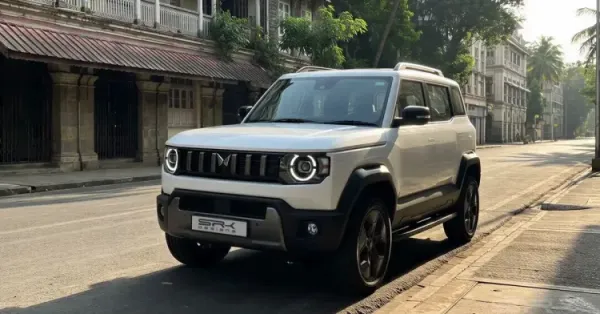
The Vision S shown in 2025 was deliberately dramatic, with concept-car lighting, oversized details and a highly stylised cabin. The test cars are now revealing how Mahindra will translate that into something customers can actually buy.
The basic boxy silhouette has survived. So have the upright nose and squared windows. Test vehicles have been seen with more conventional production lighting, including headlamps resembling those on the current Thar on some prototypes. Different daytime-running-light signatures have also appeared, possibly pointing towards variant differentiation.
Inside, prototypes have shown a panoramic sunroof, a three-spoke steering wheel, conventional physical controls and production-ready seats. Earlier concept cues such as the broad horizontal dashboard layout appear to have influenced the production cabin, but Mahindra is clearly toning down the show-car elements.
Some spy cars have also been seen with a steering wheel carrying BE-style detailing. That does not confirm an electric production variant, but it fits the wider capability of the NU_IQ platform, which can support EVs as well as combustion engines.
Another important clue sits in the front grille. Recent Vision S prototypes have been spotted with a centrally positioned radar unit along with cameras. That is the hardware normally required for features such as adaptive cruise control, autonomous emergency braking and lane- driver assistance.
Mahindra has not announced the final ADAS package, so individual features remain unconfirmed. But the visible hardware strongly suggests that higher variants will offer an advanced driver-assistance suite.
That would also fit Mahindra’s current direction. The XUV 3XO, XUV 7XO, Scorpio N and newer electric SUVs have steadily pushed more driver-assistance and connected technology into the brand’s line-up.
Mahindra has officially said that NU_IQ-based production SUVs will begin arriving from 2027. The company’s own financial commentary has also indicated that one of the Vision S or Vision T-based products will enter production in calendar year 2027 as new NU_IQ capacity comes online at Chakan. Industry reports have consistently placed the Vision S among the earliest products from the new family. An exact launch month is not official yet.
It will be compact. It will retain the Vision S concept’s upright SUV character. Diesel is confirmed through the test programme. Petrol is expected. Automatic and manual versions are under development. ADAS hardware has appeared on prototypes.
And Mahindra’s new NU_IQ architecture gives it room to expand into hybrid or electric versions later. That combination explains why this could become one of Mahindra’s most important launches of 2027.
-
Curtis Jones completes Liverpool exit with €30m transfer to Inter Milan

-
Why an emotionally charged Newcastle return could be pivotal for Alexander Isak after Liverpool’s false dawn
-
Who Was Zolani Tete? Two-Time World Champion Shot Dead In South Africa

-
NEET PG Exam Duty Won’t Shut CGHS Wellness Centres; Ministry Declares Viral August 27–31 Closure Notice Fake

-
'My Movies Were Not Doing Well...': Ranveer Singh Gets Emotional While Talking About Dhurandhar For FIRST Time, Recalls Challenges—VIDEO