Arsenal wrapping up a deal for another £60 million defender underlines exactly how things work at the absolute top level now.
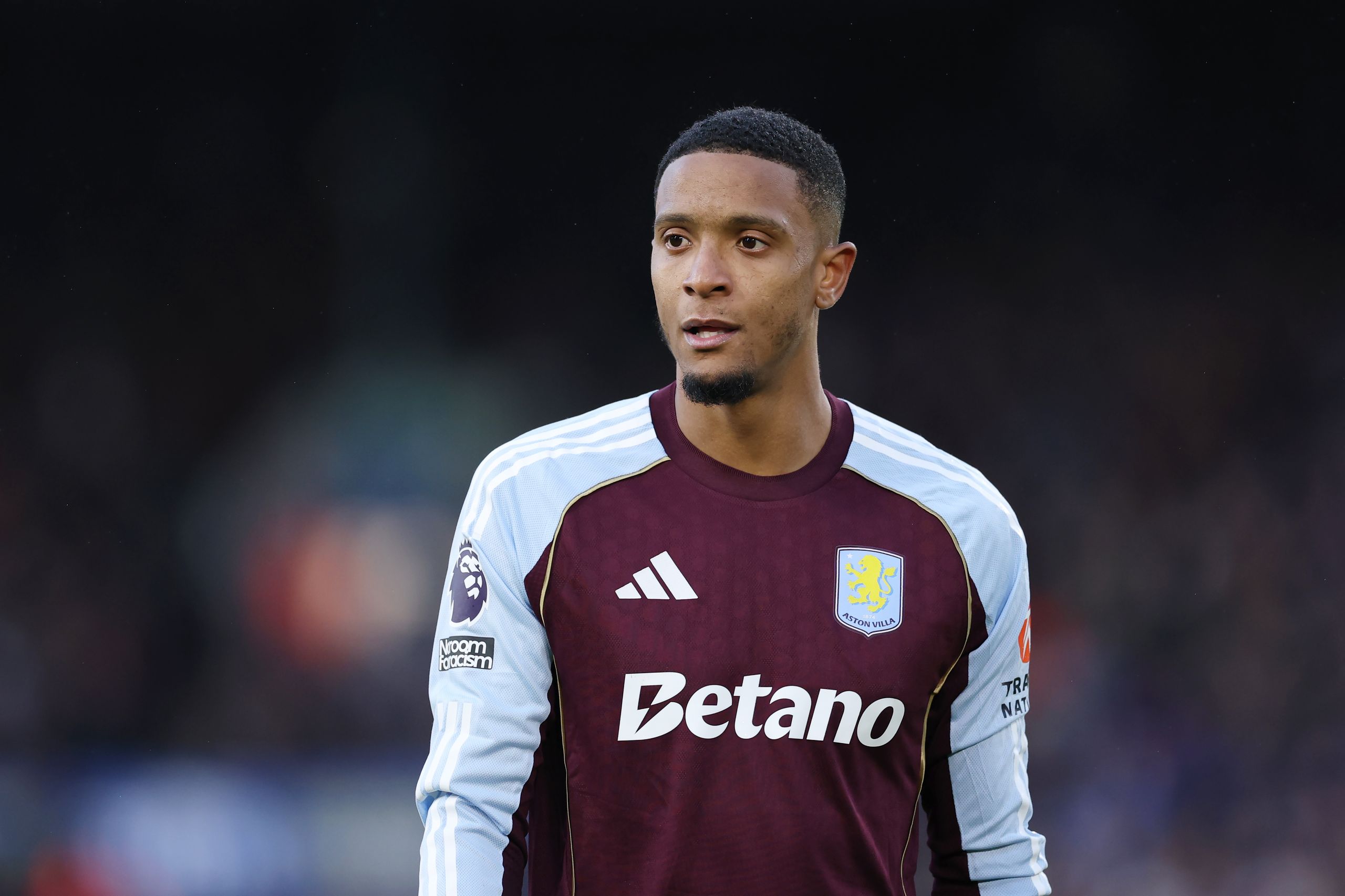
Ezri Konsa is now an Arsenal player. The side with arguably the best defence in world football last season have added yet another accomplished ball-playing centre-back, who is also a useful full-back. For Aston Villa, it is both disheartening and, at the same time, the sort of move people describe as “what Premier League champions do”.
Much of the discussion has focused on the Europa League winners and how quickly the core of their side has been broken up; Emiliano Martinez has been replaced, Konsa and Lucas Digne have now departed, Youri Tielemans and Morgan Rogers have been sold, and Ollie Watkins may also be on his way out, which would seemingly leave John McGinn to run himself even harder into the Villa Park pitch next season. From the supporters’ point of view at the very least, it hardly seems fair that a club can lift a major European trophy and qualify for the Champions League by finishing above the champions – who spent £400 million, incidentally – and still end up selling so many of their best players.
But there is another part of the debate which is simply… why? Where exactly does Konsa fit in at Arsenal?
The most obvious explanation is that William Saliba is out for an uncertain length of time with a back injury, and that is not the kind of issue where a player just misses three months and comes back completely fine. The Frenchman may not return until Christmas. His workload will need careful management. Gabriel looked fatigued at times during the summer. If manager Mikel Arteta intends to refresh his team over time, then the difficult question of when to gradually phase the Brazilian out is likely to arise within the next 18 months. Arsenal’s links with Marc Guehi in January point in that direction. At right-back, Arteta has had not so much a selection puzzle as a full-blown headache since 2023. Konsa is not naturally a right-back, but Jurrien Timber is still working his way back after making only a brief appearance in the Champions League final before surgery ruled him out of the World Cup. Ben White has had major injury troubles over the past few years and cannot be fully depended upon – partly because he pushed himself beyond reasonable limits when Timber himself was recovering from an anterior cruciate ligament injury. Cristhian Mosquera remains an excellent prospect, but he is still raw. Declan Rice even played there at times last season, and did so for England as well. So Arsenal now have eight players capable of operating at centre-back: first-choice pair Saliba and Gabriel; Konsa, Mosquera, Timber and White, all of whom can also play at right-back; and Piero Hincapie and Riccardo Calafiori, who are the two main options at left-back. Myles Lewis-Skelly can also fill in at left-back, although he is primarily a midfielder, while it also cannot be completely dismissed that Rice or Martin Zubimendi could be used at right-back this season if required.
And that is what makes the internal pecking order so fascinating. Saliba and Gabriel are surely undroppable; Calafiori and Hincapie appear largely interchangeable, helped by the former’s injury record; Timber is ahead of White, in part because of White’s own fitness issues. Mosquera is still only 22, yet he is trusted enough to start a Champions League final, or to be introduced ahead of more experienced players who, as already noted, are now viewed as full-backs despite being capable of playing centrally. Which makes the arrival of Konsa even more intriguing. Perhaps he will overtake White and battle with Timber. Perhaps he could even replace Timber, although that feels unlikely given the Dutchman is in talks over a new contract. Perhaps he will challenge Gabriel, though both players are the same age and Konsa is not left-footed. Given what Arsenal have done in midfield and attack, though, it appears more obvious than ever that collecting elite-level talent is simply the direction in which top clubs now have to move. David Luiz recently told FourFourTwo that he believed Paris Saint-Germain’s failures in the Champions League were at least partly caused by a lack of squad depth. Last season, Ousmane Dembele started only 10 Ligue 1 matches. Doue started 16; Kvaratskhelia 18. This summer, they have gone even further by signing Maghnes Akliouche, Ferran Torres and Mika Godts to strengthen that attacking depth. The days when Liverpool had no genuine backup to Trent Alexander-Arnold, Mohamed Salah or Fabinho are over. Manchester City lost Sergio Aguero and spent a period effectively pretending with false nines. Pep Guardiola reportedly told City’s hierarchy last summer that he wanted a smaller squad.
It feels more obvious than ever that stockpiling elite talent is simply the path top clubs now have to take.
When City and Liverpool amassed 195 points between them, the champions had John Stones, Vincent Kompany, Aymeric Laporte and Nicolas Otamendi as their centre-back options – and that was their order of preference. Kompany had overcome his injury troubles and was not an automatic starter in the early part of Pep Guardiola’s reign; Laporte was still adjusting to the division, while Otamendi still had doubters before Pep arrived. The runners-up, meanwhile, had Virgil van Dijk as their standout defender; Joel Matip partnered him 31 times in all competitions, Joe Gomez 25 times and Dejan Lovren 18. Arsenal’s centre-back situation is now a little harder to map out. They have moved from a structure in which Gabriel was the main figure and Saliba his understudy – with a ‘Break glass for Rob Holding’ option behind them – to one where Gabriel and Saliba are equals. Konsa is not arriving merely to sit on the bench.
The same applies in other areas of the pitch. In Arsenal’s three-man midfield in 2024/25, Arteta relied on three senior no.8s and one wildcard option – Martin Odegaard, Rice and Mikel Merino, with Ethan Nwaneri still developing – alongside two senior no.6 choices in Thomas Partey and an ageing Jorginho, who was not expected to feature much. In the summer of 2025, he replaced Nwaneri with an established marquee arrival in Eberechi Eze, while also keeping Nwaneri until January for added depth, and replaced both Partey and Jorginho with Zubimendi and Christian Norgaard. He has since replaced Norgaard with another Premier League captain, Bruno Guimaraes, and Lewis-Skelly has also made that role his own.
The best features, fun and football quizzes, straight to your inbox every week.
Arsenal used all four of their ‘defensive’ midfielders – namely Guimaraes, Lewis-Skelly, Rice and Zubimendi – in the Community Shield. Some matches this season will call for Odegaard, others for Eze, and some may require both. Merino did not get on the pitch at all. At the moment, it appears only Nwaneri will leave, whether permanently or in some other arrangement. On the right wing, Bukayo Saka went for a long time without any serious backup. Nwaneri filled in there occasionally; Raheem Sterling arrived on loan. Yet the club spent heavily on Noni Madueke last summer, and 16-year-old Max Dowman has clearly been given a pathway. In the same way, it appears Viktor Gyokeres was not signed simply to serve as cover for Kai Havertz, but to compete with and complement the German, with the two having already played together on more than one occasion. It is not at all obvious who will play how many minutes for Arsenal this season. Where there used to be a clear hierarchy – and where there was one at previous Premier League title-winning sides – things now feel much less fixed. Who is Manchester City’s best centre-back out of Abdukodir Khusanov, Marc Guehi, Ruben Dias and Josko Gvardiol? In fact, what is their first-choice pairing? What is Arsenal’s best double-pivot in midfield? Does Arteta even know exactly where Konsa will fit in, or does he simply want depth for the sake of depth because having too many options is preferable to not having enough?
None of this is especially unusual. Arsenal did not exactly require another right-back when Ben White was at his peak, yet they signed Timber anyway; similarly, Kieran Tierney was one of the club’s more important players when Oleksandr Zinchenko came in to replace him. We often talk about football squads in terms of a first XI and backups, but it is rarely that straightforward: injuries always have an influence, of course, and managers will invariably say they want two players competing for every role. Even during Arsenal’s last great era, Dennis Bergkamp and Thierry Henry set the standard, but Sylvain Wiltord and Nwankwo Kanu helped win the league at Old Trafford. All four were established internationals. But even compared to that period, it feels as though football has now moved into the age of super squads. More than ever, players seem content to feature in 70 per cent of matches and face elite competition, simply because there is so much football to be played. Liverpool went into a January transfer window and signed Luis Diaz to compete with Roberto Firmino, Mohamed Salah, Sadio Mane and Diogo Jota. And that is entirely normal now. They signed Alexander Isak when they already had Hugo Ekitike. One of the best defenders in the country is not necessarily needed at Arsenal. The Gunners could easily have made a Ronald Araujo-type signing, promoted youngster Marli Salmon for more minutes, or brought in a more obvious backup – whether a 22-year-old to develop or a 32-year-old to provide cover. The fact that they have instead made another £50 million-plus signing says as much about how far they have progressed as it does about the level of depth and spending now required at the top.
-
Liverpool making little headway in bid to sign €70m-rated PSG winger Ibrahim Mbaye
-
Manchester United seal Carlos Baleba deal as Fabrizio Romano gives his ‘Here We Go’ confirmation

-
FIR against Dipke for ‘entering govt school sans permission’
-
BCI co-chair seeks Mishra’s exit, alleges Rs 150 cr fund diversion
-
DMK's Big Overhaul After Poll Setback: Stalin Brings Age Caps And 2-Term Limit