
New Delhi, August 23 (IANS). With the historic milestone of 100 launches and 548 satellites in orbit, India's space sector is scaling new heights, Petroleum and Natural Gas Minister Hardeep Singh Puri said on Sunday.
The Minister said that on National Space Day, we have come together to celebrate India's tremendous progress in the space sector. From Chandrayaan-1 and Mangalyaan to Chandrayaan-3 and Aditya-L1, India's space program reflects our scientific excellence, ambition and spirit of innovation.
Puri also emphasized that the energy and innovation of India's talented youth is giving new momentum to this journey. Space startups and private sector innovators are turning bold ideas into new possibilities for India's space ambitions.
He said that as we are moving towards a 'Developed India' under the leadership and guidance of Prime Minister Narendra Modi, our space program is emerging as an important force in shaping a technologically advanced and self-reliant India.
On August 23, 2023, ISRO successfully landed the Chandrayaan-3 spacecraft near the south pole of the Moon, making India the fourth country after the US, China and the former Soviet Union to make a soft-landing on the Moon. India also achieved the distinction of becoming the first country to reach the rugged southern polar region of the Moon.
The first National Space Day was celebrated a year later, on 23 August 2024. The purpose of this day was not only to remember the success of Chandrayaan-3 but also to celebrate India's major achievements in the field of space science and technology.
Chandrayaan-3, launched on July 14, 2023 from Sriharikota on an LVM3-M4 rocket, was designed to demonstrate three important capabilities: safe and soft landing on the Moon, rotation of the rover on the lunar surface and conducting scientific experiments on the surface.
After landing, Pragyan rover came out of Vikram lander and started experimenting with the instruments installed on the lander. This study included things like lunar surface temperature, seismic activities, plasma environment and composition of elements, which gave scientists the opportunity to get a closer look at that part of the lunar surface that was not previously known.
ISRO was completely successful in meeting its mission goals, as the lander and rover continued to operate for one lunar day (which is equal to approximately 14 Earth days) for which they were designed.
–IANS
ms/
-
Throwing away used tea bags? You will be surprised to know these uses

-
Are you bored with daily chutney? Make peanut-sesame sweet chutney, every bite will enhance the taste

-
Hum Tum Director Kunal Kohli Urges Tukaram Mundhe Cleaning Of Indian Kitchens

-
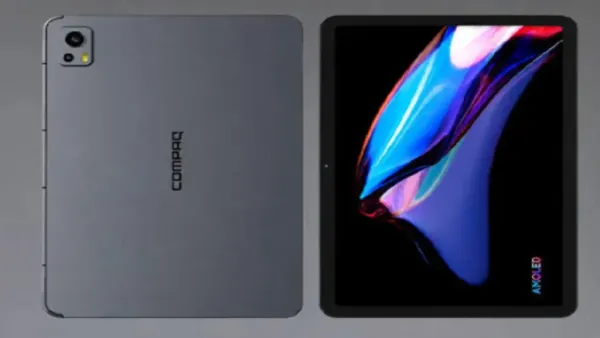
Compaq Return: Compaq QTab Ultra tablet launched with 12.6 inch AMOLED screen and 11000mAh battery
-
Compaq QTab Ultra 12.6 tablet launched, 11,000mAh battery with large AMOLED display, stylus will also be available