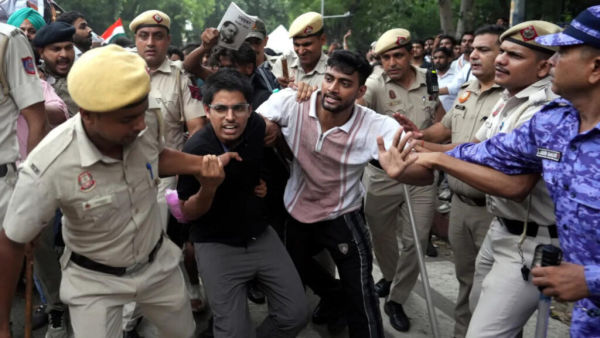
New Delhi: A fresh Amnesty International investigation has found that police personnel deployed “unlawful and deadly force” against peaceful protesters during the Cockroach Janta Party (CJP)-led Parliament march on July 20, yet no officer has been held accountable.
In a report published on Monday, August 24, the human rights group said they verified witness testimonies as well as 17 videos confirming that police used weapons, including pellet-firing shotguns, tear gas launchers, grenades, batons and electric shock devices between July 20 and 24 in Delhi and Bihar’s Siwan.
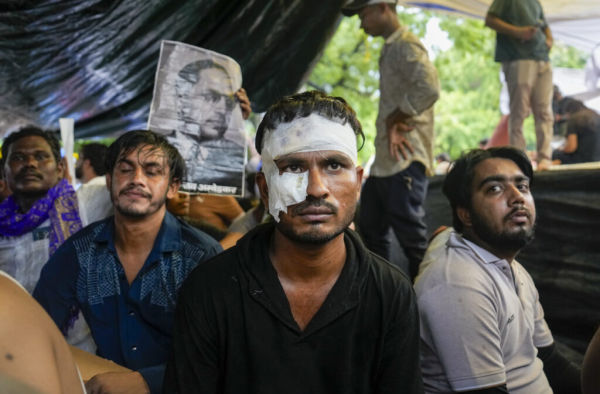
The manner in which the weapons were used breached international law and standards, said Amnesty International, adding that it verified two instances where an officer used unjustified use of lethal force against a crowd.

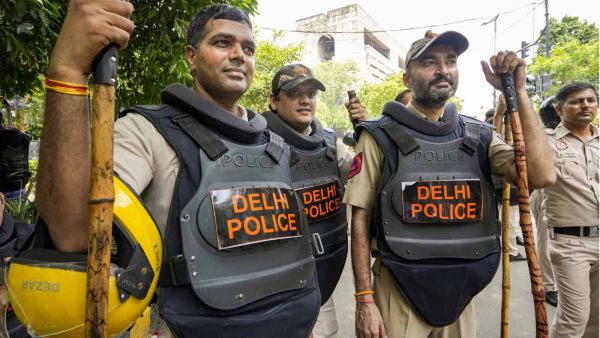
Videos taken on July 20 across Delhi in Jantar Mantar, Sansad Marg and Connaught Place show personnel from Delhi Police, the Rapid Action Force (RAF) and the Central Reserve Police Force (CRPF) using excessive force.
On pellet-gun firing, the group said no prior warning was given before its use, despite there being clear rules on its use in the standard operating procedures (SOP) prepared by India’s own Bureau of Police Research and Development.
Amnesty flagged Delhi Police’s response on X, which termed reports of pellet injuries as “Fake News Alert,” saying the reports were “completely false and misleading,” even warning against spreading rumours.
The investigative report highlighted the dangers of security personnel launching tear gas grenades directly at protesters, as verified in a video from the Parliament March. The targeted launch of tear gas was at odds with United Nations guidance on the use of such weapons by law enforcement, it said. “The use of tear gas should be limited to situations of widespread and serious violence. There is no evidence available that suggests such a level of violence by protesters.”
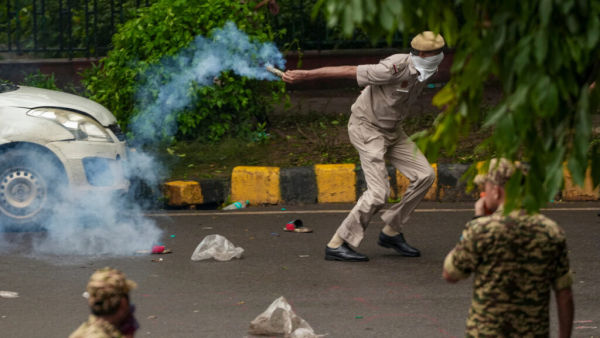
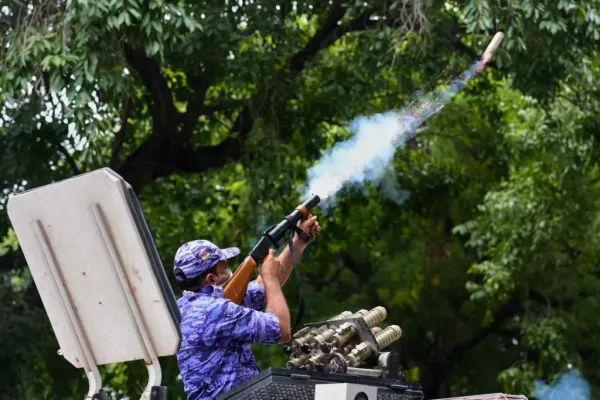
Although incidents of stone pelting were recorded, they were isolated and would not reach the threshold required to fire tear gas, the organisation said.
Lathis ‘inherently cruel’
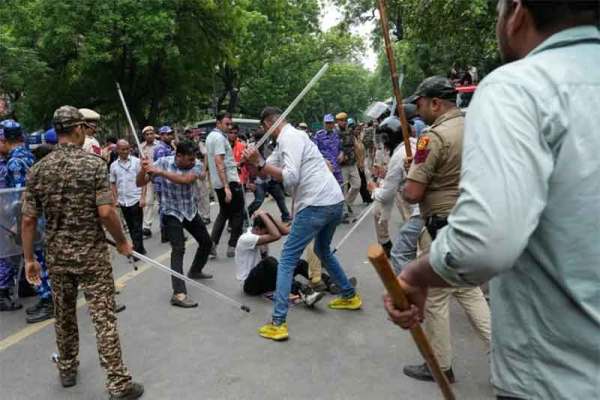
Stating that UN Special Rapporteur on Torture Dr Pau Pérez-Sales considers lathis “inherently cruel, inhuman or degrading,” the organisation said at least eight verified videos show Delhi Police in khaki and RAF officers striking protesters with batons, including a young boy.
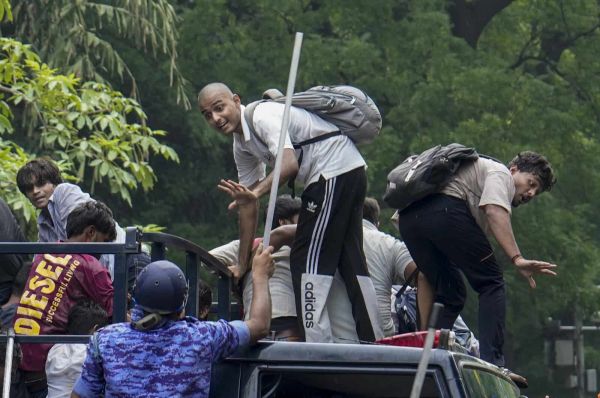
The Rapporteur has called for the prohibition of lathis, saying they inflict a greater level of kinetic force than conventional batons, causing excessive pain and increasing the risk of serious injury.
The report addressed officers in plain clothes using lathis on protesters and said the absence of official, visible identification is itself a “breach of accountability principle,” which mandates officials remain identifiable in cases where they use force.
In one video, the organisation said it identified an RAF officer using a shock baton on a peaceful protester. It called on India to immediately withdraw the weapon, saying it serves no legitimate law enforcement purpose that could not be achieved through less harmful means.
No evidence of threat that can justify use of AK-47
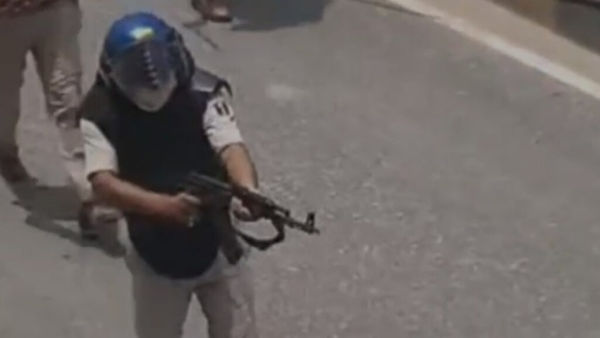
In Siwan, Bihar, a state police officer had fired from an AK-47 rifle on protesters during the student demonstrations on July 24, garnering widespread attention and backlash. While he was suspended, senior police officials in charge during the protests were also removed from their positions.
Amnesty International said AK-type assault rifles are designed to kill and may lawfully be used in cases of imminent threat or as an absolute last resort. However, the organisation found no evidence of such a threat at the time.
Suppression of right to protest
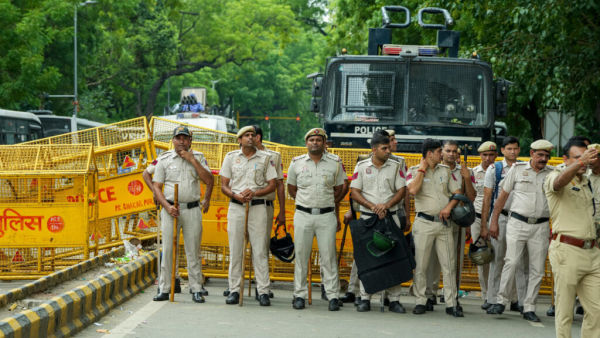
The Chalo Sansad march was initially denied permission by the authorities, and the Delhi Police had imposed an internet shutdown around the areas where the protest was scheduled. In the following days, they closed Metro stations, citing security reasons. Amnesty International said that under human rights law, holding an assembly itself does not require prior authorisation or permission and issuing prohibitory orders is equal to a blanket ban on an entire march.
Aakar Patel, Chair of the Board, Amnesty International India, accused the authorities of suppressing the protest with a communication blackout, barricades and transport disruption instead of facilitating the right to protest.

“They then attempted to crush it with unnecessary or excessive use of force against peaceful protesters, including children,” said Patel. “This heavy-handed response was state-sanctioned violence masked as crowd control. The continued impunity after a month is a testament to that.”
The CJP called off its nationwide agitation on July 25, soon after then-education minister Dharmendra Pradhan resigned and the government gave assurances that students and peaceful protesters would not face punitive action.
-
Amorim: Milan were worried about not losing, but that is not how matches are won

-
5 unique vending machines in Hyderabad: Orange juice to skincare

-
Gang of cheats busted, man arrested for posing as senior cop
-
Two men arrested with 750 gms of ganja in Quthbullapur
-
ACB nabs two tax officials for Rs 50,000 bribe in Adilabad