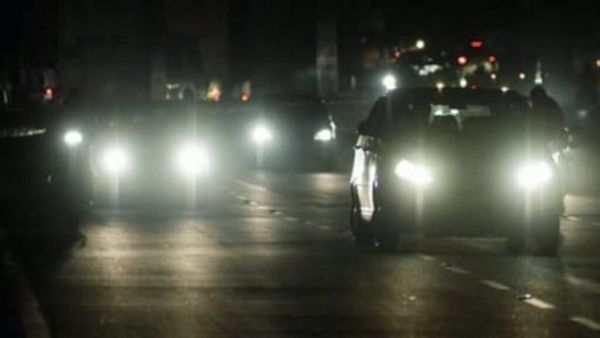
Automobile Desk: The piercing headlights of vehicles coming on the roads at night are soon going to be a thing of the past. The Ministry of Road Transport and Highways (MoRTH) is drafting major changes in the Central Motor Vehicle Rules to curb road accidents and ensure the safety of drivers. It is often seen that at night, the bright high-beam lights of the vehicle coming from the front cause darkness in front of the driver's eyes for a few moments, which is called 'glare'. This blindness of a few seconds often becomes the cause of serious accidents. To eliminate this risk, the government is planning to implement new standards from April next year.
Under the proposed rules, the first change will be seen in the safety of two-wheelers. Till now, in bikes with Automatic Headlamp On (AHO) feature, which beam will turn on the headlight, it depended on the previous setting of the vehicle. But after the implementation of the new rules, as soon as the ignition is turned on, the light will come on only on 'low-beam' (passing-beam). This will remove the problem of inadvertently switching on high-beams in the normal traffic system of the city. It is a matter of relief that this new rule will apply only to newly manufactured motorcycles and scooters, while no changes will have to be made to the vehicles already running on the roads.

Not only this, a proposal has been made to limit the total intensity of lights of vehicles and their luminous intensity. At present the maximum brightness of headlights for two-wheelers can be up to 1.5 lakh candela, which is being planned to be reduced to 1 lakh candela. Similarly, for four wheelers (cars) this limit will be reduced from 2.25 lakh candela to 1.5 lakh candela. This will improve the spread of light, but will significantly reduce the harsh light that stings the eyes of the person in front.
The crackdown is also going to be tightened on the very white i.e. aftermarket and bright LED lights used in vehicles these days. In the new draft, the maximum limit of 'color temperature' of headlights and front fog lamps can be fixed at 6,500 Kelvin. Lights with temperatures above 6,500 Kelvin appear bluish or appear more dazzling white, further impairing visibility during fog or rain. Once the standards are set, vehicle manufacturers will have to install only lamps with balanced illumination.
The help of technology will also be taken against drivers who use high-beam unnecessarily within the city. A special audio alert system can be provided in new vehicles. As soon as a driver keeps the high-beam on while keeping the vehicle speed below 60 kmph in the city, a warning beep will sound inside the vehicle to make him realize to shift to low-beam. However, this system will remain quiet at speeds above 60 kmph on the highway, because bright light is required there.
Visibility rules are also being tightened for heavy commercial vehicles and buses. Accidents often occur at night due to collisions with trucks parked on the side of the road or moving slowly. To stop this, it will be made mandatory to install certified (original) reflective tape on buses and heavy vehicles. Genuine reflective tape reflects light from a distance, due to which even in bad weather or dense darkness, drivers of vehicles coming from behind or from the side will be aware of the presence of heavy vehicles in time.
-
8 years since the regime separated us: Sanjiv Bhatt’s children
-
Karnataka seeks AI talent pipeline ahead of varsity launch

-
Rare Sight In Indian Cricket! Packed Duleep Trophy Final Crowd At Chepauk Goes Viral
-
Thuram explains barrier celebration after Inter’s dramatic comeback win over Napoli

-
Star names shine in dramatic 2-2 draw between Inter Miami and Atlanta United