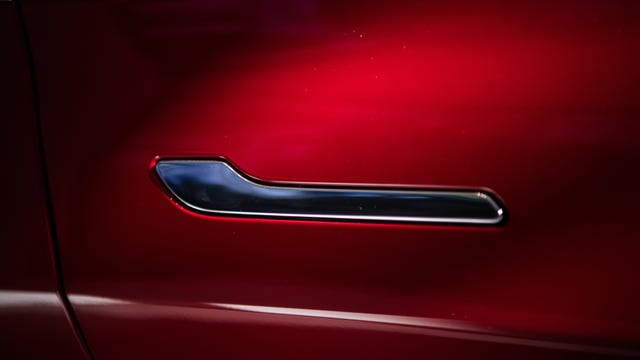
On Friday, Tesla, Xiaomi, Geely, Leapmotor, Xpeng and several other carmakers agreed to start recalling around 4.3 million vehicles across China because of regulatory concerns linked to the “hidden” electronic door handles fitted to these models. Chinese regulators believe these handles can create unnecessary risk in an emergency, as responders may find it difficult to operate electronically controlled parts after a crash. It is the biggest auto recall in China’s history.
Authorities in Beijing have been tightening safety rules for the country’s auto industry as the market continues to expand rapidly. China has become the first country to ban these flush-mounted door handles, with the restriction set to take effect from 2027. Regulators in the United States have also recently indicated they may review these components, raising the possibility of future rules there as well.
US-based Tesla is widely credited with making these handles popular, as the flush-mounted design serves both as a futuristic styling feature and as an aid to aerodynamics. As a result, the company is facing a recall involving about 2.98 million imported and China-built Model 3, Model Y, Model S and Model X electric vehicles. According to Tesla’s filing with the State Administration for Market Regulation, that recall will begin on September 25. Xiaomi will also recall about 390,000 vehicles, while Leapmotor and Xpeng will recall 371,000 and 264,000 units respectively.
The corrective measures are expected to include new warning stickers intended to make the manual door release easier to find, along with over-the-air software updates in some cases. For Tesla, the update is said to lower the windows at the moment of a crash in an effort to make it easier to extract passengers.
Electronic door handles are a smart design feature that can improve both a vehicle’s appearance and its aerodynamic efficiency; even so, most people who have used them probably have at least one frustrating experience involving the technology. Even if they are considered just as safe as conventional handles on paper, that is hardly reassuring for a component that could help save your life after an accident. The hope is that regulators worldwide continue examining these systems, while manufacturers work on refining them further.
-
Plea seeks committee reconstitution over police excess allegations

-
Telangana govt hikes Toxic movie ticket prices across state

-
Kangana questions Kriti Sanon’s ad: Why tie Rakhi in bikini?

-
Delhi Protest Police Violence: Plea Seeks Reconstitution Of Supreme Court’s High-Powered Panel

-
Do pimples appear again and again on the face? These 5 everyday mistakes are increasing the problem of pimples