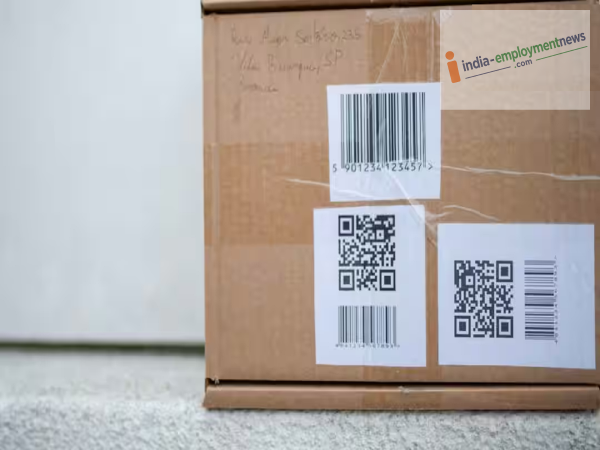
Today, the humble QR Code simplifies many tasks—from making payments to accessing websites and product details. But have you ever wondered how such a small code holds information spanning thousands of characters?
In today's digital age, QR Codes are ubiquitous. Whether you are making a payment at a shop, viewing a restaurant menu, visiting a website, or seeking product information, you see QR Codes everywhere. Scanning one with a smartphone for just a few seconds instantly displays the relevant information on the screen. However, this often raises questions: how does a code that looks like a simple arrangement of small black and white boxes manage to store so much data? A specific digital technology works behind the scenes, converting data into a unique pattern. Let’s explore how so much information is stored within a tiny QR Code.
What is a QR Code?
A QR Code—or Quick Response Code—is a type of 2D barcode. Information within it is stored in the form of small black and white modules. Unlike standard barcodes, where data is arranged in a single direction, QR Code data is organized both vertically and horizontally. This allows it to store significantly more information than a conventional barcode.
What is inside a QR Code?
A QR Code is not merely a pattern of black and white boxes; its various sections serve distinct functions. The large square markers in three of the corners are "Position Markers," which help the camera identify the code's orientation. Meanwhile, the "Timing Pattern" assists the scanner in determining the position of the small boxes and the spacing between them. Additionally, the "Data Area" contains the actual information—such as website links, text, payment details, or other digital data. QR Codes also feature "Error Correction" capabilities, allowing them to be scanned successfully even if a portion of the code is damaged or slightly torn.
How is so much information stored in a QR Code?
Information in a QR code is not stored directly as plain text. The data is first converted into a digital format, which the computer processes as binary code—consisting of 0s and 1s. This data is then transformed into a pattern of small black and white modules. When a QR code is scanned using a phone, the camera and scanner read these patterns and convert them back into digital information.
How much information can a QR code hold?
The size of the QR code and the volume of data affect its capacity. It can store up to approximately 7,000 numeric digits and around 4,000 text characters. Including more data results in a larger and more complex pattern.
Where are QR codes used?
QR codes are used in various contexts, such as websites, payment systems, product labels, business cards, brochures, hang tags, events, and landing pages. They enable users to access websites, information, videos, or other digital services. They can also be used to share Wi-Fi credentials.
-
Swine Flu in Delhi: Swine flu cases are increasing rapidly in Delhi, when to get vaccinated? Know the answers to all the questions from the doctor

-
Onam Wishes 2026: Send 10 heart-touching Onam wishes to your loved ones, share on WhatsApp

-
Misbah Arshad reacts to Kaziah Liz Mejo's Miss Universe win

-
Do not make these mistakes while doing makeup during festivals, follow these easy tips to look beautiful.

-
Today's Rashifal: Big miracle of Tripushkar Yoga on 25th August, doors of fortune of these zodiac signs will open