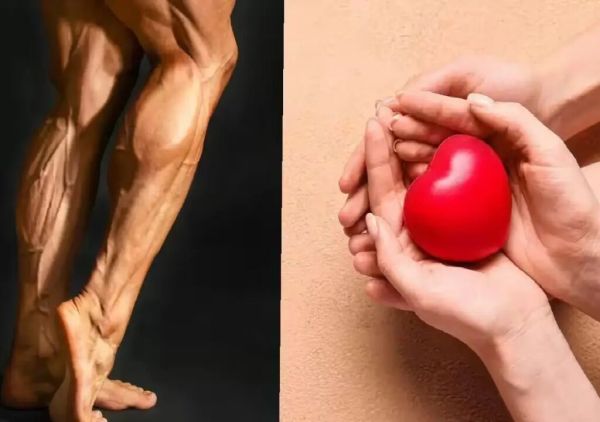
Every step you take, stair you climb or even toe you wiggle sets off a small but important process in your legs. Your calf muscles help squeeze veins and push blood upwards towards the heart, working against gravity.
This mechanism, known as the calf muscle pump, is increasingly attracting attention from researchers because of its possible links to circulation and long-term health.
Why the calf is called the ‘second heart’
The heart pumps blood around the body, but it depends on blood returning from the legs. The calf is part of a chain of muscles that helps propel that blood upwards.
Research cited in the report found that people with impaired calf pump function had a considerably higher 10-year mortality risk. The risk was 17.5 per cent among those with impaired function, compared with 5.9 per cent in people with normal calf pump function.
However, this association does not prove that poor calf function itself causes a higher risk of death.
Good calf pump function can also help reduce blood pooling in the legs and ankles, which may ease discomfort and swelling and could have implications for circulation- problems.
Simple movements can activate your calves
You do not necessarily need an intense workout to engage these muscles. Walking, running, climbing stairs and standing on your toes all activate the calf muscles.
Research has also examined the soleus, one of the major calf muscles, and found that low-level movements while seated may help the body process glucose after a meal.
One simple movement involves keeping the toes on the ground and repeatedly raising the heels for around five to 10 minutes.
This could be particularly relevant for people who spend long periods sitting, although the findings should not be viewed as a replacement for medical treatment or regular exercise.
Strength matters as we age
Maintaining calf strength may become increasingly important with age. Walking and other forms of exercise can keep the muscles active, while strength training may help prevent muscle loss.
Stretching can support ankle mobility, while balance exercises can help people remain capable of walking and exercising regularly.
Researchers caution that an important question remains unanswered: whether improving calf pump function can actually increase survival. Current evidence supports an association between calf pump function and health outcomes, but more research is needed to establish whether strengthening this mechanism directly improves longevity.
For now, the message is relatively simple: keeping your legs moving may be good for more than just mobility — your calves are also helping keep blood moving towards your heart.
-
Aquarius Tarot Horoscope Today, August 30, 2026: Will focus on health, will emphasise diet

-
Tanker hit by three projectiles near Oman in Strait of Hormuz

-
Nepal floods: Families struggle to identify victims amid crisis

-
US revokes citizenship of Indian-origin man convicted of rape
-
Over 100-Year-Old Hindu Temple Demolished In Pakistan's Punjab; Officials Blame Rain