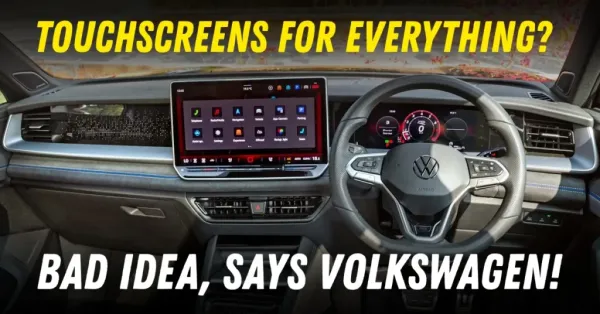
Volkswagen has finally accepted what many drivers have been saying for years: replacing familiar physical controls with touchscreen functions and touch-sensitive panels was a mistake.
The company was one of the manufacturers that pushed hardest in this direction. Its first generation of ID electric cars replaced many familiar buttons and rotary controls with touch-sensitive panels, capacitive steering-wheel controls and screen-based menus.
Even simple functions such as changing cabin temperature could require using touch-sensitive sliders.
The thinking was simple. Electric cars represented a technological break from conventional cars, and manufacturers wanted their interiors to look equally futuristic.
Volkswagen quality chief Andreas Krepp has now explained that the company assumed EV controls also had to be radically different. Customers did not necessarily agree. They wanted the advantages of an electric powertrain without having to relearn basic functions they had used instinctively for years. Volkswagen is now changing course, and its next generation of interiors will bring back more physical controls.
Large touchscreens quickly became associated with modern cars, and especially EVs. They gave dashboards a clean, minimalist appearance while allowing manufacturers to move dozens of functions into software.
There were manufacturing advantages too. A single display can replace numerous separate switches, knobs and components. Software also makes it easier to change functions between variants and update features without redesigning an entire dashboard. Tesla helped popularise the approach. Its minimalist cabins became closely associated with the EV revolution, and much of the industry followed.
Volkswagen went particularly far. The ID.3 and ID.4 arrived with touch-sensitive steering-wheel controls and capacitive sliders for functions such as temperature and audio volume. The eighth-generation Golf also moved many everyday functions into its touchscreen interface.
A physical knob can be located by feel. A driver can reach for it without looking away from the road, turn it and receive immediate tactile feedback. A smooth touch panel does not work the same way.
Touch-sensitive steering-wheel controls can be triggered accidentally, while functions buried inside touchscreen menus may require several taps instead of one movement. That is particularly dangerous while the car is moving.
Volkswagen’s latest comments follow several years of criticism from customers and reviewers.
Volkswagen Passenger Cars CEO Thomas Schäfer had already acknowledged the problem and said the company’s touch-heavy approach had frustrated customers. Volkswagen subsequently began restoring conventional steering-wheel buttons and improving its infotainment systems.
The upcoming ID. Polo previews a new generation of Volkswagen interiors developed with customer feedback in mind. Physical buttons return for frequently used functions, while screens remain central to infotainment and vehicle information.
That is a much more sensible division of labour.
Navigation, media libraries, smartphone integration, charging information and detailed vehicle settings work well on a screen. These functions often require maps, lists, graphics or multiple choices that would be difficult to reproduce with individual buttons.
Climate control, demisting, hazard lights, volume and common steering-wheel functions are different. Drivers use them frequently, often while moving, and should be able to operate them with minimal visual attention. Volkswagen is not abandoning touchscreens. It is accepting that putting every possible control on one was the mistake.
The debate is no longer only about convenience.
Euro NCAP has been pushing manufacturers towards retaining physical controls for important driving functions as part of its evolving safety assessment. The concern is driver distraction.
Looking down to find a small touchscreen icon takes attention away from the road. If that function sits inside another menu, the driver may need to look down more than once.
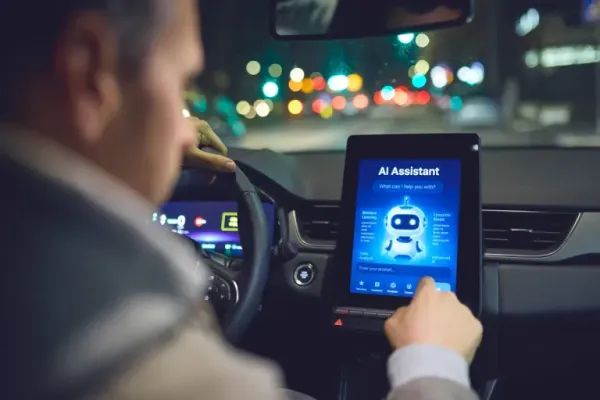
Voice commands can help but are not a complete solution. Recognition can be inconsistent, passengers may be speaking, accents can cause errors and issuing a spoken command is often slower than turning a knob.
A well-designed physical switch is predictable. Its location does not change after a software update and the driver can learn its position through repeated use.
That does not mean every dashboard needs dozens of buttons. It means frequently used controls should be tactile and easy to locate, while less frequently used functions can remain digital.
Volkswagen is far from alone.
The almost button-free cabin became a common design theme across the EV industry. Large displays, hidden air vents and minimalist dashboards were used to make electric cars look technologically different from petrol and diesel cars.
But the basic act of driving did not change.
Drivers still need to adjust temperature, clear a misted windscreen, alter audio volume or activate frequently used functions without spending several seconds looking away from traffic. That is why Volkswagen’s reversal is important beyond the ID range.
One of the world’s largest carmakers tried the touch-heavy approach on a large scale, received sustained customer criticism and is now deliberately restoring physical controls.
Other manufacturers have already begun reaching similar conclusions, and safety assessment is moving in the same direction.
The next generation of Volkswagen EVs will still have large displays, connected software and modern digital interfaces. They simply will not require the driver to use a touchscreen for everything.
Via AutoBlog
-
Financial Horoscope Today, September 10, 2026: Career expansion efforts will increase for Gemini natives, know the condition of all zodiac signs

-
Career Horoscope Today, September 10, 2026: Taurus natives will continue to experience positivity in their work, know the status of all zodiac signs

-
Pakistan Cricketers Mistaken For Asylum Seekers During UK Protest

-
Wednesday Box Office Report: 'Mirzapur The Movie' Mints Rs 12.30 Cr, 'I’m Game' Stays Below Rs 1 Cr, 'Hanuman Ansh' Adds Rs 0.10 Cr

-
Bihar Board Inter Result 2026: 168 Toppers To Receive Cash Awards, Laptops