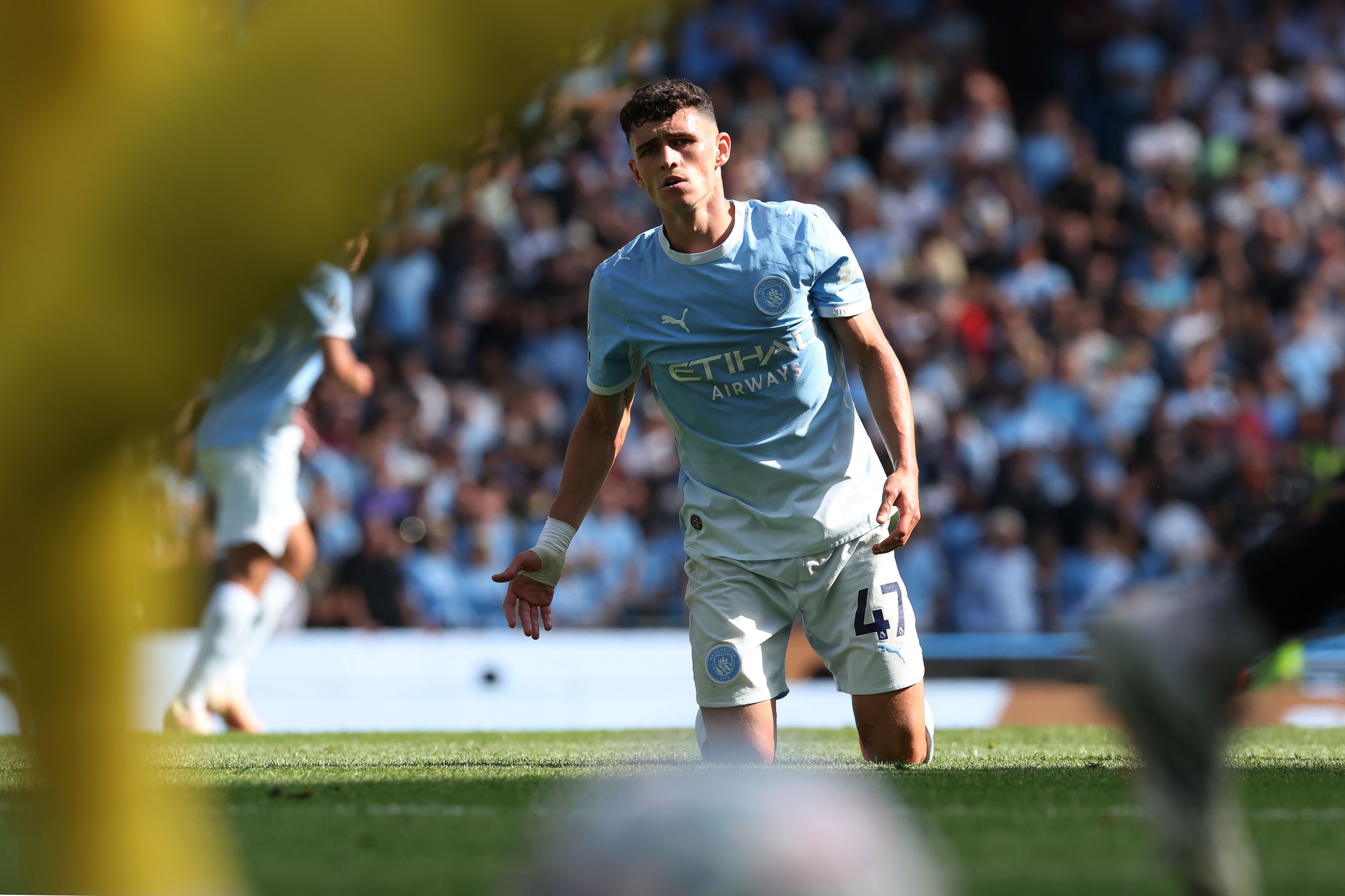
Phil Foden is facing increasing criticism, but perhaps the bigger issue is that he was never quite the footballer many believed him to be.
Why place limits on a player with a nickname? Has any footballer ever labelled as ‘the somewhere someone’ actually surpassed the original? The Romford Pele, the Welsh Xavi and the Scouse Cafu were at least clearly tongue-in-cheek; the Croydon De Bruyne, the Scottish Messi and the Yorkshire Pirlo now sound closer to mockery than praise.
The Stockport Iniesta always felt, at best, like convenient shorthand. Small in stature, naturally sharp in his movement and outstanding in tight spaces, he looked like the sort of midfielder who could play a rondo inside a lift. Pep Guardiola famously said that Andres Iniesta would retire them all in Catalonia — and perhaps that remark sat at the centre of the Foden comparison: that even amid the riches of Pep’s first great Manchester City side, the future might be even bigger, brighter and bolder than the peak reached by the Centurions.
That is not to say Foden and Iniesta have always been directly tied together. The Manchester City academy graduate has more often been measured against more immediate reference points. It was widely assumed that Foden would one day inherit Kevin De Bruyne’s crown, perhaps even Bernardo Silva’s. Many have probably forgotten that Iniesta was ever used as a benchmark at all, because it worked more as a grand statement than as a true explanation of his game. Even so, the comparison does reveal something.
Iniesta was a genuine all-rounder: everything a team could need in a Barcelona shirt, from controlling matches from deep in the 2006 Champions League final to later operating on the left under Pep. He was gifted enough to perform Xavi’s role, take on parts of Sergio Busquets’ job and even mirror Lionel Messi from the right. He was the kind of footballer you had to truly understand the game to appreciate. Foden has often carried similar associations. Gary Neville notably argued that whatever form the Manchester City man was in, he remained undroppable for England. Gareth Southgate appeared to share that view towards the end of his England spell, forcing Foden into the No.10 role in his side. Jude Bellingham was pushed out to the left, while Harry Kane began to be substituted more often. “Just give Foden freedom. Let him dictate. Let him roam.” It has long been accepted that he is at his best when given the room and time to shape a match according to his own will. And that, is a lie.
Foden has had two especially clear high points, both with Manchester City. The first came in the 2020/21 season, his breakthrough campaign behind closed doors after David Silva’s exit. Those who did not look closely assumed he was a direct replacement — but in City’s strikerless setup, Foden was most often the left-winger, performing a Leroy Sane-like function in which he held width, beat full-backs on the outside and pressed without pause. He did play as a false nine at times in that system, and occasionally as an advanced midfielder, but fluidity should not be mistaken for freedom. This was one of Guardiola’s most detailed and exact systems, with Foden among several players following instructions precisely. He was not roaming freely; he was carrying out a specific assignment. Then, in 2023/24, the England international produced the best season of his career. Whether starting from the right, the left or through the middle — depending on who overlapped — Foden operated as an attacking midfielder, drifting into spaces just outside the penalty area, receiving on the half-turn and causing devastation. This time the team was built around him, with even Erling Haaland sacrificing some goals so that this shadow striker could thrive.
It is simply untrue that Foden is at his best when he is handed the space and time to bend a game to his own will.
Once again, there was nothing free about that role. Foden did not have the authority to dictate play or act as the team’s creator; he was there to provide the decisive final punch. It suited him perfectly. For too long, we have talked about Foden as though he is a generalist, when in reality he is a specialist. He is not at his best when presented with a blank canvas and a box of paints, but when he is given a toolkit and a stopwatch. That is exactly why he has moved in and out of Manchester City’s strongest teams over the years. Generalists are useful in almost any setup: Bernardo Silva, John Stones, Gabriel Jesus and Ilkay Gundogan all adjusted their roles depending on whether Guardiola used inverted wingers, a double pivot, a target man or a 3-2-4-1. Specialists such as Jack Grealish or Aymeric Laporte, however, were usually excellent at one or two specific things, and their importance tended to rise and fall accordingly.
Calling Foden a specialist is not an insult. Liverpool built an entire side around such players, with Mohamed Salah, Trent Alexander-Arnold and Roberto Firmino essentially carrying out the same core functions throughout Jurgen Klopp’s reign, and doing so to a standard that shaped the league. It may also help explain why neither Foden nor Trent have ever really flourished for long in an England shirt. And perhaps the burden of expectation on Foden was too heavy from the start. The No.47 was among the earliest players to be handed the ‘generational’ label on social media, even though none of us really knew what that was supposed to mean. Was he meant to be the Second Coming of Gazza, peroxide hair and all? Was Angel Di Maria the kind of lofty comparison that made more sense? Or was Foden simply going to define an era of English attacking midfield play? It feels now as though we misunderstood him then and are still misunderstanding him today. The early signs under Enzo Maresca are not that he will seize Manchester City by the throat and unleash a bolt of inspiration from the middle of chaos. And perhaps he was never that type of footballer. Perhaps he was always closer to a Salah, a Riyad Mahrez or a Julian Alvarez — a player capable of doing a very particular job within a very particular system. There is nothing wrong with that. After all, not everyone is Andres Iniesta.
-
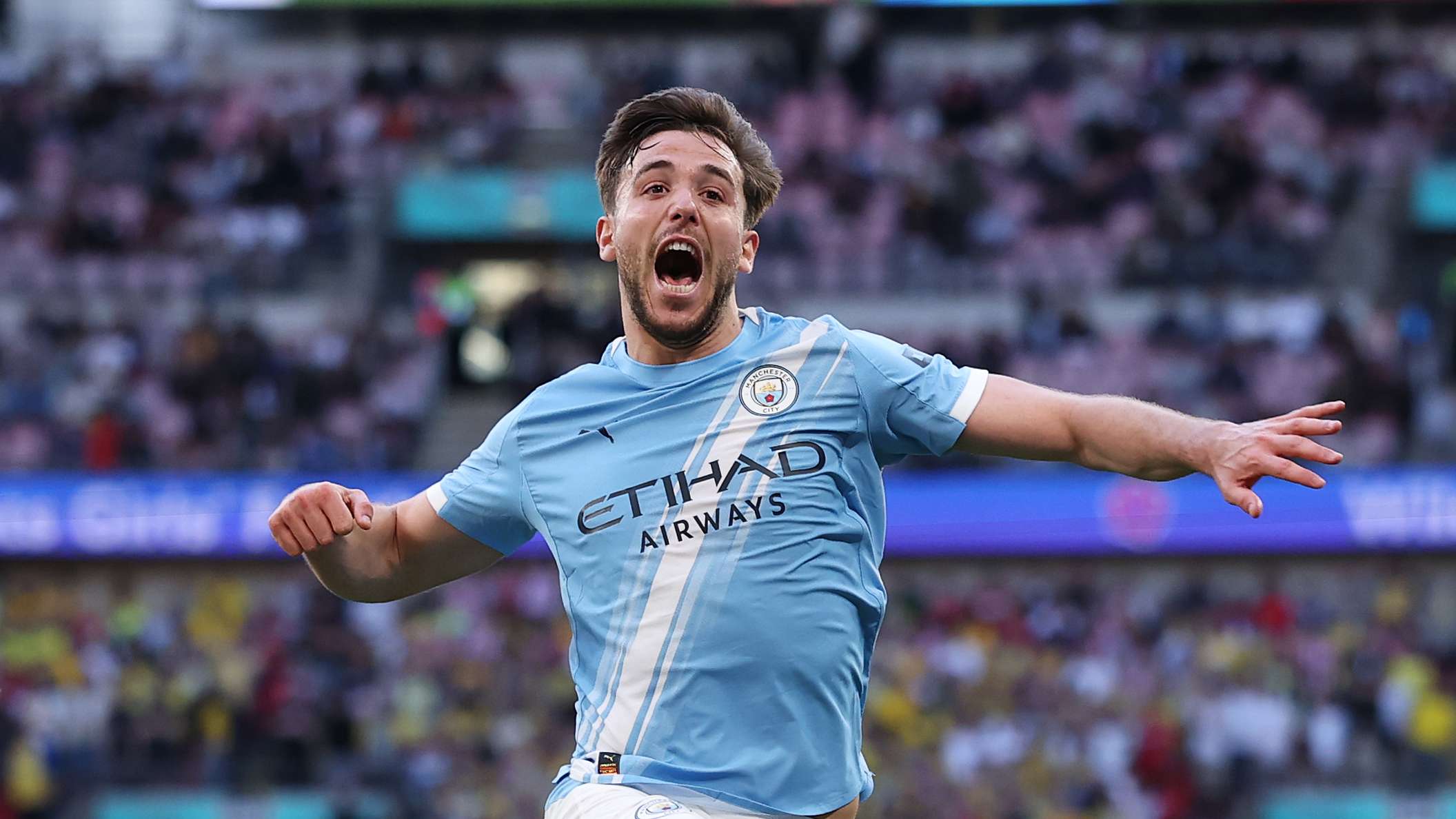
Newcastle seal £52m agreement for Man City midfielder Nico Gonzalez, with medical next after clearance granted
-
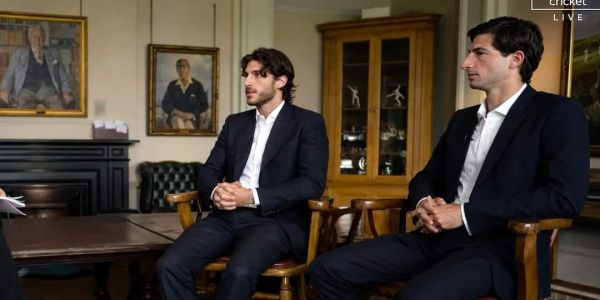
Imran Khan's Sons' Interview Leads To Stunning Protest By Pakistan Cricket Team
-
NEET stir ends fear of speaking against power: AISA chief

-
Liverpool track €50m PSG teenage talent Ibrahim Mbaye as Bradley Barcola discussions slow down

-
How does the pancreas work? What are the symptoms of his deteriorating health and when does cancer occur?