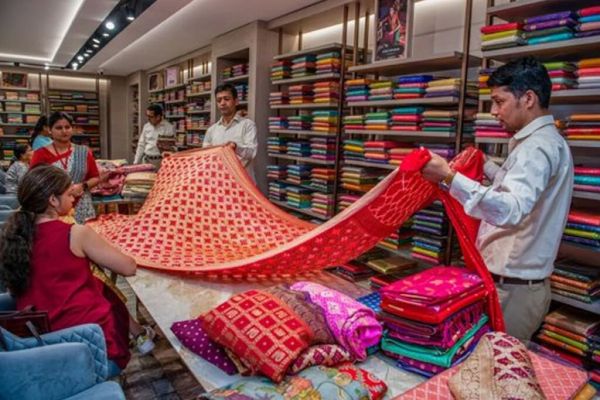
If you want to buy authentic handloom saree for Puja, but you need to know it first. Handloom fabric is a living reflection of Indian history, culture and craftsmanship. Unique fabrics hand woven by skilled weavers for generations. Many people think that handloom cloth means cotton or muslin. Not really, be it Banarasi or Kanjivaram – everything can be made on handlooms (Indian Handlooms).
But how do you know that the clothes you are buying are not really machine made?
1. While buying handloom fabric, look at both sides. There may be slight variations in weave type, yarn arrangement, color or design.
2. However, in the case of silk, it is difficult to understand the difference. Popular silks in India include mulberry, tasar, muga and eri. Each has a different texture, quality and place of origin. Pure silk is usually soft and has a soft sheen, beware of excessive sheen. The most important thing is to check the 'silk mark' while buying a silk saree. This certification indicates the purity of the silk. However, pure silk does not necessarily mean that it is handwoven.
3. A 'Geographical Indication Tag' recognizes the specific geographical area of a product and its associated characteristics. Check this 'GI tag' to buy the famous handloom saree of a region. For example, Champa silk sarees from Chhattisgarh got GI recognition in 2010.
4. If the price is high, it cannot be said that it is a handloom saree. But it takes days, even weeks, to weave cloth on a handloom. So the handloom fabric is naturally more expensive than this type of saree. It is not fair to compare its price with mass produced fabrics by machines.
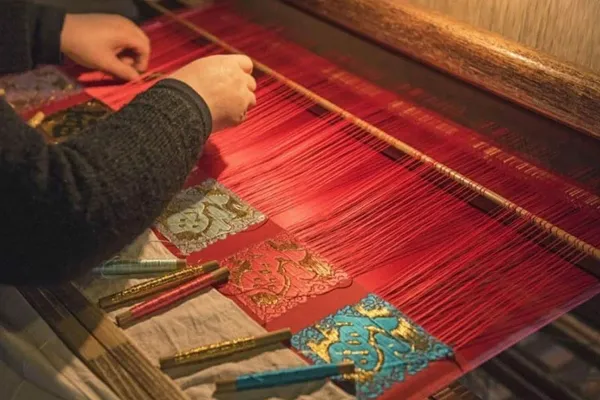
5. The form of handloom varies from region to region. The climate, local raw materials and culture of different regions of India have influenced the textile industry there. Be it Banarasi in Uttar Pradesh, Kanjivaram in Tamil Nadu, Paithani in Maharashtra or Kosa silk in Chhattisgarh—each textile has its own regional characteristics. Therefore, it is not the case that handloom sarees of another area can be judged by understanding the characteristics of handloom sarees from one place.
Any handloom garment is usually produced in limited numbers. And that's why its 'airloom value' is so high. A handloom saree is not just a garment; Marriage, becomes a tradition of a certain time and place.
-
Breastfeeding: Breastfeeding after C Section, Easy Tips to Get Started

-
Even if the phone falls, don't stress! Realme's cheap 4G phone with a strong body enters the market; Know everything from features to price

-
EFL Cup 2026-27 — Savio nets on debut as Tottenham cruises past Charlton

-
Asian Games 2026 Cricket: ‘Tented Dressing Rooms, Washrooms 500m Away’ — Jasprit Bumrah, Shreyas Iyer May Miss as BCCI Consider ‘B’ Team India

-
Genome Sequencing to Create World Champions; 5 Year Master Plan of Gujarat Govt