Edited by: Rob Mudge
Smoke from the wildfires still hangs over parts of Serbia, but as the flames slowly recede, another debate is taking shape in their wake — one that has less to do with firefighting and more with politics.
In early August, wildfires swept across Serbia, affecting more than 3,500 hectares (8,600 acres) in the Deliblato Sands Special Nature Reserve alone. For days, firefighters, soldiers and helicopters battled the flames.
Then a Russian Ilyushin Il-76 firefighting aircraft arrived in the southern city of Nis. Serbia had turned to Moscow for help, making Russia the first foreign country it asked to provide a firefighting aircraft. Pro-government media greeted its arrival with celebratory coverage, dubbing the aircraft the "Russian beast."
"Considering that there are no firefighting aircraft of this capacity available within the European Union, the arriving Russian aircraft will significantly strengthen our capacities to fight the fires," said Luka Causic, head of the Serbian Interior Ministry's Department for Emergency Situations.
A pragmatic choice between EU, Russia — or a political signal?
The episode, however, was already being viewed through a geopolitical lens, as Serbia had sought Russian assistance before activating the EU's emergency mechanism.
When it did, the response was swift. Brussels mobilized four helicopters from its strategic rescEU reserve, based in Czechia, Romania and Slovakia, along with ground firefighting teams from Germany and Romania.
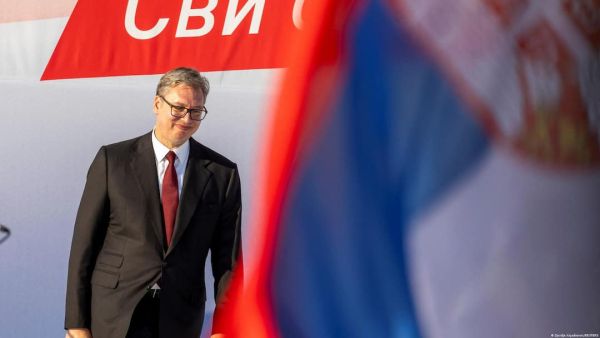
Vucic rejected the idea that turning to Russia first was a foreign-policy decision or a sign of Serbia's political alignment with Moscow.
"As far as equipment and resources are concerned, we are a European giant. The helicopters we received from Europe to fight the fires are less capable than ours and have a lower carrying capacity than our own," Vucic said during a visit to the Deliblato Sands.
Zelenskyy in Belgrade
The wildfire episode came less than two weeks after Ukrainian President Volodymyr Zelenskyy made his first official visit to Serbia.
The two presidents reaffirmed their support for each other's territorial integrity, which is particularly significant for Belgrade because Ukraine does not recognise Kosovo's independence.
But Vucic is also trying to keep the other side on board, says Vuk Vuksanovic, a political scientist and foreign-policy lecturer at King's College London.
Vuksanovic argues that Vucic's engagement with Zelenskyy must therefore be portrayed in Moscow not as a fundamental shift in Serbia's relationship with Russia, but as a response to Western pressure and Serbia's own interests.
"Vucic is now trying to make sure that neither the West nor Russia becomes an open opponent during the election campaign," said Vuksanovic.
"Zelenskyy was primarily received so that the ruling coalition could present itself to Europeans as a great friend of Ukraine. In the same way, Vucic is trying to present himself to the Trump administration as a great friend of Israel, primarily to ensure that neither the European Union nor the United States becomes an opponent of the ruling party during the election campaign," Vuksanovic added.
Vucic's room for maneuver is shrinking
The problem is that the room to maintain these relationships may be shrinking.
The deeper the confrontation between Russia and the West becomes, the harder it is for Serbia to remain close to both without facing pressure to choose.
The European Union increasingly expects candidate countries to align their foreign and security policies with those of the bloc. Serbia's refusal to impose sanctions on Russia remains one of the most visible obstacles to closer alignment.
But Moscow, too, has reasons not to take Belgrade's loyalty for granted, Vuksanovic said. He argues that Russia does not fully trust Vucic, even as Moscow continues to support his narrative about "color revolutions" — a reference to anti-government protests, in this case the student-led protests in Serbia that started last year, which Vucic and Russia portray as Western-backed attempts to destabilize the government.
For Vucic, however, the longer-term question of Serbia's ties with Russia can wait. The more immediate question is whether he will survive the election, tentatively scheduled for October, and remain in a position to preserve that delicate balance himself.
Disclaimer: This report first appeared on Deutsche Welle, and has been republished on ABP Live as part of a special arrangement. Apart from the headline, no changes have been made in the report by ABP Live.
-
Every word from Michael Carrick’s pre-match press conference before Manchester United vs Ipswich Town
-
Not a stranger, now the new enemy behind the relationship break! According to the survey

-
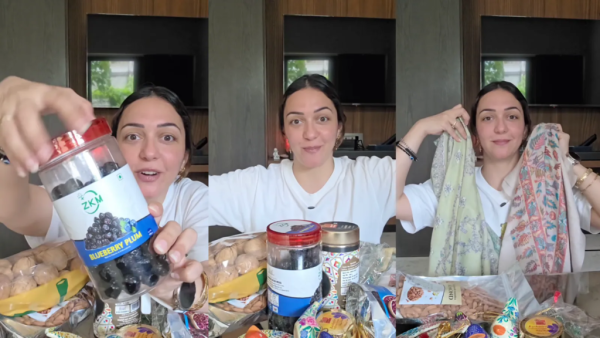
From Local Rajma To Saffron: Nauheed Cyrusi Shares Her Kashmir Food Haul
-
If you want to increase WiFi speed then first change the location of the router, keeping it at this location in the house will give better signal.

-
Sri Lanka counterattacks in Colombo Test, what will be the condition of Team India in the fourth innings?