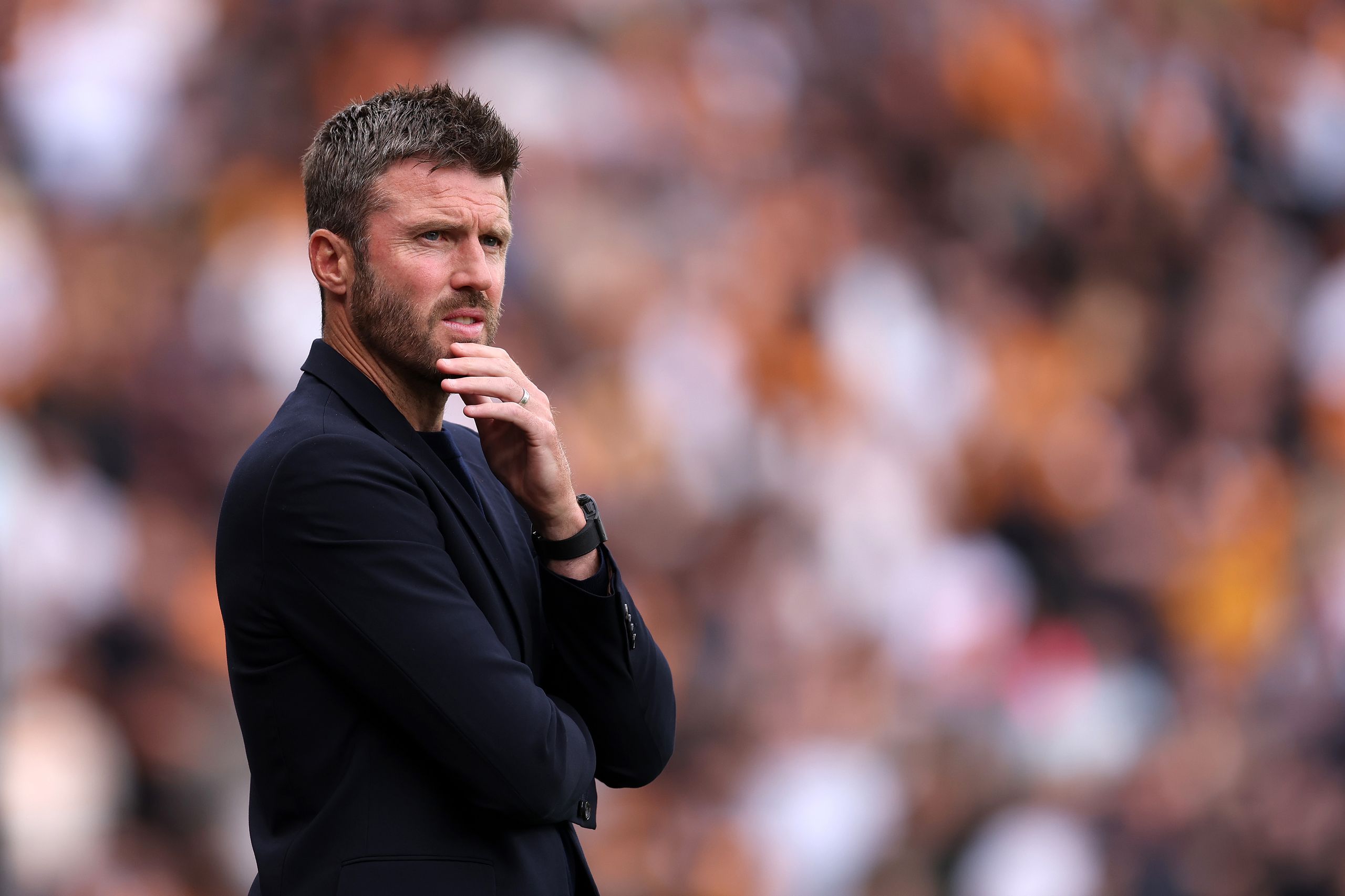
English managers have for years been a rare sight in the Premier League, and there is little indication that trend is about to change.
The Basque province of Gipuzkoa is renowned for its beautiful coastline, celebrated food spots and dramatic mountain landscape.
Yet this small part of northern Spain, home to fewer than one million people, has also become known for producing several top-class football managers, including four current Premier League head coaches: Xabi Alonso, Mikel Arteta, Unai Emery and Andoni Iraola.
That meant there were more managers from Gipuzkoa than from England on the opening weekend of the Premier League season, once again shining a light on the shortage of home-grown coaches in the top division.
The three men currently representing English management in the Premier League are Michael Carrick at Manchester United, Coventry City head coach Frank Lampard and Ipswich Town boss Gary O’Neil.
This is far from a new development. If you go back 10 years to the beginning of the 2016/17 season, there were only four English head coaches - Bournemouth’s Eddie Howe, Burnley’s Sean Dyche, Crystal Palace manager Alan Pardew and Mike Phelan at Hull City. The number was exactly the same on the opening weekend of the 2021/22 season.
Further down in the Championship, only 10 of the 24 clubs are managed by English coaches. If that sounds low, it may be surprising to note this is not a recent issue either. At the start of the 2016/17 season, only nine second-tier clubs had English head coaches, while there were 10 at the beginning of 2021/22.
This does not take into account the occasional manager born in England who represented another country as a player, but the broader point remains unchanged: the number of home-grown coaches at the highest level of the domestic game has been low for a long time.
When you examine the backgrounds of the three Englishmen now managing in the Premier League, the reasons begin to become clearer.
Lampard and O’Neil both arrived in the division with promoted clubs, although O’Neil was appointed in the summer after Kieran McKenna left Ipswich. Carrick, meanwhile, only landed the Manchester United role after serving a spell as interim head coach during the second half of last season.
Even after a generally encouraging two-and-a-half-year spell with Middlesbrough in the Championship, it is difficult to imagine Carrick would have been under serious consideration by the Old Trafford decision-makers had he not previously played for the club. In much the same way, going back to the summer of 2019, it seems unlikely Chelsea would have appointed a coach whose only managerial season had ended with Derby County reaching the Championship play-off final, had that coach not been Lampard, a club legend at Stamford Bridge.
That points to a reality in which, unless you are a famous former player, the clearest route from the second tier into the Premier League is to earn promotion with your club. But none of the current English managers in the Championship are in charge of sides considered among the favourites for promotion, which makes that path a difficult one for the present group.
You might assume that if a coach delivers strong work over a sustained period, a Premier League opportunity would eventually follow, but that is rarely how it happens. In the last five years, only three times has a Premier League club directly recruited a manager from a Championship job - Wolves moving for Rob Edwards from Middlesbrough last season, Chelsea appointing Leicester City’s Enzo Maresca in the summer of 2024, when the Italian had just guided the Foxes to the second-tier title, and Southampton hiring Luton Town boss Nathan Jones in 2022.
During that same period, 14 different English managers have been appointed by Premier League clubs, but only four of them had not previously worked as a permanent head coach in the division. They were Steven Gerrard at Aston Villa in 2021, O’Neil at Bournemouth in 2022, and this year Liam Rosenior and Carrick. Again, two of those were high-profile former players, while Rosenior arrived from Chelsea’s sister club, Strasbourg.
All of that suggests that almost every route into top-flight management has effectively narrowed or closed. So why has it become this way?
Perhaps the most obvious answer, though not the only one, is that the stakes at the top of the game are now so high that clubs are reluctant to take risks on untested coaches. With the financial rewards continuing to rise, Premier League owners are becoming ever more desperate to remain in the division, while those running Championship clubs are ever more desperate to reach it.
As a result, new faces rarely get a chance to step onto the managerial merry-go-round. Over the past five years, Keith Andrews at Brentford and O’Neil at Bournemouth were the only managers permanently appointed by Premier League clubs who were taking on their first full-time job as a number one.
A number of younger coaches have spoken publicly about how hard it is to secure an opportunity. After taking charge of Italian Serie B club Cesena in March, former England left-back Ashley Cole said he had been “discouraged by a lack of opportunities” at English clubs.
He told BBC Sport: “They like to throw the ‘you don’t have experience’ line. And I’m like, I get what you’re saying, I agree - but how am I going to get experience?
“That’s the battle you have to fight as a number two for six or seven years - you have to take a leap of faith, but a club also has to take a leap of faith.”
Cole’s former Chelsea and England team-mate John Terry voiced similar frustrations last year. “It’s really disheartening, actually,” he told BBC Sport. “I have interviewed for a few jobs myself and not got them due to my lack of experience as a number one, but having captained Chelsea and my country, I’m not sure you can do much more in terms of leading teams and people.”
Terry has a UEFA Pro Licence, which leads into another factor behind the issue. In this area, England has traditionally trailed other leading European nations. A Guardian report in 2017 said that 1,796 people in England held either a Pro Licence or an A Licence, compared to 15,089 in Spain. Then in 2021, the FA said that fewer than 500 coaches had completed their Pro Licence through England Football.
With the pool of qualified English coaches relatively small, and clubs unwilling to take chances on those who do possess the required badges, it is hardly surprising that so few end up managing in the Premier League.
Compare that with Spain, where 12 of the 20 La Liga clubs are led by Spanish managers, while the national side won Euro 2024 and the World Cup 2026 under head coach Luis de la Fuente, who had spent close to a decade in charge of the country’s age-group teams.
At the same time, despite Gareth Southgate enjoying a fair degree of success after moving up from England Under-21s to become senior head coach, the FA replaced him with Thomas Tuchel in 2024 in a bid to win the World Cup - effectively suggesting they did not believe any home-grown coach could deliver that objective.
All of it points towards a broader cultural problem that begins at the top. While Spain’s FA and domestic league are committed to creating opportunities for home-grown coaches, that is a secondary concern in England. That mindset has been embedded for so long that it is hard to see it shifting any time soon.
It is little surprise, then, that Basque managers now outnumber their English counterparts in the Premier League.
-
BCCI Reacts To 'B Team' Reports After Concerns Over Asian Games Facilities
-
Jio Platforms IPO Gets Sebi Approval, Could Become India's Biggest At Rs 37,700 Crore

-
Trump Announces US Deal With Venezuela To Control 65 Billion Barrels Of Oil Reserves
-
Weather 29 August: Alert of torrential rain in 21 states today

-
National Sports Day: The most defining moments of 2026