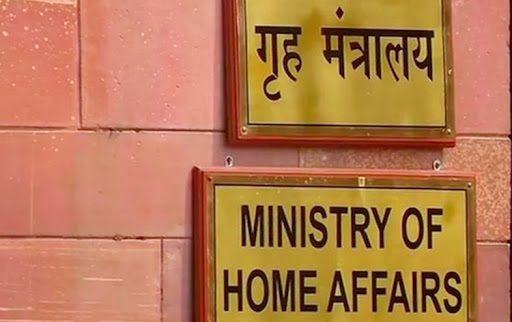
New Delhi. To make the country's borders more impenetrable, the Central Government is now going to take the help of technology. The Ministry of Home Affairs is preparing a modern command and control system for all land borders. Under this, the information received from the surveillance equipment deployed in the border areas will be directly transmitted to the central headquarters in New Delhi through the network of command centers.
According to officials, the purpose of this system is to strengthen surveillance on the border as well as ensure rapid action in real time on any potential threat. Under the new border management policy, special attention is being given to those areas where traditional fencing is difficult. The pilot project of this ambitious scheme is likely to start from the Pakistan border.
-
Read this also Government's 'damage control' amid student-farmer resentment in MP, now direct communication with youth in every district
From AI to drones, many technologies will be connected in one system
The proposed 'smart border' system will integrate artificial intelligence, sensors, cameras, drones, surveillance equipment and image processing technology.
Inputs from these different channels will be transformed into a common operational picture. This will help security agencies to identify and rapidly respond to infiltration, smuggling, drone activities and other security threats.
According to officials, several small command centers will be built on the land borders. These will be connected to the regional field headquarters and further their network will be connected to the central headquarters located in Delhi.
Border will be monitored through live feed
Live monitoring feed will play an important role in the new system. This will help the border security forces to see the situation in different areas in real time. As per need, soldiers and other resources can be immediately sent to the area where the danger is visible.
This may also reduce the reliance on physical patrolling by large numbers of troops at all times in areas where technical surveillance may prove more effective.
Special focus on drone challenge on Pakistan border
The increasing challenge of smuggling and surveillance through drones is also considered to be an important reason behind starting this project from the Pakistan border.
Efforts to send weapons, drugs and other contraband through drones across the border remain a challenge for security agencies. In such a situation, priority is being given to identification of drone activities and immediate response to them in the new technology-based surveillance system.
The 3,488 km border with China will also be in focus
Not all borders of India pass through the same geographical conditions. Somewhere there is desert and somewhere there are mountains, rivers, forests and densely populated areas. Therefore, the government is preparing such a technical system, which can be used according to the local conditions.
India's approximately 3,488 km long border with China is also one of the major focus areas of this plan. In many parts from Ladakh to Arunachal Pradesh, geographical conditions and demarcation conditions make traditional fencing difficult.
Technology will become support in flooded areas on Bangladesh border
Many parts of the Bangladesh border pass through rivers and flood affected areas. It is not practical to install permanent physical fencing everywhere in such areas.
Therefore, special emphasis is being laid on strengthening technology-based surveillance, sensors, cameras and quick response mechanisms. The government is trying to make up for the lack of technical surveillance in places where physical security infrastructure is limited.
Police of border states will also be part of the system
Regarding border security, instead of relying only on border security forces, the government is working on a plan to make border communities and local police also a part of the new system.
On July 9, for the first time, a conference of Superintendents of Police of the districts connected to the land border was organized under the chairmanship of Union Home Minister Amit Shah. It was attended by Superintendents of Police of 119 border districts of 17 states and union territories sharing borders with Pakistan, China, Nepal, Bhutan, Bangladesh and Myanmar.
According to officials, suggestions have been sought from the states regarding this proposed system by December.
Plan to be prepared in the next one and a half year
The government wants to include the role of local police and border population along with the border security forces in the proposed quadrilateral border security arrangement.
According to officials, the plan will be finalized based on the suggestions received from the states and the needs of various border areas. It is planned to be completely ready in the next one and a half year.
After the implementation of this system, the government aims to make border monitoring more technology-based, integrated and real-time, so that information about any suspicious activity can quickly reach the central system based in Delhi.
-
7 transfers that were called off after fan pressure: Arnautovic, Ronaldo, Diouf and more

-
cool tourist places around gujarat

-
Inside John Galliano’s decision to pull out of Met Gala — and how it could affect Anna Wintour’s legacy

-
Vietnamese engineer becomes first foreign member of Japanese volunteer fire brigade

-
Hamza Ali Abbasi urges society to support women seeking remarriage