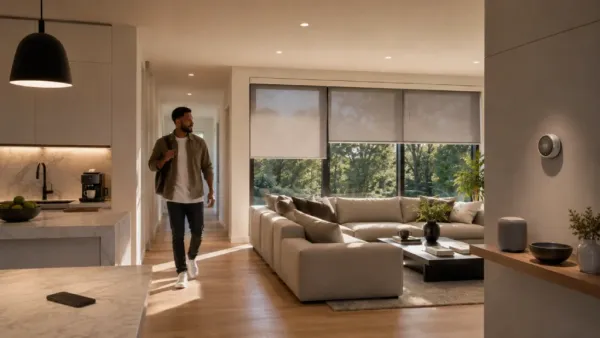
As modern electronics evolve to seamlessly weave into our physical environments, ambient computing technology is beginning to move away from having consumers perform multiple actions in order to use their products. Hardware suppliers are actively trying to build infrastructure that runs itself without the consumer having to pay constant attention to the screen.
The suppliers of technology, however, are now beginning to move away from having consumers perform multiple actions in order to use their products. They are trying to build products that run themselves without the consumer having to pay any attention to them. This is an approach called “ambient computing”.
Ambient computing refers to technology that exists within our surroundings or the surrounding environment. The various technologies will communicate with each other so that they can evaluate their surroundings and take action automatically based on the context.
Oftentimes, the consumer may not even be aware that the technology is working. There are many people who believe this will work to completely change how we interact with technology in our daily lives.
Why Tech Companies Invest in Ambient Computing Technology
Ambient computing consists of many devices connected and working in conjunction to provide an integrated user experience. These devices employ a variety of technologies, including sensors, connectivity through the internet, and various forms of software, to allow for real-time recognition of what is happening in their environment.
Rather than wait for input from an end-user, the devices will actively respond to events as they occur. Examples of events and subsequent device responses include turning on the lights in an area when an individual enters the area.
Adjusting the temperature of a room based on temperature changes occurring outside. Providing reminders to an individual based on specific times of day, such as the commute to work.
A key purpose of ambient computing is to create a sense of natural and uncomplicated technology within a person’s environment. When all elements of ambient computing are functioning correctly, the end-user will no longer be aware of the device. They simply notice that things are running smoothly.
Why Tech Companies Are Interested in It
In the past 10 years, cellphones have taken over as the main source of digital life for many people. As people use mobile devices for communication, shopping, business, entertainment, and other activities, there is plenty of opportunity for these devices to become a distraction because of the many notifications they produce. However, there are also many ways that they can be helpful and make life easier.
People check their cell phones numerous times throughout the day without even realizing it. For example, each time you send someone a text message, you may have to go through different menus in a variety of applications before you can actually send the text, which can get very frustrating and take up a lot of time.
With Ambient Computing, technology learns your unique patterns and will therefore execute the tasks that you need to do on your device without having to manually go into specific applications to perform them. This reduces the need for constant screen time.
For technology companies, this also opens a new way of designing products. Instead of building devices that demand attention, they can build systems that quietly assist users.
Smart Homes Show How It Works
Ambient computing is best illustrated now by smart homes. You may have devices in your home that are connected and can interact with you. Some examples include smart appliances, connected speakers, and smart heat/cooling and lighting systems.
Although the current definition of ambient computing includes controlling and communicating with those devices using voice or mobile apps, that is not the big picture.
An instance of the operation of smart homes is when you leave work, and as you approach your home, you receive a message on your mobile device indicating that your home is either there or close to it, and the lights in the hallway will automatically illuminate upon your entering.
To make your residence as comfortable as possible, you can also program your thermostat to adjust to your desired temperature before you wake up or return home in the evening.
When you get home, the smart home audio system may automatically play one of your favorite songs from a playlist without you needing to press any buttons or open any applications on your phone. The system simply understood your routine. This is how ambient computing blends technology into daily life.
Offices Are Starting to Use It Too
Similar concepts have begun to appear in the workplace. Meeting rooms now self-prepare before meetings by automatically activating the camera and microphones and setting the presentation screen up ready to meet.

No longer do employees need to connect cables or adjust equipment to be ready for their meeting.
Some buildings also have sensor technology that automatically turns off the lights and services the air systems when no one is in the room and then re-adjusts the system again once someone enters.
All of these new systems eliminate many of the small but very common problems that people face during their workday. Employees can continue to concentrate on their work and don’t have to concentrate on the technology being used to support them.
Healthcare May Benefit the Most
Healthcare is another area where ambient computing can help in many ways. Hospitals already use machines to monitor patients. However, the latest technology is making monitoring systems far more ‘bio-friendly.’
Sensors placed in a hospital room are able to provide real-time tracking of the patient’s movements, breathing patterns, and activity levels within the room. If an abnormality is detected, an alert is instantly sent to the medical staff.
A similar type of system can monitor older adults living alone. It can detect when an older adult has fallen or has been inactive for an unusually long period.
If there is an inconsistency, family and caregivers will receive an immediate notification. The environment itself is becoming an integral part of the overall healthcare system.
Artificial Intelligence Plays an Important Role
AI has a role in supporting Ambient Computing, and there is no way to remove AI from that support role. By reading and understanding the frequency and dates of repeated behavior, an AI will learn to connect the often-repeated behaviors of a user and formulate a likely outcome based on the results obtained from connecting the user’s behavior over time.
For example, if the user is known to use/turn on their coffee pot at the same time every morning, the AI will have likely learned over time that the coffee maker will probably turn on each morning sometime before the user wakes up.
As the user’s devices gather enough habits like this to actually assist the user without the user needing to assist the device, it will likely cause the user to develop a belief that the device is there to assist the user and/or does not require assistance to accomplish a goal.
Privacy Still Needs Attention
Enhancing and simplifying daily tasks is one benefit of using ambient technology; however, there are critical privacy concerns associated with ambient technologies, too.
Data collection through ambient technologies is often based on identifying patterns and behaviors of individuals by using various types of sensors (for example, global positioning satellites (GPS) or other forms of networked devices (e.g., Smart Home Devices) in order to define behavioral pattern models.
Some examples of data collected by ambient technologies include location tracking, voice commands, and tracking the movements of individuals within their homes. Not securing this type of personal identity data represents a serious potential for privacy issues surrounding the use of ambient technologies.
Many experts believe that companies need to create secure, comprehensive, and extensive information security technologies for ambient technologies, including providing consumers the option to determine their own level of data sharing as soon as the ambient technologies come onto the market.

Adoption of ambient technologies will depend upon the amount of trust that individuals have in the ambient technologies.
A Quiet Shift in the Way We Use Technology
Ambient computing does not mean technology disappears completely. Devices will still be there, but they will require less direct interaction. Homes may adjust automatically. Offices may prepare workspaces on their own. Healthcare systems may quietly watch over patients.
The basic premise is straightforward: technology must assist and not require continuous focus from those users.
If that concept takes hold in society, our daily technological interactions could become seamlessly integrated into our surroundings, rather than remaining a separate utility operated by a user.
-
PM Modi receives warm reception from Indian diaspora in Uzbekistan

-
Flash floods in Nepal: 275 Indians missing

-
Prepare for draught-like situation in Rajasthan with timely measures amid weak rainfall: Gehlot

-
Judiciary proactively responded to emerging fraudulent schemes like digital arrest: CJI

-
Gas pipeline leak prompts traffic diversion on Samruddhi Expressway in Chhatrapati Sambhajinagar