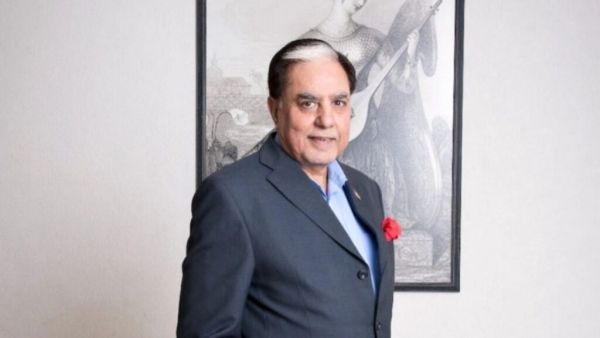
Essel Group-Zee (Essel/Zee) Group Chairman Subhash Chandra's 99.97% haircut of Rs 22,006 crore i.e. huge reduction in debt is in the news. Rs 22,006 crore was not Subhash Chandra's own loan. In fact, some companies belonging to the Essel/Zee group had borrowed money from banks, and Chandra had given guarantees for these loans, that is, if the companies were unable to repay the money, the responsibility would have fallen on Subhash Chandra, but these things were kept as if the banks had personally lent ₹22,006 crore to Subhash Chandra and now only ₹6.25 crore has been recovered.
Actually the matter is not so simple. The figure of Rs 22,006 crore reflects claims made against Chandra when he gave personal guarantees for several companies linked to Essel/Zee. He had not personally borrowed ₹22,000 crore. Additionally, only about Rs 2,574 crore is linked to the guarantee given at the time of the original loan.
What is the whole matter?
Before understanding this entire controversy, you have to understand the Insolvency and Bankruptcy Code (IBC) made in 2016, under which companies as well as their personal guarantors also come under the ambit of bankruptcy proceedings. Under this, in 2022, Indiabulls Housing Finance (the loan granting company) filed a case in the National Company Law Tribunal NCLT against Subhash Chandra, Chairman of Essel/Zee Group, because he had given personal guarantee for a loan of ₹ 170 crore given to Vivek Infracon and that loan defaulted.
This petition was accepted in 2024. In which a total of ₹ 22,006.57 crore claims were registered against Subhash Chandra. However, this was not his personal loan but the sum of the loan guarantees of Essel/G-linked companies. On 25 August 2026, NCLT approved the repayment plan, under which only ₹6.25 crore would be repaid from Chandra's personal assets. The companies which had originally borrowed the money are still debtors and there are plans to separately recover about ₹1,494 crore from them.
When, what happened?
- 2016: Insolvency and Bankruptcy Code (IBC) was passed, under which companies along with their personal guarantors came under the ambit of bankruptcy proceedings.
- 2022: Indiabulls Housing Finance initiates NCLT proceedings against Subhash Chandra as he had personally guaranteed a ₹170 crore loan given to Vivek Infracon which defaulted.
- 2024: Petition accepted in NCLT. The claims filed against Chandra totaled ₹22,006.57 crore, which were not his personal loans but the sum of guarantees given for loans of various Essel/G-linked companies.
- August 25, 2026: NCLT approves repayment plan, under which ₹6.25 crore will be repaid from Chandra's personal assets. The plan was supported by most of the banks with 80.81% voting share, while several banks like LIC Housing Finance, HDFC Bank, Axis Bank, Canara Bank, RBL Bank and Union Bank were opposed.
- Also: The plan is to separately recover about ₹1,494 crore from the original debtor companies, and some dissenting banks are considering challenging the decision.
Who are included?
In this case, Subhash Chandra is involved as a personal guarantor, who had guaranteed the loan of Vivek Infracon. Indiabulls is the original lender, which initiated the case against Chandra on the basis of this guarantee. NCLT ruled in this entire matter, the repayment plan was supported by creditors with 80.81% voting share, while banks like LIC Housing Finance, HDFC Bank, Axis Bank, Canara Bank, RBL Bank and Union Bank opposed it.
Where did this case go?
This entire matter went to NCLT (National Company Law Tribunal), which is the court that hears bankruptcy cases in India. The proceedings were registered as personal guarantor insolvency proceedings under the Insolvency and Bankruptcy Code (IBC). The case pertains to the guarantee of loans given to companies (such as Vivek Infracon) linked to Essel Chairman Subhash Chandra by Indiabulls Housing Finance.
Why will Subhash Chandra pay only Rs 6.25 crore?
The ₹22,006 crore was not his personal loan, it was the total amount of his personal guarantee which was borrowed by several Essel/G-linked companies. Of this, only ₹2,574 crore was to the guarantees given at the time of the original loan, the rest were guarantees added later as additional security. Therefore, the court decided that Subhash Chandra should pay ₹6.25 crore only on account of his personal assets, while the original debtor companies are separately liable to pay ₹1,494 crore.
This was objected to by many banks as Subhash Chandra's current declared net worth (₹31.79 crore) was much lower than the earlier figures (₹45,888 crore in 2017 and ₹40,562 crore in 2018). Because of this questions were raised about his real assets.
How was it approved, how much money had to be paid?
Judicial member Nilesh Sharma in NCLT approved the plan under Section 114 of IBC based on the investigation by the Resolution Professional (RP). The plan was supported by creditors with 80.81% voting share, while LIC Housing Finance, HDFC Bank, Axis Bank, Canara Bank, RBL Bank and Union Bank were opposed. The total claims against Subhash Chandra were ₹22,006.57 crore. Of this, the guarantee given at the time of the original loan was ₹2,574 crore, the amount payable from his personal assets was ₹6.25 crore and an additional ₹25 lakh for the insolvency proceedings. The amount to be repaid (separately) from the main borrower companies is approximately ₹1,494 crore.
What did Subhash Chandra say?
Subhash Chandra himself has said that the companies for which he had given guarantees had taken total loans of about ₹45,000 crore till January 2019, of which about ₹43,000 crore has already been repaid.
Now what next?
The matter is likely to be further challenged by HDFC Bank in NCLAT as it expects to get only 3.2% of its claim, while Indiabulls Housing Finance has said it will not challenge as it has already recovered more than its principal amount from the sale of pledged shares.
With this, the matter will now go back to the parent bench of NCLT for formal orders. Subhash Chandra has sought an independent audit of his group's debt and the process of recovery of ₹1,494 crore from the main borrower companies will continue separately.
-
Rain damages Ganga Expressway in Unnao; Akhilesh takes dig at UP govt

-
DUSU elections: NSUI accuses ABVP of tearing its signature campaign posters

-
Confirmed: Barcelona sign Gabriel Jesus from Arsenal

-
A simple Dominik Szoboszlai switch could help Liverpool fix two overlooked problem positions without spending anything
-
Can anxiety and stress become the cause of hair fall? Dermatologist's opinion