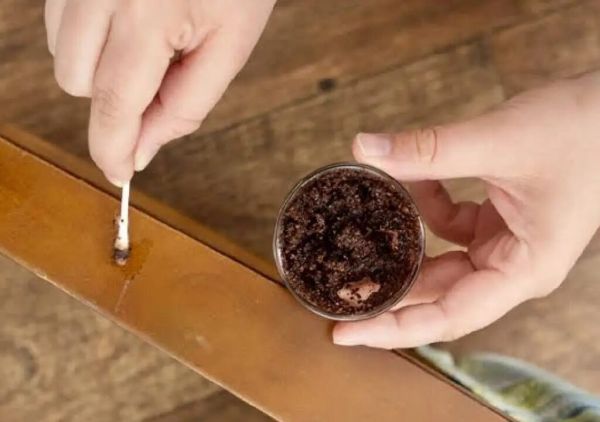
The used coffee grounds left behind after brewing a cup of coffee may have a surprisingly useful second life. Instead of going straight into the bin, they can be used to help disguise small scratches on wooden furniture.
An educational lesson from the West Virginia University Extension Service suggests that a paste made from damp used coffee grounds can help improve the appearance of minor scratches.
Coffee can make scratches less visible
Scratches often expose the lighter, unfinished wood beneath the surface coating, making the damage stand out.
Coffee contains natural pigments that can darken the exposed wood. When damp grounds are gently rubbed into a scratch, some of their colour can transfer to the bare wood, helping it blend with the surrounding surface.
The method is particularly suited to medium and darker wood tones, where the warm brown colour of coffee can provide a closer match.
The grounds also help buff the surface
The coffee grounds do more than add colour. Their slightly gritty texture can provide gentle buffing when used carefully.
The aim is not to aggressively scrub the furniture but to soften the appearance of the scratch while allowing the coffee pigments to darken the exposed area.
How to use coffee grounds on furniture
The process is simple. Keep the used grounds slightly damp and gritty. If they have dried, add a few drops of water to make a soft paste.
Apply a small amount to the scratch using a soft cloth or your finger. Rub gently in the direction of the wood grain and leave it for a few minutes.
Wipe away the excess with a dry cloth and check the result. If the area needs to be darker, the process can be repeated.
Test it before treating the scratch
The technique is intended for minor surface scratches, not deep gouges, chips or major furniture damage.
It may also be unsuitable for very light-coloured wood because the coffee could leave a darker mark. Testing the mixture on a hidden area first is therefore advisable.
Research cited in the source has examined the staining properties of tea and coffee residues on fabric, while a separate review has discussed the coarse texture of coffee grounds in exfoliating applications. These studies concern other materials and uses, but they provide context for the natural pigments and texture involved.
For a small scratch on a darker wooden table or dresser, however, those leftover coffee grounds could offer a simple way to give them a second use instead of throwing them away.
-
Soon, two new international-standard golf courses in Telangana

-
Two peacekeepers killed as AU condemns South Sudan attack

-
25 from Telangana missing in Nepal floods as count rises

-
H1N1 Cases Surge In India: Delhi, Karnataka, Maharashtra Among States Seeing Rise In Swine Flu

-
Taylor Swift donates $50,000 to injured Rhode Island mother