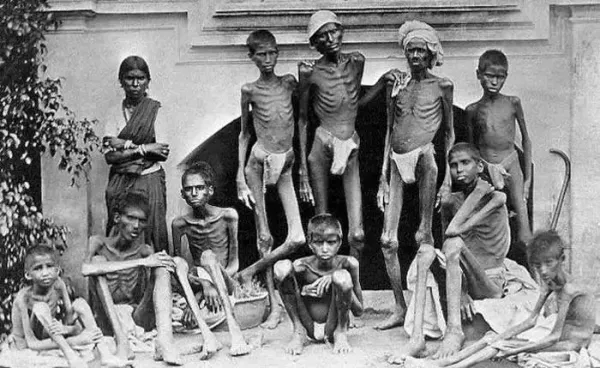
The Chhappaniya famine was one of the worst recorded famines in the history of Rajasthan and Western India. It is called in English as The Great Indian Famine of 1899–1900. In Rajasthan it was called 'Chhappaniya famine' because it fell around Vikram Samvat 1956. This famine badly affected life in Gujarat, Central India and many parts of the country including Rajasthan.
There was no rain, the crops dried up
During 1899, there was no rain in large parts of Rajasthan due to weak monsoon. The crops sown in the fields dried up and wells, ponds and other water sources started emptying rapidly. The rural economy was mainly dependent on agriculture and animal husbandry, so the lack of rain directly affected people's livelihood. As grain production fell, food prices began to rise. Poor families faced food crisis. In many areas, people had to leave their villages and migrate to other areas.
Heavy impact on livestock also
The biggest impact of the Chhappaniya famine was not only on humans but also on livestock. Due to lack of fodder and water, a large number of cattle became weak and started dying. This was a double whammy for families whose livelihood depended on farming as well as animal husbandry. In many parts of Rajasthan, fodder was not available for animals. People started moving with their animals towards those areas where water and grass were expected to be available.
Hunger and disease increased the difficulty
The risk of diseases also increased with food shortages during famines. The condition of weak and malnourished people became serious. Lack of clean water and poor health facilities further deepened the crisis. At that time, means of transportation and communication were extremely limited compared to today. In such a situation, providing relief to the affected areas was also a big challenge.
Relief work during British rule
During this famine of 1899–1900, the British government and local princely states started relief operations. Relief camps and labour-based relief operations were run at many places. Efforts were made to provide food or money to the people by making them work as laborers in public works. However, the magnitude of the famine was so great that the relief system proved inadequate in comparison to the needs in many areas. A large number of people left their villages and reached other areas in search of employment and food.
Still alive in the collective memory of Rajasthan
The Chhappaniya famine was not just a natural disaster, but it left a deep impact on the social and economic life of Rajasthan. Stories of this period are still heard from the elders in the rural society of Rajasthan. This famine also showed how devastating continuous drought can be for a society dependent on water, grains and livestock. In the history of Rajasthan, Chhappaniya famine is still remembered as a great historical example of hunger, migration, destruction of livestock and conflict.
Share this story
-
Indian teen in UAE turns AI ideas into award-winning projects

-
Passenger Ferry Carrying 267 Capsizes Off Northern Cyprus; 100 Evacuated

-
Japan unveils 220-meter bridge with views of its largest lake
-
Inside Rajkummar Rao’s Rs 44 Crore Mumbai Home: Spiral Staircase, Buddha Statue, And A Puja Area

-
Freshly dried lemons brought from the market? Bajimat will be easy trick