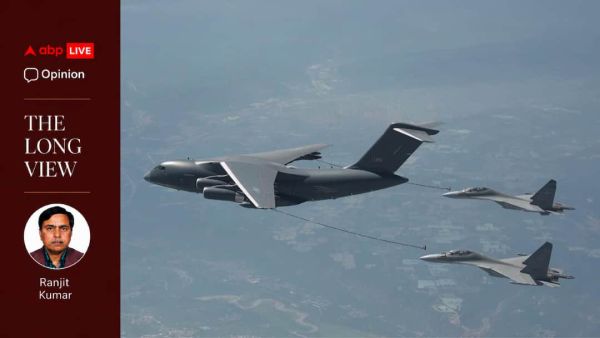
The Chinese Air Force, boasting a significant advantage in both numerical strength and firepower, is actively strategizing to counter the challenges posed by the Indian Air Force's (IAF) limited fleet of 36 Rafale fighter jets. In light of this, the People's Liberation Army (PLA) Air Force has engaged in a collaborative air exercise with the Egyptian Air Force, which operates two squadrons of French-made Rafale omni-role fighters. This joint exercise, characterized by extensive one-on-one combat scenarios, has provided the Chinese forces with valuable insights into the operational strengths and weaknesses of the Rafale aircraft. Such knowledge is crucial for the PLA as it prepares for any potential future engagements with the IAF, particularly in dogfighting situations.
IAF Faces Challenges In Expanding Fighter Fleet
Within Indian strategic and military aviation circles, there is a growing acceptance of the reality that the IAF will face challenges in expanding its fighter fleet in near term. The anticipated enhancement of Rafale squadrons is unlikely to materialize before the early part of the next decade, leaving the IAF reliant on its current operational fleet of 36 Rafales for the foreseeable future. This situation necessitates a strategic focus on effectively utilizing these two squadrons to counter the formidable Chinese Air Force, which fields advanced aircraft such as the 4.5 Generation J-16 and fifth generation J-20, significantly outnumbering the IAF's capabilities. The Indian Air Force's existing legacy fleet, which includes 270 Sukhoi-30 MKIs, three squadrons of Mirage-2000s, three squadrons of MiG-29s, and two squadrons of Light Combat Aircraft (LCA), is under pressure to perform against a backdrop of increasing Chinese aerial dominance.
China Uses Egyptian Rafales To Study Their Capabilities
To further understand the operational capabilities of the Rafale, China has leveraged its diplomatic influence to conduct the "Eagles of Civilization 2026" joint training exercise with the Egyptian Air Force. This initiative underscores China's commitment to enhancing its aerial combat proficiency by studying the Rafale's performance in a controlled environment. The exercise, which emphasizes one-on-one aerial combat drills, serves as a critical platform for the PLA to analyze the Rafale's strengths and vulnerabilities. As the Indian Air Force continues to await the arrival of additional engines for the LCA Mk1A, which is still in the production phase, the strategic implications of this joint exercise could have lasting effects on the balance of air power in the region.
'Eagles Of Civilization 2026' Begins With Air Combat Drills
On August 23, the People's Liberation Army Air Force (PLAAF) initiated the "Eagles of Civilization 2026" joint training exercise with Egypt, marking a significant milestone as it was the first instance of Rafale jets being involved in such collaborative maneuvers, with a Chinese fighter. The exercise commenced with a focus on one-on-one aerial combat, where pilots from both the Chinese and Egyptian air forces engaged in rigorous aerial maneuvers designed to simulate real combat conditions. According to official reports from the PLAAF, the training involved a series of coordinated take-offs, with pilots executing complex tactics to test their skills and the capabilities of their respective aircraft.
Pilots Exchange Aircraft Details Before Flight Training
Prior to the commencement of flight training, extensive briefings were conducted by pilots from both nations, detailing the unique characteristics of their aircraft. These discussions were crucial in establishing a common understanding of the training scenarios, ensuring clarity on flight safety protocols, airspace management, take-off and landing procedures, and emergency response strategies. The "Eagles of Civilization 2026" exercise represents the second collaborative training event between the Chinese and Egyptian air forces, showcasing a robust commitment to enhancing operational readiness. The PLAAF's deployment included a diverse array of aircraft, such as fighter jets, tanker planes, combat support units, and helicopters, reflecting a comprehensive approach to joint military training and cooperation.
J-16 Production Numbers Raise Indian Concerns
A recent report from a Chinese daily concerning the joint air exercise between China and Egypt has brought to light significant developments in China's military aviation capabilities. The Shenyang Aviation Company has reportedly manufactured over 350 units of the J-16 heavy multirole fighter, a figure that raises concerns among Indian defense strategists. In addition, a military website previously disclosed that China has deployed more than 500 J-20 fifth-generation aircraft. The substantial production numbers of the J-16, particularly in the context of regional security dynamics, are likely to be alarming for those tasked with safeguarding Indian airspace.
J-16 Fleet Estimated To Have Surpassed 350
Two years ago, the Russian Military Watch Magazine estimated that the J-16 fleet had surpassed 350 units, a conservative figure based on new imagery from the 125th Air Brigade. This imagery confirmed that aircraft from the 13th production batch were being delivered to frontline units, with each batch consisting of approximately 24 to 30 fighters. Such production rates position the J-16 as the most extensively commissioned heavyweight fighter class by a single air force globally since the beginning of the 21st century.
PLA Releases Video Of J-16s Flying Against Rafales
In a rare move, the People's Liberation Army Air Force (PLA AF) released a video showcasing Chinese pilots operating their J-16s in exercises against the Egyptian Air Force's Rafale fighters. The footage, reportedly captured by the rear-seat pilot of a J-16, depicts the two aircraft engaging in maneuvers at a relatively close range. The J-16, is recognized as the PLA's primary combat aircraft, distinguished by its ability to carry more firepower compared to medium-weight models like the J-10 series. This capability underscores the J-16's role as a formidable asset in China's aerial arsenal, further enhancing its strategic position in the region. The substantial production figures of the J-16 are likely to raise concerns among those responsible for safeguarding Indian airspace.
Chinese J-16s And J-20s Deployed In Tibet
"Eagles of Civilization 2026," marked a significant milestone in the collaboration between the Chinese and Egyptian air forces, showcasing a series of meticulously planned maneuvers under conditions that closely mimic real combat scenarios. As fighter jets from both nations took to the skies in a carefully orchestrated sequence, the pilots engaged in rigorous aerial tactics that tested their skills and coordination. Prior to the commencement of these flight operations, the pilots conducted comprehensive briefings to familiarize themselves with the unique characteristics of their respective aircraft. This preparatory phase included detailed discussions on the various training scenarios, emphasizing the importance of flight safety, airspace management, takeoff and landing protocols, and emergency response strategies, as highlighted by the PLA Air Force.
The deployment of J-16 fighters from air bases in Tibet, alongside advanced fifth-generation J-20s, underscores China's commitment to enhancing its aerial capabilities in the region. This strategic positioning is particularly concerning for India, as it faces a formidable challenge from these advanced aircraft, which are poised to counter the Indian Rafale fighters and other combat jets. The disparity in air power creates a significant imbalance, leaving India with a perceived disadvantage in combat readiness and capabilities. Furthermore, the ongoing activities within India's air headquarters and the Ministry of Defence have not succeeded in instilling a sense of confidence among its air warriors, who are increasingly aware of the challenges posed by the superior Chinese air force. This situation raises critical questions about India's preparedness to engage effectively in aerial confrontations with its rival.
-
The Last Dance Ends: Lionel Messi confirms retirement from international football after Argentina’s World Cup final defeat

-
Who Is Sukesh Chandrasekhar? All About Conman Sentenced To 8 Years And His Bollywood Connections

-
Why Is HOOD Stock Up 3% Overnight?

-
Startup Founder Questions Why Sleeping Till Late Is Seen As ‘Character Flaw’, Internet Divided

-
Tesla Stock Crushes Rivian, Chinese EV Rivals In August — Wall Street Sees More Upside Before Cybercab Event