India wants Bangladesh’s new Prime Minister Tarique Rahman in Delhi. It has made little secret of it. From a formal invitation soon after Rahman’s Government took office to unusually warm assurances that he would receive the “highest honour” and a “memorable welcome”, New Delhi has gone considerably further than diplomatic niceties would normally require. India has also kept electricity and fuel supplies flowing, resumed bilateral mechanisms and facilitated medical visas-practical overtures suggesting Delhi is serious about repairing a relationship badly frayed since Sheikh Hasina’s dramatic fall in August 2024.
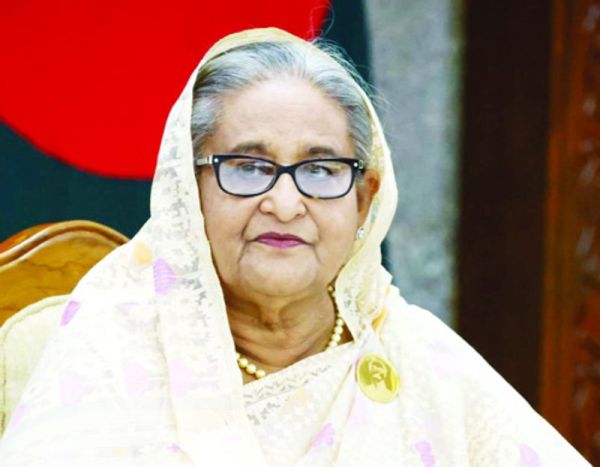
Yet one issue remains unresolved i.e., Sheikh Hasina herself. Dhaka wants her extradition. India says the request is being considered. For Bangladesh, this is a defining test of whether India genuinely accepts the post-Hasina political order. For Delhi, however, the matter is more complicated than choosing between an old friend and a new Government.
The temptation in Bangladesh is to see Hasina as the price India must pay for a reset. That calculation may prove mistaken. India can, and should, reassess its relationship with Bangladesh after Hasina. But expecting Delhi simply to “throw Hasina under the bus” ignores the history of the relationship, India’s own security considerations and the sensitivities surrounding the manner in which a former Prime Minister was removed from power and subsequently sought refuge in India.
Hasina is not merely another political exile in Delhi. For fifteen years she was India’s most important political partner in Dhaka. Her government worked closely with India on counter-insurgency, connectivity and security, while allowing New Delhi greater access to India’s north-eastern states through Bangladeshi territory. Road, rail and port links expanded. Security cooperation deepened. For India, this was not simply a personal relationship with Hasina; it was part of a strategic architecture constructed over years. That architecture cannot be dismantled overnight because the political weather in Dhaka has changed.
There is also a more uncomfortable reality. India has its own institutional and public sensitivities about how a former head of government should be treated after seeking refuge on Indian soil. Whatever one thinks of Hasina’s record, and there are legitimate questions about democratic backsliding, human rights and political repression during her rule, Delhi cannot act as though these considerations do not exist. Nor can India ignore the precedent created by surrendering a former leader under circumstances that remain politically contested.
None of this means India should provide Hasina with an indefinite political platform from which to intervene in Bangladeshi politics. Her public interventions from India have complicated Delhi’s efforts to rebuild ties with Dhaka. Her recent virtual address attacking the current Bangladeshi government generated outrage in Bangladesh and placed Rahman in an awkward political position. India needs to recognise that sensitivity.
But Bangladesh, too, must recognise the difference between asking India to manage the consequences of Hasina’s presence and demanding that India abandon every consideration of its own. A reset cannot begin with an ultimatum. If Hasina is temporarily set aside, Delhi has already demonstrated considerable flexibility towards Bangladesh’s new government. India has reached out to Rahman, engaged the new administration and signalled that his visit to Delhi would receive unusual ceremony. It has maintained essential supplies and reopened bilateral channels despite the political turbulence of the past two years. These are not empty gestures.
Bangladesh can discount them because Delhi has not delivered Hasina. But doing so risks confusing one unresolved dispute with the entirety of the bilateral relationship. Dhaka’s emerging foreign-policy calculations also deserve scrutiny. Since Hasina’s departure, Bangladesh has sought to rebuild relations with Pakistan and expand defence and strategic cooperation with countries beyond India. There is nothing inherently wrong with diversification. No sovereign country should want its foreign policy dependent on a single neighbour. But diversification is not substitution.
Pakistan cannot replace India’s geography. China cannot replace India’s immediate neighbourhood. Neither can erase the realities of a 4,096-kilometre border, deep linguistic and cultural links, economic interdependence and Bangladesh’s geographic importance to India’s access to its north-east. Bangladesh’s relationship with India is therefore structurally different from its relationship with Pakistan or China.
Dhaka can buy more weapons from one country, attract infrastructure investment from another or deepen diplomatic engagement with a third. None changes the map. And geography, particularly in South Asia, is often the most consequential foreign-policy fact of all. There is a danger in assuming that a strategic pivot away from India would automatically produce greater Bangladeshi leverage over Delhi. It may instead produce the opposite.
Bangladesh needs access to the Indian market. India remains important for Bangladesh’s energy security, transit, trade and connectivity. The north-eastern Indian states offer Bangladesh enormous strategic and economic opportunities, but those opportunities depend fundamentally on a functional relationship with Delhi. The same logic works in reverse. India needs Bangladesh. But mutual dependence does not mean both sides have identical leverage.
This is why Bangladesh would be unwise to interpret India’s eagerness for Rahman’s visit as weakness. Delhi is reaching out because it has substantial interests in Bangladesh. It is also reaching out because it understands that a stable and cooperative Bangladesh is in India’s interests. That is strategic realism, not capitulation. Dhaka should respond in kind.
There is a legitimate Bangladeshi argument that India must acknowledge the political transformation of 2024. The old Hasina-centric relationship cannot simply be restored with a different occupant of the prime minister’s office. Bangladesh’s transition has changed public attitudes towards India, and Delhi needs to understand why its previous embrace of Hasina generated resentment among sections of Bangladeshi society. But making Hasina’s extradition the gateway through which every other aspect of the relationship must pass would be counterproductive.
Bangladesh should separate the Hasina question from the broader India relationship. The two governments can disagree profoundly over her future while simultaneously rebuilding trade, connectivity, energy cooperation, border management, water negotiations and people-to-people ties. They can establish mechanisms to discuss the extradition request without allowing it to consume the entire relationship. That would be diplomacy.
The alternative is to turn a difficult bilateral issue into a test of national pride-and then discover that pride does not generate electricity, open markets, secure borders or create transit corridors. There is a larger lesson for both countries. India cannot assume that the strategic goodwill accumulated during the Hasina years will automatically survive her departure. Bangladesh is no longer willing to accept an India policy defined primarily through one political leader. Delhi must engage Bangladesh as a country, not merely as an extension of a friendly government.
But Bangladesh should equally resist the idea that estrangement from India can be costlessly repaired through deeper ties with Pakistan or China. It cannot. China can be an important economic partner. Pakistan can be a useful diplomatic and defence partner. Saudi Arabia, Turkey and other countries can expand Bangladesh’s strategic options. But none offers the combination of proximity, connectivity, trade, security interdependence and geographic indispensability that India does.
The objective of Bangladeshi foreign policy should therefore not be to replace India. It should be to maximise Bangladesh’s interests while maintaining workable relations with India. That requires leverage, but it also requires proportion. India, for its part, should understand that protecting its relationship with Bangladesh does not require protecting every aspect of its relationship with Hasina. Delhi must distinguish between humanitarian considerations, legal processes and political activity.
A durable reset will not come from either side pretending the Hasina question does not matter. Nor will it come from making that question the price of every other form of cooperation. It will come when both governments recognise that they can disagree over one deeply consequential issue while rebuilding a relationship that geography, economics and mutual security make too important to abandon.
-
Arsenal’s major transfer setback leaves Mikel Arteta with only one route

-
Southampton keen to reveal Tonda Eckert’s attacking side in their Championship promotion push

-
Method of making fertilizer from banana peel

-
My wild weekend at a 24-hour sex ‘camp’

-
Is the egg diet a safe way to lose weight quickly?