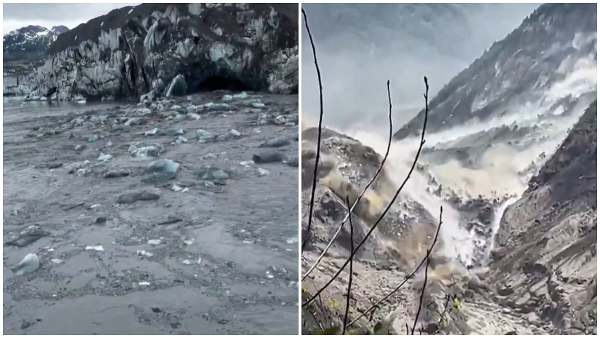
A preliminary study by Nepalese scientists has found that the devastating Bhotekoshi-Trishuli floods were triggered by a massive ice-rock avalanche from the Langtang-Lirung area, rather than heavy rainfall. The avalanche travelled over 22 km at speeds of up to 167 kmph, causing widespread destruction, killing over 900 people and damaging hydropower projects.
The devastating floods that swept through Nepal's Bhotekoshi-Trishuli corridor were triggered by a massive ice-rock avalanche in the high Himalayas rather than conventional rainfall, according to a preliminary report by Nepalese scientists.
The report, commissioned by the Nepal Environment Society (NES), was released on Sunday. The death toll from the flash floods rose to 903 on Monday as bodies continued to be recovered, authorities said.
Avalanche Originated In Langtang-Lirung Area
The study found that a massive volume of ice, rock and debris fell from an elevation of about 5,200 metres in the Langtang-Lirung area of Rasuwa and entered the Lhende River. The surge travelled downstream through the Bhotekoshi and into the Trishuli, generating a powerful debris-laden flood, My Republica reported.
-
India’s economy shows resilience with 7.8% GDP growth in Q1 FY27
-
Air India flight makes emergency landing in Ahmedabad after bomb scare
-
Sellas CEO Stergiou Says ‘Rigorous, Unblinded’ Data From Pivotal AML Trial Will ‘Speak For Itself’ As REGAL Catalyst Nears

-
Tom Lee Sees ‘Very Strong’ September Market Rally If Fed Holds Rates – Says Bitcoin’s ‘First Leg Up’ Has Begun

-
Kozhikode Bus: Crew Faces Action After Woman Left Stranded At Midnight!