There have been several advancements in engine design over the years that have allowed for greater power delivery. Turbocharging transforms engine performance, and isn’t actually a new technology, but one that’s been around for over a century. Essentially, a turbocharger consists of multiple connected turbines. One turbine is spun up using exhaust gas and this allows the other connected turbine to pull in air. This air is compressed and pushed into the engine, creating a temporary boost of power (more air burns more fuel).
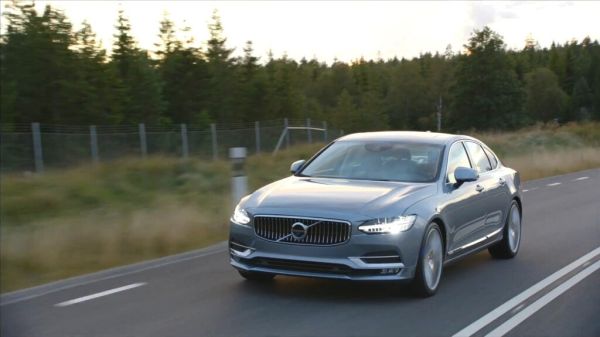
Traditionally, one of the disadvantages of a turbocharged engine is something called lag. Basically, when a driver presses down on the accelerator, there’s a delay before the engine generates a boost in output. This happens because it takes a moment for the turbocharger to spool up and deliver that compressed air back into the engine. But Volvo found a way around this problem several years ago with their PowerPulse technology. This innovative system was incorporated into its diesel engine powered models like the V90, S90 and XC90 SUV.
In addition to the typical turbocharger system, the PowerPulse includes an electric compressor and a storage tank. The compressor is fed by the air filter, compresses air, and stores it in the tank. When accelerating, the pressurized air stored in the tank is sent to the turbocharger (the exhaust side), spinning up the turbines instantly. Sadly, America didn’t get to see this system in action, as Volvo hasn’t sold diesel-powered vehicles in the U.S. since 1985.
If PowerPulse technology is so great, what happened to it?
Volvo started incorporating the lag-free turbocharging system in some of its vehicles in 2016. But by 2023, the automaker announced it would be done with diesel engines the following year. In fact, the final one, a diesel equipped XC90, left the assembly line in early 2024, capping 45 years of Volvo’s relationship with the diesel engine. Why? The company decided to pursue electric vehicles.
Originally, in 2021, Volvo declared in a press release that by 2030 it would be fully electric. However, the automaker has since walked their ambitions back a little, though they remain committed to the EV direction. The market has been a challenging one for EVs, and among the electric cars discontinued in 2026 (so far), the Volvo EX30 made the list after a production run of only a few years.
Currently, Volvo offers fully electric and hybrid vehicles, the latter incorporating turbocharging. However, the PowerPulse technology is now obsolete. Hybrid powertrains like the B5 and B6 don’t need a compressor and air tank bolted onto the engine to reduce lag, because an electric motor can instantly spool up the turbocharger, removing the delay until the exhaust gas builds.