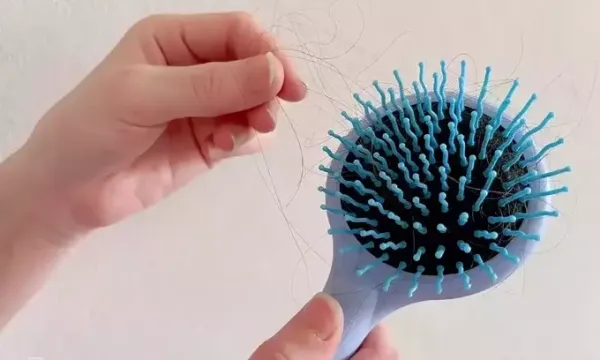
Hair loss may be considered abnormal when shedding consistently exceeds this level or when new hair grows back slowly or not at all. Besides genetics, stress, aging and hormonal changes, inadequate nutrition can also contribute to excessive shedding.
Protein and biotin (vitamin B7)
Protein and biotin play important roles in the production of keratin, a major structural component of hair. Insufficient intake may interfere with hair formation at the follicle, leaving strands thinner and more brittle while slowing growth and increasing shedding.
Iron
Iron is essential for carrying oxygen through the bloodstream to tissues, including hair follicles. Inadequate iron intake may reduce the supply of oxygen and nutrients reaching the scalp, weakening follicles and contributing to hair loss.
Excessive hair loss can be linked to deficiencies in vitamins and minerals. Photo by Read/Bao Bao
Zinc and other minerals
Zinc, together with minerals such as calcium, selenium, silica and sulfur, supports cell renewal and helps regulate oil production in the scalp. Deficiencies may weaken hair roots and can also contribute to scalp problems such as dandruff or hormonal imbalance.
|
Excessive hair loss can be due to a lack of vitamins and minerals. Photo by Read/Bao Bao |
Vitamins A, C, D, E, B-complex and omega-3 fatty acids
These nutrients support scalp health, moisture balance and protection against oxidative stress. A dry or inflamed scalp can create an unfavorable environment for hair growth, while inadequate intake of vitamins and omega-3 fatty acids may reduce hair strength and elasticity.
According to Thuy, people looking to prevent nutrition- hair loss can include a variety of nutrient-rich foods in their daily diet.
Meat and fish: Red meat supplies protein and easily absorbed iron, which supports oxygen delivery to hair follicles. Salmon, herring and mackerel provide omega-3 fatty acids, selenium and vitamins A and D. Fresh meat is preferable to heavily processed products such as sausages and cold cuts.
Legumes, nuts and seeds: Black beans and lentils, along with sunflower seeds, flaxseeds, chia seeds and walnuts, provide protein, zinc, biotin, iron and vitamin E. These nutrients support the repair and maintenance of hair and scalp tissue. Nuts, seeds and legumes can also serve as important nutrient sources for vegetarians.
Vegetables: Spinach, kale, carrots and bell peppers contain vitamin A, calcium, folate and other vitamins and minerals that support scalp health and circulation.
Fruits: Avocados provide unsaturated fats and vitamin E, which help maintain scalp moisture. Vitamin C-rich fruits such as oranges, tangerines and kiwis can improve iron absorption and help protect cells against oxidative damage.
Besides improving their diet, people experiencing hair loss may consider supplements containing keratin- or plant-derived ingredients such as aged black garlic, millet, horsetail and saw palmetto, depending on professional advice.
Thuy notes that hair recovery takes time because the natural growth cycle spans several months. Nutritional improvements are most effective when combined with a healthy lifestyle and proper scalp care.
If hair loss continues despite dietary and lifestyle changes, people should consult a specialist to identify the underlying cause.
-
Vijay Removes Dior Glasses, Gifts Them To Elderly Woman During Mettur Visit | WATCH

-
Teachers Day 2026: This time give such a surprise to the teacher, your style will be remembered for years

-
Adani Energy Solutions becomes utility company with highest ESG score globally

-
This time the fraudster will be known by WhatsApp! New features are coming, know the details

-
Philips 5G Smartphone: Philips' first 5G phone will be launched in India on September 2, these features will be available including 64MP camera.