New Delhi: The Trump administration is preparing to make another major change regarding the citizenship of children born in America. According to a Reuters report, the US government is now planning to ask parents for proof of their citizenship or immigration status when applying for children’s passports. If this proposal is implemented, the passport application process for children born in America may become more stringent than before.
This proposal of the State Department is being considered as the first detailed step towards implementing the executive order of President Donald Trump on August 6. The Trump administration says its aim is to stop ‘birth tourism’ and limit the scope of citizenship granted on the basis of birth. State Department spokesman Tommy Pigott told Reuters that President Trump has clearly stated the need to protect the meaning and importance of American citizenship. According to the department, the process of issuing passports should also be in accordance with this policy.
What is the new proposal?
Currently in America, when applying for a passport for a child, parents have to prove their relationship with the child. Along with this, they also have to provide photo identity card issued by the government. Although parents are required to state their citizenship status on the application, they are generally not required to routinely submit documents proving their immigration status.
Now the Foreign Department has come up with a proposal to change this process. According to the draft guidelines, the department can ask for documents from parents to their citizenship or immigration status. It will be used to check whether the child comes under the scope of Trump’s new executive order or not.
If the proposal is implemented, parents or legal guardians will have to provide proof of their status when getting a child’s passport. US citizens may be required to provide documentation such as a valid US passport or birth certificate. At the same time, documents like I-94 form or Valid Permanent Resident Card may be asked from non-US citizens. On the basis of these documents, the government will try to decide whether the child in question is eligible for American citizenship under the new rules or not.
Which children will be affected?
According to Reuters report, under the proposed directive, the citizenship of children born in America may be affected under certain circumstances. These include cases where one of the child’s parents is working for a foreign government in the US. Apart from this, people involved in fraudulent or any business transactions to acquire citizenship and children of persons classified as ‘enemy aliens’ may also be brought under the ambit of the new rules. This proposal comes at a time when a legal battle is going on in the courts over the Trump administration’s attempt to limit birthright citizenship.
Legal battle going on in court also
Lawyers have filed challenges in several federal courts on behalf of children affected by Trump’s initial order. The petitioners have demanded from the courts that the government be stopped from implementing the order. One such case is before US District Judge Deborah Boardman in the federal court of Maryland. He was appointed by former President Joe Biden. During the hearing held in Greenbelt, the judge raised serious questions about Trump’s order and called it an extraordinary step. He also allowed the petitioners to make changes in their case, so that the demand for staying the order could be considered.
At the same time, the Justice Department has argued that it would not be appropriate to impose a ban at this stage. The government says federal agencies have not yet issued detailed public guidance on implementing the order. In such a situation, the legal challenge has been declared premature.
Trump’s citizenship agenda
Limiting birthright citizenship has been a key part of the Trump administration’s immigration policy. His initial executive order stated that a child born in the United States would receive automatic citizenship only if at least one parent was a US citizen or lawful permanent resident, i.e., a green card holder. The matter regarding this policy even reached the US Supreme Court. According to the details given, the court, in a 6-3 decision, considered the order illegal and said it conflicts with the citizenship provision given in the 14th Amendment of the Constitution.
-
VfL Osnabrück vs Bayern Munich: Match preview and team news

-
Julian Alvarez to Barcelona still on as club prepares fresh move in January or June 2027

-
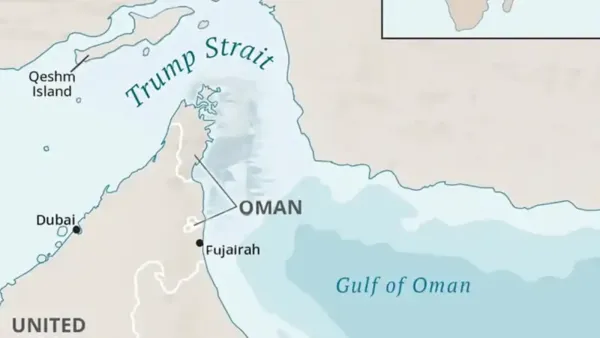
Trump proposes renaming Strait of Hormuz ‘Trump Strait’
-
Manchester United transfer window rated as Lewis Hall move must be completed in January

-
Gardening Tips : Prices of ginger skyrocketed? It could be grown in pots in the house like this; This simple method will work