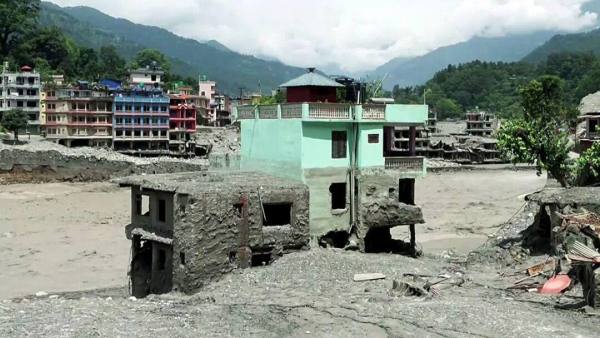
Seven days have passed since devastating floods struck the Bhotekoshi-Trishuli river valley on August 26, but the full scale of the tragedy in Nepal is still emerging.
As of September 2, the death toll has surpassed 1,127, while another 16 fatalities have been recorded on the Tibetan side of the border, taking the total number of deaths to 1,143. Around 4,858 people remain missing, including 583 foreign nationals and 83 Nepali security personnel.
More than 12,000 people have been rescued, while approximately 84,270 people across 17 municipalities have been affected by the disaster.
Here is a 10-point look at the situation so far.
1. What are the official death and missing figures?
As of September 2, Nepal has reported more than 1,127 deaths. Including the 16 deaths on the Tibetan side of China, the overall fatalities have reached 1,143.
Around 4,858 people are still missing. This includes 583 foreign nationals and 83 Nepali security personnel.
More than 12,000 people have been rescued, while approximately 84,270 people across 17 municipalities have been affected.
2. Which areas suffered the most destruction?
Chitwan district recorded the highest number of deaths at 321, followed by Nawalparasi (East) with 216 and Nawalparasi (West) with 170.
In Nuwakot district, 24 bodies were recovered from Uttargaya Mini Mart, a shopping arcade in Betawati. The bodies included 13 women, 10 men and a child.
The Rasuwagadhi immigration office on the route to Bhotekoshi was completely swept away. Around 300-400 people were present there at the time. Four immigration employees, including the head of the office, went missing, while the body of one employee was later recovered far downstream.
3. How is the rescue operation progressing?
The Nepali Army has continued its search and rescue operation for the seventh consecutive day.
One of the biggest challenges is reaching people trapped inside hydropower project tunnels along the Trishuli River. Around 639 workers are estimated to be trapped in various tunnels after water and debris blocked the passages.
The government has brought in expert teams from India, China and South Korea to assist with blasting operations.
However, continuous rainfall and fresh landslides are hampering rescue and relief efforts, with many remote villages remaining inaccessible.
4. Why did Nepal resort to mass burials?
The scale of the devastation overwhelmed hospitals and morgues. Many bodies had also decayed beyond recognition after prolonged exposure to water and mud.
The government therefore decided to temporarily bury unidentified bodies.
Kathmandu's Gokarna Forest Resort, formerly the royal family's hunting ground, was designated as one of the burial sites. Large pits were dug in the muddy embankment using JCB excavators, with around 75 bodies buried there.
Each body was tagged with a batch number, while DNA samples, photographs and identification details were preserved so families can identify their loved ones.
A day earlier, more than 200 bodies had been buried at four different locations.
5. What is the situation of foreign nationals?
Of the 583 foreign nationals reported missing, 275 are Indians. The list also includes 32 Chinese nationals and nine Americans, along with citizens of countries including Britain, Canada, Australia and Italy.
Most of those missing were tourists, businessmen, or engineers and labourers working on hydropower projects.
The last entry at the Rasuwagadhi immigration office was recorded at 8:35:03 a.m. Just 10 minutes later, the avalanche struck, sweeping away all the foreigners present.
6. Does the flood threat still remain?
Yes. A serious flood threat remains in Nepal.
The Nepal Meteorological Department (DHM) has issued a fresh alert, with river levels rising again in eastern, central and western parts of the country.
Small rivers and streams in Nuwakot and Rasuwa districts are particularly vulnerable to flash floods.
Authorities have urged people to remain vigilant and avoid going near river banks.
A temporary dam on the Chinese side was also reported to have breached, raising concerns about a possible further rise in water levels.
7. What pressure is Prime Minister Balendra Shah facing?
Prime Minister Balendra Shah is facing intense pressure from within his government and the ruling Rastriya Swatantra Party to attend the UN General Assembly (UNGA).
The government wants Shah to use the UNGA platform to demand climate justice, arguing that Nepal contributes only a small amount to greenhouse gas emissions but suffers the most from their impact.
Nepal is also expected to appeal to the international community for assistance with rehabilitation and reconstruction.
There were earlier plans to send Foreign Minister Shishir Khanal to the UNGA, but that decision may now change.
8. What international aid and relief has arrived?
The UN Development Programme (UNDP) estimates that the floods have left 2.2 million tonnes of debris, including 550,000 tonnes of building debris, rocks, sediment and household items.
The Red Cross has launched an emergency appeal for 25 million Swiss francs, while Jersey, a British Crown Dependency, has announced 200,000 euros in aid.
Expert teams from India, China and South Korea are already involved in tunnel blasting operations.
The UN has also warned that the disaster comes at a particularly difficult time for families dependent on agriculture. The main monsoon sowing season is underway, while crops have been completely destroyed.
9. What assistance has India provided?
India has taken several steps to assist Nepal in the aftermath of the floods.
- India has so far delivered more than 68.5 tonnes of relief material, including tents, blankets, medicines, solar lamps and hygiene kits, through five relief aircraft.
- India's Specialized Tunnel Rescue Team and a 19-member forensic-DNA team are involved in rescuing people trapped inside hydropower tunnels and identifying decomposed bodies.
- The Indian Embassy has issued an emergency helpline number,
+977 9851316807, along with an email.
- So far, 163 Indian citizens have been safely rescued as part of the operation.
- India has provided Bailey bridges to create pathways through the debris and experts to assist with blasting operations, helping relief reach remote areas.
- Nepal's Foreign Minister Shishir Khanal has publicly expressed gratitude for India's quick and comprehensive assistance, calling it an example of friendship.
10. What are the biggest challenges ahead?
Nepal is facing five major challenges in the days ahead:
- Reaching and safely rescuing the more than 639 workers trapped inside hydropower tunnels.
- Clearing 22 lakh tonnes of debris that is blocking routes needed to deliver relief supplies.
- Preventing the spread of diseases such as cholera, typhoid and diarrhoea due to rotting carcasses and contaminated water.
- Managing the situation as continued rainfall could worsen conditions and put new relief teams at risk.
- Providing accurate information and mental support to the families of more than 4,000 missing people.
With every passing day, the hope of finding those missing alive diminishes. Hundreds of relatives are arriving each day at Kathmandu's Teaching Medical College in search of their loved ones.