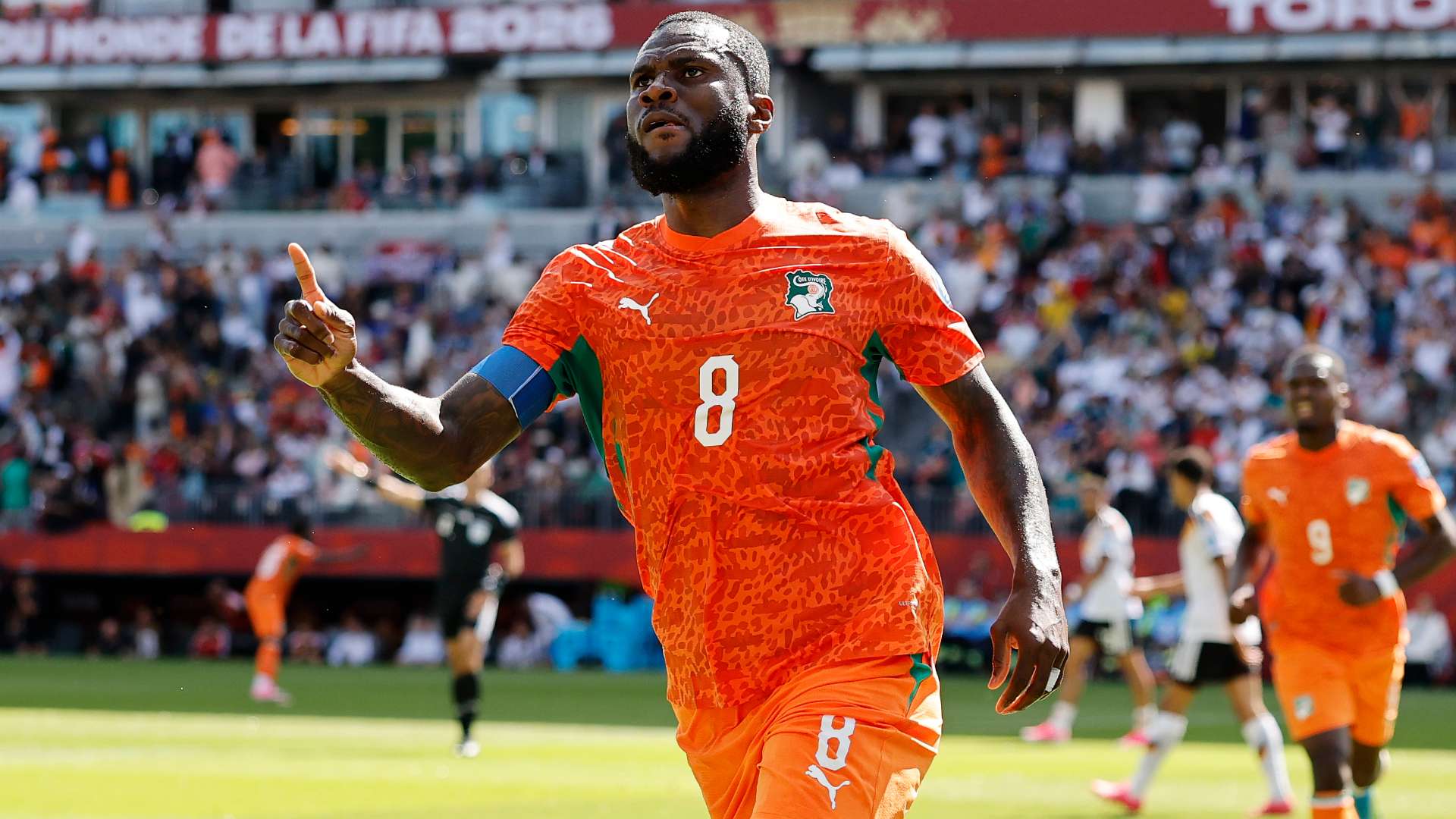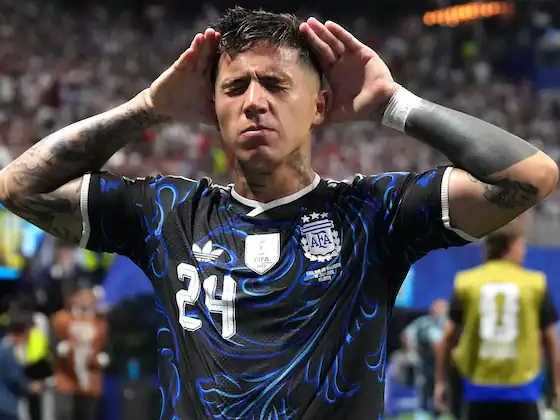
If Manchester City want to defend their decision to spend nine-figure fees on two midfielders and make them two of the costliest footballers in history, they could point to two late goals that played a part in costing them the title.
Elliot Anderson’s clean 88th-minute finish for Nottingham Forest at the Etihad Stadium in March earned Forest a draw, and it came exactly two months after an even later leveller: Enzo Fernandez scoring for a managerless Chelsea in the 94th minute in January. With Enzo Maresca having left, Fernandez looked like a talismanic figure with a knack for producing on the biggest occasions.
Now Anderson and Fernandez may become the most expensive midfield pairing ever, a £241m combination. Yet references to them together may also bring back other memories. Most notably, with the World Cup still fresh, the Argentinian driving an elbow into his new teammate’s head in the second minute. Argentina’s indiscipline then reached its lowest point in the World Cup final, when Fernandez was sent off for a reckless lunge, his teammates disgraced themselves after the final whistle, and the 25-year-old later posted on Instagram saying the Albiceleste had behaved with “pride” and “humility”.
In Fernandez’s case, there are several words that come to mind before “humility”. Maresca is an old ally, though, and presumably offered a character endorsement for a player who can often seem petulant, self-centred and ill-disciplined.
Fernandez is, however, also a midfielder capable of scoring 15 goals in a season for a side that finished 10th, as he did for Chelsea last year. His finishing ability and habit of delivering in defining moments were both visible at the World Cup too: first with his stoppage-time winner against Egypt and then his late equaliser in the semi-final against England.
All of that might suggest he is City’s overdue successor to Kevin De Bruyne, or their version of the 2023 Ilkay Gundogan. But that also underlines why there are three concerns about City signing him: financial, behavioural and tactical.
Partly because of Rayan Cherki’s success, City already had a succession plan in place for De Bruyne. Fernandez’s strongest Chelsea form, though, came either as a No 10 or as a No 8 with freedom to push on. He was initially used out of position as a defensive midfielder, and was then paired with Moises Caicedo in Chelsea’s first partnership of £100m midfielders. Over time, however, it became clear he preferred having both Caicedo and another player — sometimes Andrey Santos, Romeo Lavia or Reece James — alongside him in midfield to take care of more of the hard graft.
Some of Fernandez’s best Chelsea performances came when Cole Palmer was absent. While Chelsea are presenting the transfer as the result of his desire to leave, with the Mancunian fitting in and Morgan Rogers arriving, it could be argued there was no obvious role for the Argentinian in Xabi Alonso’s 3-4-2-1 system.
Even so, City are buying Fernandez, along with Anderson and the £85m Ayyoub Bouaddi, for the deeper midfield roles behind Cherki or Phil Foden, effectively as replacements for Rodri and Bernardo Silva. It is fair to argue that almost anyone would represent a drop from a Ballon d’Or winner and a World Cup Golden Ball winner. With Rodri spending spells out injured last season, and the hugely important Portuguese also leaving a major void, an Anderson-Fernandez partnership — with Bouaddi’s age perhaps meaning he starts fewer matches — could appear inferior to Rodri and Silva.
Pep Guardiola adored Silva, not only for his technical quality but also for his mentality. That is another reason to question City’s judgement in committing such an enormous amount to Fernandez. Looking back at City’s greatest side, it stands out how many players — not just Rodri and Silva, or Gundogan and De Bruyne, but also Nathan Ake, Manuel Akanji and Ruben Dias — were exemplary professionals and admirable characters. Most required very little management.
Then there is Fernandez, who forced through exits first from Benfica and then from Chelsea, despite being on long-term contracts at both clubs, and seemingly in each case for substantial wage increases. Maresca may believe the remarks that led Chelsea to suspend the 25-year-old for two matches reflected loyalty to his former manager — and, as it turned out, future manager. To others, they appeared disloyal. Fernandez also gave the impression he wanted to join Real Madrid, who later took the unusual step of publicly stating they would not sign him.
All of that ought to have served as a warning sign for City. Clearly, it did not. Although Chelsea attempted to impose a 14 August deadline for Fernandez’s sale, the fact they were still prepared to let him go on the final day of the window suggested they had grown weary of him.
In its own way, Chelsea making a profit on him was quite an achievement. Fernandez has shone for his national team but, despite Chelsea winning the Club World Cup, his three-and-a-half years in London were largely marked by underachievement. The fees paid for him have been wildly out of step with the level of his performances for Chelsea.
He did not represent value for money for Chelsea. And now City have paid even more for him.
-
10 fake doctors held in raids across Hyderabad, surrounding dists

-
Five dead in bus-truck collision in Madhya Pradesh’s Rewa

-
20-yr-old ate hair, Delhi doctors remove 1.16-kg hairball

-
US May Require Parents To Prove Citizenship When Applying For Their Children’s Passports

-
Kessie’s agent: “He wanted Juventus and waited for them until the end of August, but perhaps the directors were not convinced. It was about dignity, not money”