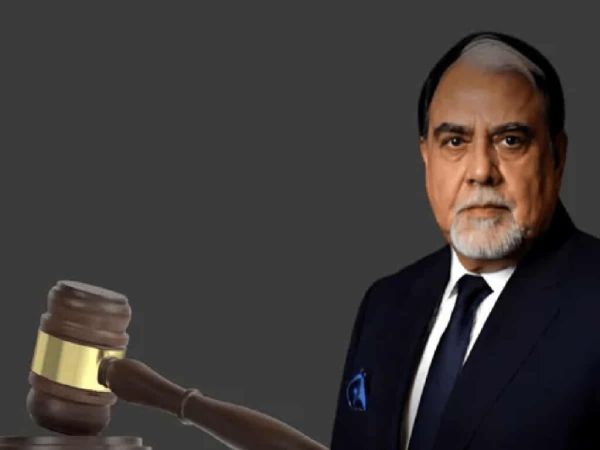
The high-stakes legal battle involving Essel Group Chairman Subhash Chandra has escalated to the appellate tribunal, centering on profound questions of corporate law and tribunal jurisdiction. Chandra has formally challenged the National Company Law Tribunal’s (NCLT) decision to constitute an extraordinary five-member bench to hear his personal insolvency proceedings. Contesting the move before the National Company Law Appellate Tribunal (NCLAT), Chandra’s legal team slammed the tribunal’s action as legally unauthorized, setting the stage for a prolonged judicial tussle over massive financial guarantees and debt settlement frameworks.
Subhash Chandra’s Legal Team Questions Tribunal’s Authority
Representing Subhash Chandra, senior advocate Sasmit Patra launched a sharp attack before a three-member NCLAT bench headed by Acting Chairperson Justice Yogesh Khanna, denouncing the NCLT order as “erroneous and wrong.” Patra argued that the tribunal possesses no statutory jurisdiction under the Insolvency and Bankruptcy Code (IBC) or the Companies Act to assemble a five-member bench.
The core dispute erupted after a newly formed five-member NCLT bench issued an interim stay on an order passed by NCLT Member (Judicial) Nilesh Sharma. The previous order had restrained Chandra from transferring personal assets and validated a settlement framework concerning personal guarantees linked to group loans. While creditor claims stand at approximately ₹22,006 crore, Chandra’s proposed settlement offer stands at roughly ₹6.5 crore.
Questioning the legality of the proceedings, Patra challenged the bench directly: “Under what authority was the stay granted? When did this five-member bench sit together? What proceedings took place on the basis of which this five-member bench passed only one order?” Pointing to Section 419 of the Companies Act, 2013, Patra maintained that the statute’s scope is strictly limited and does not empower the tribunal to bypass established procedures by creating a larger bench.
Lenders Defend Larger Bench Formation Amid Distinct Views
Defending the constitution of the larger bench, Solicitor General Tushar Mehta, appearing for dissenting institutional lenders including LIC Housing Finance, Canara Bank, and Union Bank, countered that the case involves “very unusual circumstances” and presents “three distinct views.” Mehta argued that given the complexity of diverging opinions among tribunal members regarding repayment eligibility under Section 79, examining the matter through a larger bench was entirely appropriate.
During the heated exchange, Patra contended that the orders passed by Judicial Members Ashok Kumar Bhardwaj and Nilesh Sharma were consistent regarding the repayment plan and statutory eligibility. He further raised concerns that Chandra was facing unwarranted public defamation regarding the settlement figures in the absence of a final judicial approval. In response, Solicitor General Mehta cautioned against using judicial forums for external rhetoric, stating that courtroom proceedings should not be leveraged for media narratives.
NCLAT Fixes Next Hearing for October 7
As legal arguments unfolded, the NCLAT bench observed that the specific composition of the five-member NCLT bench was not formally challenged under the immediate appeal parameters, though it permitted the core petitions to remain pending. Declining requests for immediate withdrawals and adjustments, the appellate tribunal directed all concerned parties to complete their submissions and scheduled the next comprehensive hearing for October 7, 2026, ensuring the high-profile insolvency battle will continue to command intense legal and financial scrutiny.
-
I am deliberately marginalised: Konda Surekha hits back post exit
-
Nepal-Tibet Flood: China warns of more glacier collapses

-
CJP protests: Gau rakshak claims Delhi Minister helped avoid jail

-
Mercedes-Benz plans to launch many more models in India: CEO

-
Nitish Rajput Bigg Boss 20 trends, meet YouTuber banned in Pakistan