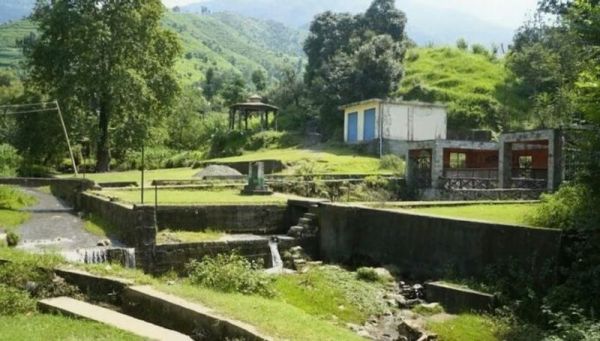
Heritage is a human signature on the earth. Whether tangible or intangible, it serves as a source of identity for communities, groups, and individuals alike. This identity is not static-it is a living bond that fosters social cohesion and dialogue, becoming a foundation for peace building. Precisely because of this role, safeguarding heritage is imperative.
In this process, Government agencies, heritage professionals, and local communities all have roles to play. The most important responsibility lies with the Government and heritage professionals, who act as facilitators, ensuring that conservation is not reduced to mere repair but is guided by principles of authenticity, sensitivity, and inclusivity.
Taking this role forward, the Government of Jammu & Kashmir has recently sanctioned significant budgets for the conservation of several heritage sites-a welcome step that signals commitment to preserving the region’s cultural legacy. The approved projects span districts and traditions:
Kathua: Gurudwara Charan Kamal Sahib at Bakhta and Basohli Fort.
Rajouri and Bhaderwah: Lah Wali Bowli and Rattan Garh Fort.
Anantnag and Bijbehara: Ziyarat Sharief Khiram, Shiv Mandir at Thajiwara, and Yatri Niwas with the historic Nallah Soundbrari Spring.
Samba: Purmandal and Uttervehini Heritage.
Srinagar and Pulwama: Imambara Zadibal and the holy spring of Khoo Sahib at Yarwan.
Shopian and Ramban: Jamia Masjid Sharief and Sarvadhar Chaumanda Mata Mandir.
Collectively, these projects reflect a comprehensive approach to heritage conservation, underscoring the Government’s recognition that safeguarding monuments is not only about preserving the past but also about strengthening cultural identity, fostering community pride, and promoting sustainable tourism.
While these projects are laudable, their success depends on more than financial sanction. Conservation must be guided by established frameworks-UNESCO charters, national heritage policies, and state level acts-that emphasise authenticity and cultural integrity. Heritage conservation is not simply about repairing structures; it requires sensitivity, professional oversight, and respect for the values embedded in these sites. Officers and agencies entrusted with on site work must be properly sensitised to conservation principles, ensuring that interventions uphold historical integrity rather than reducing monuments to cosmetic facades.
This broader understanding lays the foundation for a truly holistic approach to safeguarding heritage. It calls for a decisive shift in perspective-one that moves beyond structural repair to embrace conservation as a cultural, social, and human endeavour, where monuments are preserved not only as physical relics but as living embodiments of memory and meaning.
From Repair to Renewal: Communities at the Heart
Heritage conservation must move beyond the narrow lens of civil engineering. Too often, it is treated as a technical exercise-repairing walls, strengthening foundations, or beautifying facades. While such interventions are necessary, they are far from sufficient. Heritage sites are not ordinary buildings; they are repositories of collective memory, identity, and intangible traditions. Reducing conservation to a purely technical project risks stripping these monuments of the very cultural essence that makes them significant.
A powerful example comes from the restoration of Humayun’s Tomb in Delhi, carried out by the Aga Khan Trust for Culture in partnership with the Archaeological Survey of India and UNESCO. The project used traditional lime mortar, employed local craftspeople, and revitalised surrounding gardens while documenting oral traditions linked to the site. This approach ensured authenticity, created livelihoods, and preserved both tangible and intangible heritage. It illustrates how conservation must go beyond structural repair to embrace cultural continuity and community well being. Similarly, in Ladakh’s monasteries, conservation projects safeguarded Buddhist chanting traditions alongside architectural repair, showing how intangible heritage and community custodianship are inseparable. Closer home, the planned restoration of Basohli Fort in Kathua offers a unique opportunity to revive the Basohli school of miniature painting-a tradition historically tied to the fort’s cultural landscape.
The importance of community participation in heritage conservation is not a new idea-it has been embedded in global policy for decades. The UNESCO Operational Guidelines of 1996 (Article 41) made it clear that nominations and conservation efforts must be prepared “in collaboration with and with the full approval of local communities.” In other words, communities were recognised as custodians, not bystanders. Scholars have reinforced this principle: W.S. Logan (2007) argued that the cultural practices of local communities deserve recognition as human rights, while C. Bortolotto (2020) reminded us that intangible heritage cannot be separated from the concerns of those who live it daily.
Over time, the conversation has evolved: by 2005, heritage scholarship was stressing participation, and by 2019, the focus had widened to include community well being. The message is unmistakable-conservation cannot succeed unless it is rooted in the lived experiences of host communities.
Heritage thrives only when the people who live alongside it remain part of its story. Communities near new conservation projects in Jammu & Kashmir must be seen not as bystanders but as central stakeholders. Their custodianship, memories, and living traditions are the threads that give heritage its authenticity. To push them aside is to strip monuments of their soul, weakening the very foundation of conservation. To involve them, on the other hand, is to anchor projects in resilience and continuity-ensuring that restored sites are not just repaired structures, but living spaces of meaning, pride, and identity.
The Government’s vision of heritage led tourism will only succeed if conservation is approached holistically. True conservation must safeguard authenticity, sustain living traditions, and empower communities. This means integrating professional oversight, legal safeguards, and community participation, while recognising that heritage sites are not isolated monuments but living landscapes where cultural and natural values intersect.
The Government’s recent fund allocations for heritage projects are more than numbers on paper-they are a signal of intent, a first step toward reclaiming Jammu & Kashmir’s cultural legacy. What is needed now is a decisive shift: from civil engineering repair to cultural renewal, from cosmetic beautification to continuity of traditions, and from tourism promotion to genuine community empowerment.
If this vision is embraced, the monuments of Jammu & Kashmir will not merely stand restored-they will breathe again. They will continue to live as repositories of resilience and artistry, carrying forward the memory of generations while inspiring pride in the present. In doing so, they will enrich not only local communities but also the broader heritage of humanity, reminding us that conservation is not about preserving stones, but about keeping stories alive.
-
UN nuclear agency members draft resolution against Iran
-
Hindutva influencer Bhardwaj faces SC/ST, POCSO charges

-
Teachers’ Day Special: Puri Artist Manas Kumar Sahoo Creates Stunning Sand Animation Of Dr Radhakrishnan | WATCH
-
Manchester United take firm call on Lisandro Martinez’s future amid INEOS defensive revamp plans

-
Cancer Horoscope Today, September 5, 2026: Keep your routine regular, adherence to rules will be maintained