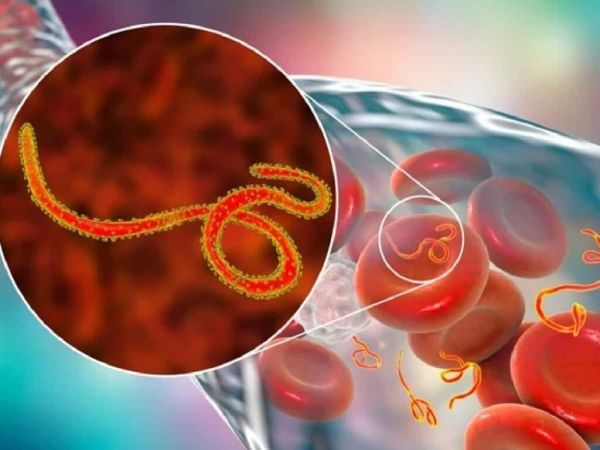
Once again very worrying and scary news is emerging for the global health world. In the Democratic Republic of Congo (DRC), Central Africa, the Ebola virus has once again taken a monstrous form, due to which the health system there has completely collapsed. The total number of Ebola infections in Congo has now crossed 6,100, according to health organizations and local data, indicating the widespread extent of the disease. The most frightening aspect is that so far more than 3,000 innocent people have died due to this deadly infection. The speed at which this dangerous virus is spreading has given sleepless nights not only to Congo but also to international health agencies. History is witness to the fact that Ebola is considered to be one of the most deadly and rapidly killing viruses in the world, and the chances of survival of a patient affected by it are very low. Since this epidemic has gone out of control in Congo, everyone from children to adults is being given strict instructions to be extremely alert and careful. Since in this era of globalization it does not take much time for any epidemic to spread from one country to another, precautionary measures are being taken in India and other Asian countries also. Let us know in detail what Ebola virus is, its initial and severe symptoms, how it spreads and what precautionary steps we should take to avoid this deadly disease. Symptoms of Ebola virus: The journey from initial 'dry' symptoms to severe 'wet' symptoms. To deal with any dangerous disease in time, it is most important to correctly identify its symptoms. According to the guidelines and medical research of America's prestigious 'Center for Disease Control and Prevention' (CDC), Ebola virus infection takes an average of 2 to 21 days to show its effect after entering the body. However, in most cases, patients start showing obvious symptoms within 8 to 10 days of getting infected. Doctors have divided the infection of this disease into two stages, which are called 'dry symptoms' and 'wet symptoms'. The onset of infection is very common and similar to other viral diseases, due to which many times people ignore it considering it to be an ordinary fever. The initial or 'dry' symptoms of Ebola include a sudden high fever, severe pain throughout the body, strain or stiffness in the joints and muscles, and extreme fatigue and weakness. As this virus tightens its grip within the body and starts damaging the organs, its symptoms start turning into extremely severe i.e. 'wet' symptoms. In this second stage, the patient complains of persistent and severe diarrhea, frequent vomiting, and the most dangerous thing is that internal bleeding starts from the internal parts of the body. Due to bleeding from the nose, gums and digestive system, the patient's condition becomes critical within a few hours and if timely treatment is not received, he dies. Ebola does not spread through air: Know how this deadly virus makes humans victims. There is often a big fear in the minds of the general public that can the Ebola virus spread through air like Corona? Clearing this confusion, health experts have clarified that Ebola virus never spreads from one person to another through air or breath. This means that if an infected person is passing by you or you are in a place where an Ebola patient is present, you will not get the disease just by coming in contact with the air. This virus spreads only when a healthy person comes in direct contact with the body fluids of an infected or a person who has died from this disease. Furthermore, according to medical science, unless a suspected person shows obvious symptoms of Ebola, he or she cannot spread the virus to others. But once symptoms start appearing, the patient's sweat, saliva, vomit, feces, urine, breast milk and other bodily fluids become highly contagious. Additionally, the virus can also spread for some time through the sperm of people who have completely recovered from Ebola infection, until medical tests confirm that the virus has been completely eliminated from their bodies. Apart from humans, this virus can also spread to humans through contact with wild animals such as bats, wild deer, monkeys and chimpanzees. What things and precautions should be kept in mind to avoid the risk of Ebola infection? Since there are only very limited and expensive medicines available for the treatment of Ebola virus, the surest and only way to avoid this epidemic is to take extreme precautions and strictly follow the rules of prevention. Since this disease is spread through body fluids, direct contact with urine, stool, saliva, sweat, vomit and other bodily secretions of any sick or suspected person should be completely avoided. If there is an outbreak of this disease in any area, then one should strictly avoid touching the clothes, bedding, medical needles, syringes and other items used by the patient in hospitals or homes. If an infected person unfortunately dies, it is mandatory to follow special safety protocols even during his funeral so that the virus does not spread further. Apart from humans, we should also avoid consuming bushmeat and coming in direct contact with them, because many scientific studies have found that animals like bats and monkeys are natural reservoirs of this virus. Tourists and workers traveling to African countries or such areas should strictly follow local health guidelines. If any person shows suspicious symptoms like fever or body ache, he should be immediately isolated and taken to the nearest health center or hospital so that proper medical support can be provided in time. Only by vigilance, cleanliness and taking precautions at the right time can the cycle of this terrible epidemic be broken and precious human lives can be saved.
-
Dutch bank moves billions in gold as global unrest grows

-
UAE flights to India, Gulf face disruption amid rising tensions

-
Why Raja Singh walked free for Prophet hate speech: Court explains

-
Kashmir divisional commissioner reviews arrangements for international film festival

-
Nepal floods: Centre to offer DNA profiling services for first-degree relatives of missing persons