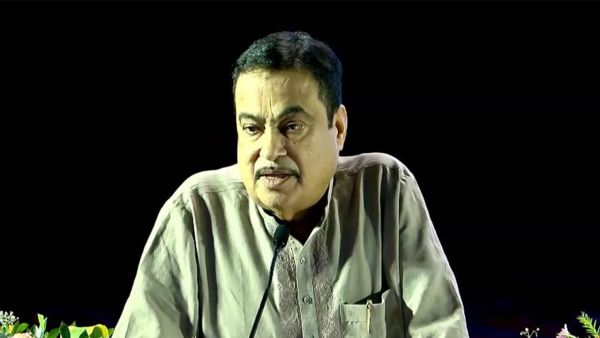
Union Minister Nitin Gadkari stated that India has the potential to become the world's number one automobile industry. He called for a faster transition to cleaner transport, including electric mobility, biofuels, and green hydrogen.
India has the scale, engineering talent, growing market and ambition to become the world's number one automobile industry, Union Minister for Road Transport and Highways Nitin Gadkari said on Thursday, expressing confidence that the country can move up from its current position as the world's third-largest automobile industry.
"I hope that India will become the number one automobile industry in the world. Today, we are number three," Gadkari said, addressing the 66th Annual Convention of the Society of Indian Automobile Manufacturers (SIAM) in New Delhi.
Gadkari said India's opportunity extends beyond the domestic market and called on the industry to help the country secure a larger share of the global automotive value chain. "India's opportunity is bigger than the domestic market. We have scale, bandwidth, engineering talent, a growing market and the ambition to lead. We need to take a larger share of the global value chain for sustainable development," he said. He said the government was committed to providing the policy environment and institutional support needed for the growth of the automotive sector.
Focus on Cleaner Transport
Gadkari also stressed the need to accelerate the transition towards cleaner transport, particularly electric mobility and biofuels. "The change in the transport sector has to happen much faster... we have to move much, much faster," he said, adding that the transition to cleaner fuels was becoming increasingly important.
He said electric mobility and biofuels were areas where India had significant potential, while green hydrogen could also offer opportunities. He identified heavy vehicles, particularly trucks and buses, as a key area where the transition needs to accelerate.
Gadkari said electric mobility had gained traction in the four-wheeler segment, but charging infrastructure and its maintenance remained important challenges. He said oil marketing companies had been encouraged to install charging stations across the country, though some facilities were not being properly utilised or maintained. He urged automobile manufacturers to prepare for greater adoption of electric vehicles.
Vehicle Safety and Regulations
He also sought greater industry participation in tackling pollution and addressing issues related to old vehicles, retrofitting and vehicle scrapping. On vehicle safety, Gadkari said more than 30 models from 11 companies had been certified under Bharat NCAP. He said the cost of testing had come down to around Rs 60 lakh per model from nearly Rs 2.5 crore under Global NCAP.
He said the government was also planning a graded points system for driving licences, under which repeated traffic violations could result in suspension or cancellation of licences. Gadkari said the government planned to establish 1,600 driving training centres. Of these, 24 are currently operational and 112 are in the pipeline, while around 10 lakh drivers have already been trained.
Addressing Old and Polluting Vehicles
On vehicle scrapping, he said the National Capital Region (NCR) scheme aims to scrap more than two lakh old trucks and buses. He said 53 vehicle scrapping centres were already operational against a target of 50.
Gadkari also announced a new retro fitment scheme involving a rear emission control device based on approved AIS 228 standards. The technology is aimed at reducing particulate matter emissions by 90 per cent and nitrogen oxide (NOx) emissions by 60 per cent from heavy vehicles.
He said the government and the automobile industry would need to work together to make the transition cleaner, safer and more competitive, while contributing to India's development goals for 2047. (ANI)
(Except for the headline, this story has not been edited by Asianet Newsable English staff and is published from a syndicated feed.)-
Another day, another government officer in Telangana ACB net
-
New York City bans generative AI in schools through Class 8
-
Adityanath defamation case: Court asks Ajay Rai to record statement
-
Karnataka: Protest erupts over misbehaviour with 6-year-old girl
-
Why buy commercial vehicles? TGPWU on private bike taxi proposal