Was Everton’s summer transfer window really that poor? Yes. Yes, it was.
If transfer windows are supposed to show a football club’s long-term vision, Everton’s recruitment in summer 2026 was a textbook case of panic, hesitation and dysfunction. The Toffees’ business pointed to nothing less than a club drifting badly: decades on from their last trophy, and seemingly decades away from the next.
After years of balancing on a financial tightrope and dealing with Profitability and Sustainability (PSR) penalties, this was meant to be the summer in which the club set out a clear, modern direction in their new home.
Instead, they finished deadline day in a far more vulnerable position than when the window began — desperately light in attacking areas and publicly showing little strategic certainty — which was never how anyone wanted this to unfold.
Nowhere was that failure more obvious than in Everton’s handling of the forward line. Approving the exits of both Beto and Iliman Ndiaye on transfer deadline day was always going to be a risk. Doing that without bringing in replacements, though, amounts to a huge mistake.
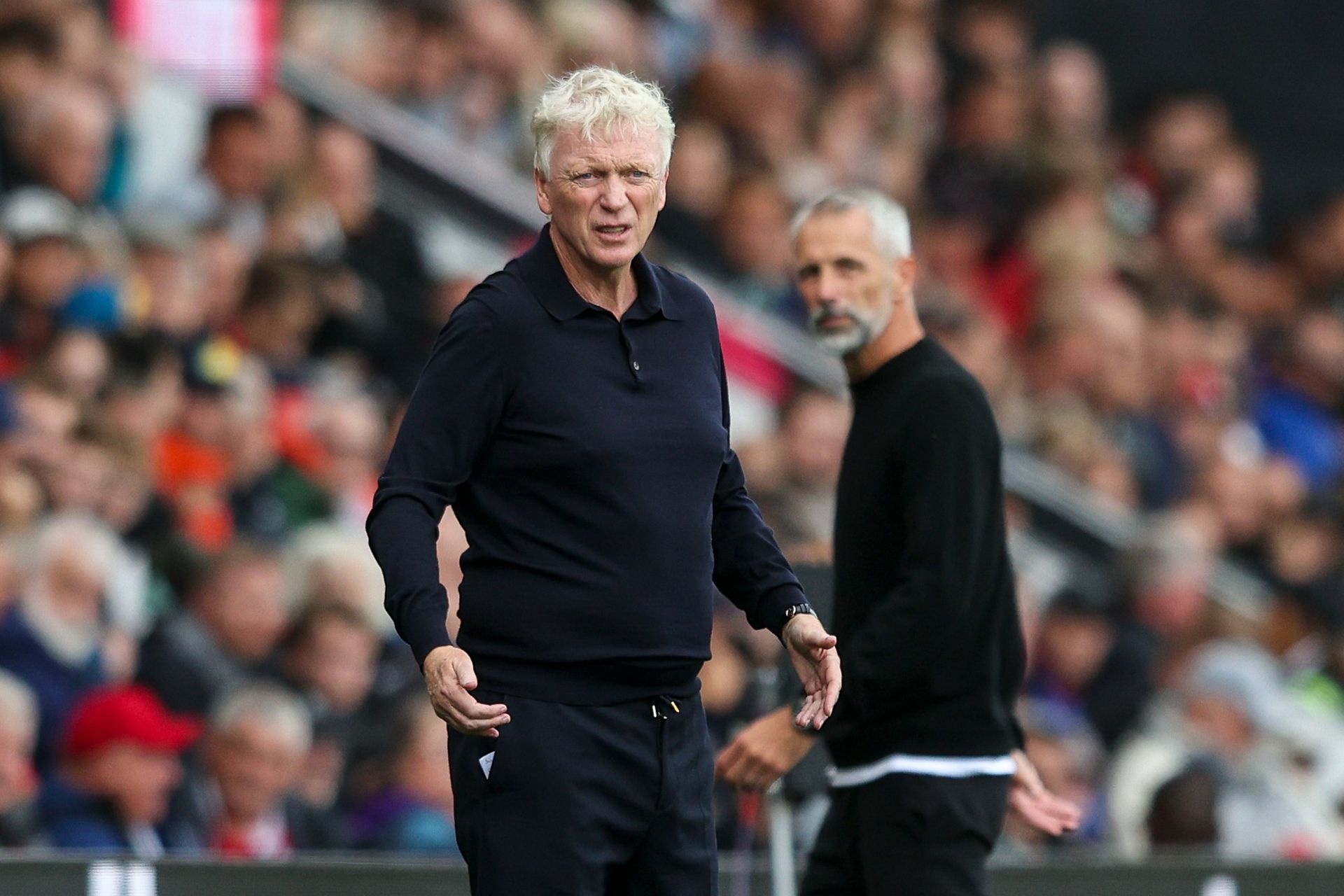
That has left David Moyes with 23-year-old Thierno Barry as the club’s only recognised senior striker, which is, quite simply, not good. Barry may be a promising young player, but he scored eight goals in 41 appearances across all competitions for the Toffees last season — hardly numbers to build your hopes around.
Why wait until the final hours of deadline day to complete such crucial business, especially when Ndiaye’s eventual departure had looked likely for weeks?
Moyes himself did not hold back when discussing the state of his squad. Speaking after Everton’s 4-0 Carabao Cup win over Preston North End, the Scot delivered a typically blunt verdict on the club’s transfer work.
“I still think we are short in the squad and I still think we are short in quality in some places.”
Moyes pointed out that, despite the arrivals, the squad was numerically thinner than last season’s already stretched group. His comments after the match amounted to a clear call for reinforcements, one that ultimately went unanswered — not intentionally perhaps, but that is beside the point now.
A move for Monaco’s Folarin Balogun was close to being completed before Everton’s medical team found issues during his medical, leading the club to stop the deal.
The Toffees then quickly switched their attention to Manchester United outcast Joshua Zirkzee. But perhaps after seeing the wave of angry reaction from supporters, Everton’s leadership appeared to lose their nerve. In a bid to repair the situation, they attempted to restart the Balogun move, only for the USA international to reject the transfer outright.
In almost farcical fashion, the USA striker left Everton’s training ground late at night and headed back to the principality.
The collapse that followed left Everton with nothing — an awful look that summed up a club working without proper internal alignment.
Their lack of certainty in decision-making had already been exposed in the earlier saga involving 19-year-old midfielder Harrison Armstrong. Everton had reportedly agreed a £40m deal to sell the academy graduate to Nottingham Forest — a move that appeared most likely to be driven by executives focused on financial compliance.
But after a furious backlash from supporters, the hierarchy performed a U-turn. Keeping a gifted young player is, of course, a positive, but pulling out of such a major sale purely because of public anger points to a boardroom with little conviction in its own decisions. If the club truly required the money, then folding at the first sign of fan unrest suggests policy is being made as they go along.
To round off an underwhelming window, Everton chose to bring Jack Grealish back, while also signing Ainsley Maitland-Niles, but still did not add another left-back. Grealish unquestionably has talent, but handing over a huge wage package for a costly loan signing feels short-term in its thinking — and little more than a sticking plaster over the rest of the club’s business.
Everton now go into the 2026/27 season with a wafer-thin squad, a frustrated manager and a fanbase left utterly confused by how the window was handled. By waiting until deadline day, yielding to public pressure and mishandling negotiations, Everton have turned what might have been a transformative summer into months of anxious waiting for the January market.
At least doughnuts will still be on offer for another year at Hill Dickinson, right, Everton fans?
-
Another day, another government officer in Telangana ACB net

-
New York City bans generative AI in schools through Class 8
-
Adityanath defamation case: Court asks Ajay Rai to record statement
-
Karnataka: Protest erupts over misbehaviour with 6-year-old girl
-
Why buy commercial vehicles? TGPWU on private bike taxi proposal