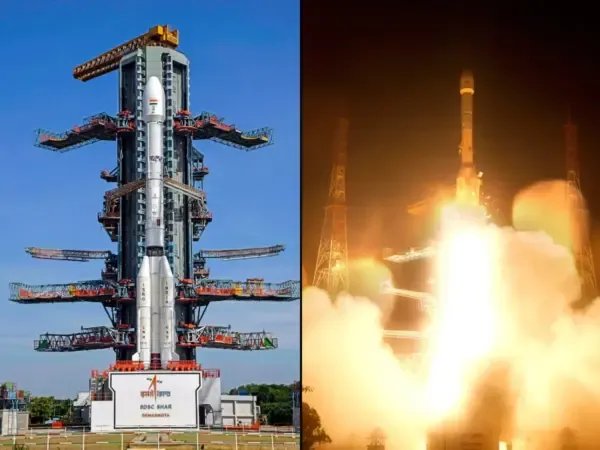
Indian Space Research Organisation (ISRO) launched the EOS-05 satellite from the Satish Dhawan Space Centre at 2:55 am on Friday. It is an Earth Observation Satellite launched aboard the GSLV-F17 rocket.
The successful takeoff ended an eight-month lull for the Indian space agency. Here is everything you need to know about the new Indian satellite in space.
The EOS-05 satellite weighs 2,367 kg and will be placed in the Geosynchronous Orbit at an altitude of 36,000 km above Earth. It has multispectral (VNIR) and hyperspectral (VNIR/SWIR) sensors. It can take images of a specific region every 5 minutes, and of the entire Indian landmass every 30 minutes. Its spatial resolution is 42 metres, making it the highest-resolution camera ever placed in geostationary orbit by ISRO.
EOS-05 is India's first-ever imaging satellite in geosynchronous orbit. Being placed in this position gives it an advantage over other Earth observation satellites in Low Earth Orbit (LEO). While the latter only pass over a specific location once every few days, EOS-05 is like a real-time "eye in the sky" that can remain over a specific region.
Purpose and objectives of EOS-05
The primary objective of the EOS-05 satellite is to offer near real-time disaster monitoring. It will track rapidly evolving natural disasters by taking pictures of a specific region every 5 to 30 minutes. This will provide a window for emergency action when storms, cyclones, floods, cloudbursts, and forest fires occur.
The satellite will also have defence implications as it can continuously monitor the entire Indian subcontinent. To have a real-time eye in space watching over maritime zones and international borders will allow for specific, timely steps to avert an incursion. EOS-05 will complement existing weather satellites to keep an eye on cloud cover, weather patterns and anomalies on the sea surface. It will also benefit agriculture as it can monitor seasonal crop health, soil moisture, vegetation changes, and land-use dynamics.
Upcoming ISRO missions
ISRO Chief Dr V. Narayanan said that the EOS-05 satellite was the heaviest satellite to be launched on the GSLV rocket, as it carried a 2,367kg satellite on its 19th flight. The Indian space agency is targeting five more launches for the current financial year, including the Navigation satellite NVS-03 and the Gaganyaan-G1 mission.
-
‘No Prevention, Only Grandstanding’: Rahul Gandhi Slams PM Modi, BJP Over Collapse

-
ICC Fines Pakistan Captain Fatima Sana Khan For Fiery Send Off To Shafali Verma During IND Vs PAK Women's Asia Cup 2026 Clash

-
Tripura Tragedy: Class 10 Student Drowns While Bathing In Jagannath Dighi, Body Recovered After Prolonged Search

-
Who Is Surabhi Vanzara? Meet Murder & Qubool Hai Actress Who Roasted Samay Raina On India's Got Latent 2

-
Bigg Boss 20: 'Kisiko Hijra Bulakar...'; CJP Protest Fame Rhiya Ahir Gives Befitting Reply To Trolls After Losing To Love Gill