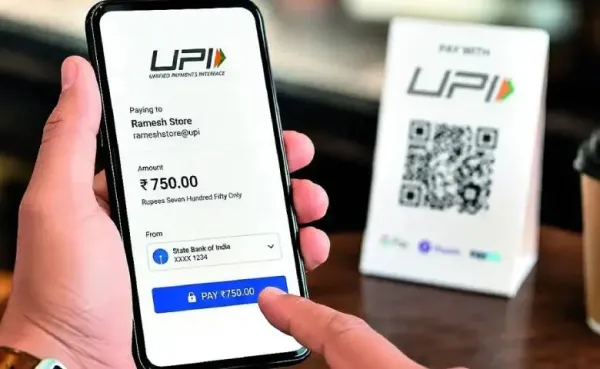
UPI Payments : Most people use UPI for payments. Be it paying for groceries, vegetables, rickshaw fare, or tea, everything is done within seconds. But it also affects your pocket. Recently, a girl shared a summary of her UPI expenses on social media, describing how she was worried about her increased expenses. The video showed how small online UPI payments can clear your entire salary by the end of the month.
On the first of every month, the soul-pleasing message is “Salary credited to your account.” This is the day you look forward to all month. Some days go well, but by the 15th or 20th, looking at your balance, you wonder where the money went.
Small digital payments
You probably have an estimate of the major expenses. Most of the money usually goes towards rent, EMI, school fees, groceries and other major expenses. But another expense that quietly eases your bank balance is small digital payments.
Big game with small expenses
Rs 180 for a taxi to work in the morning, Rs 120 for coffee in the afternoon, Rs 350 for food delivery in the evening, Rs 250 for a quick grocery purchase on the way, Rs 699 for online shopping and four or five monthly subscriptions. None of these costs seem significant. The problem starts when these small expenses are repeated every day.
Why not feel the pain of spending Rs.100?
Giving Rs.500 notes in cash makes your pocket lighter. With digital payment, the same amount appears on the screen within seconds. UPI has made payments so easy that the mental break between spending and withdrawing money has almost disappeared. Data from the National Payments Corporation of India shows that around 24.51 billion transactions were made using UPI in India in August 2026. On an average, around 817 million transactions take place every day. The total value of these digital payments in a month is around Rs.29.82 lakh crore. Not all of this money is personal spending, but it shows that digital payments have become an important part of everyday life.
Range of expenses
If your salary is Rs.60,000, the average per day cab or auto-rickshaw to and from work is Rs. 150 more spending will be around Rs.3,000 per month. Delivering food twice a week for Rs.400 will make around Rs.3,200. Two or three online shopping orders in a month will generate Rs.2,000. Coffee and snacks will cost Rs 2,000, and various digital subscriptions will cost Rs 1,000. This small expenditure will be around Rs.11,000-Rs.12,000. Surprisingly, most of these expenses don’t seem like big expenses to anyone.
Secretly empty accounts Subscription
Small monthly charges for OTT, music, cloud storage, apps, gaming or other digital services are automatically deducted from accounts.
A report by FICCI-EY predicts that revenue from digital subscriptions in India will grow by 60% to Rs 16,300 crore by 2025. Paid video subscriptions have also grown to around 216 million. This means, a huge market for just Rs.149 per month.
Blurring the line between need and want in online shopping
E-commerce has made shopping easy, with anything available online. According to the India Brand Equity Foundation, India’s e-commerce market was estimated to be around $125 billion in 2024 and is projected to reach around $345 billion by 2030.
Fast trade is also growing rapidly. Earlier, one had to step out of the house to buy something. Now, opening the app saves all that effort. Therefore, instead of buying when needed, shopping done just because it feels good has increased.
How to save money
The solution is not always to give in to temptation; What is needed is to do something that makes the cost visible. For a trial, divide every UPI, card and online payment for a month into four categories: necessity, convenience, entertainment and random shopping. Then, at the end of the month, see where the real blow fell.
For many, the answer will be found not in large grocery purchases, but in dozens of payments of 100, 200, or 500 rupees. Because your salary isn’t often reduced by one big expense; It is reduced by numerous small, seemingly insignificant expenses. Therefore, the essential financial skill is not to make money, but to know where your money is going quietly.