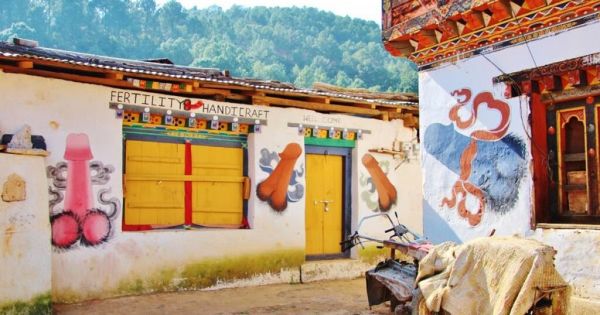
If you are walking through Bhutan and spot a giant phallic symbol painted on the side of a house, don’t panic. You have not stumbled onto some rogue prankster’s art installation, nor a particularly bold local Banksy. The unusual-looking artwork is a recognised part of Bhutanese cultural and religious tradition, and you will find it painted on houses, carved in wood and even sold as souvenirs.
Why Bhutan’s walls are covered in phallic symbols
The blame, or perhaps the credit, belongs to Drukpa Kunley, a 15th-century Tibetan Buddhist saint popularly known as the “Divine Madman.” Known for his irreverent approach to teaching Buddhism, Kunley used humour, shock and unconventional behaviour to challenge religious conventions. Local legend says he used his phallus, known as the “Thunderbolt of Flaming Wisdom”, to subdue demons. There is, however, more to the story. While Drukpa Kunley is commonly credited with popularising Bhutan’s phallic imagery, scholars suggest that the tradition may predate him and have roots in older local and Bon beliefs that were later incorporated into Buddhist practices.
The symbol’s popularity in Bhutan is also connected to Vajrayana Buddhism, the tantric tradition of Buddhism practised in the country, where the phallus can function as a protective talisman. In Bhutan, the image is believed to ward off both evil spirits and malicious gossip, which perhaps reflects how Bhutanese culture does not always draw a clear line between the supernatural and the social.
One of the best places to see it is Punakha, particularly around Chimi Lhakhang, a temple associated with Drukpa Kunley. The temple dates to 1499 and is one of the country’s best-known sites associated with the saint. The nearby village of Sopsokha takes the tradition even further, with traditional houses here featuring phallic paintings on their exterior walls, ensuring that anyone walking toward the temple encounters them well before they encounter the shrine itself.
The symbol also appears in three-dimensional form. At Chimi Lhakhang, a wooden phallus, believed to have been brought to the temple by Drukpa Kunley himself, is used directly in fertility rituals, with monks blessing pilgrims — particularly women and childless couples — by pressing it to their heads.
It may be one of the first things to make you do a double take in Bhutan, but there is a centuries-old cultural story behind it.
-
This Janmashtami, offer Mathura Peda to Kanha ji, note down the quick secret recipe.
-
AI Skills for Students: These 7 AI Skills are very useful for students, they will get job

-
The heat of Lamborghini and the technology of Tecno! Company's limited edition smartphone launch, the look will not take your eyes off

-
Duleep Trophy final: Sooryavanshi in focus

-
T20I Tri-Series: South Africa became champion even after losing to Namibia, defeated Zimbabwe in the final