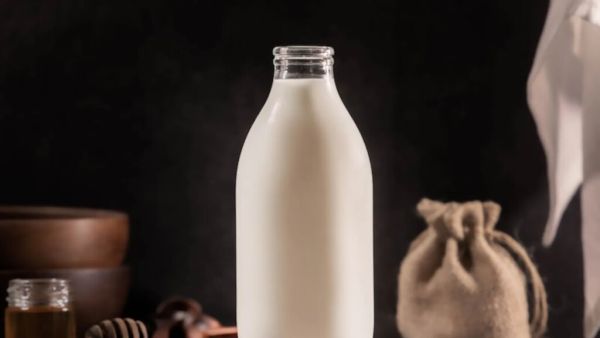
Milk is a staple in most Indian households and is consumed every day in various forms. However, concerns about milk adulteration make it important to know exactly what goes into your glass. One commonly discussed adulterant is detergent, which may be added to milk to alter its appearance or consistency so that it does not look diluted. A simple home test can help you check for possible detergent adulteration and stay more aware of the milk you consume.
The Simple FSSAI Test To Detect Detergent in Milk
In a video posted on Instagram, the Food Safety and Standards Authority of India (FSSAI) demonstrated an easy test that anyone can perform at home to detect milk adulteration.
Here's how to do it:
- Take a sample of 5-10 ml of milk in a small glass.
- Shake the contents vigorously.
- Observe the reaction.
What the results mean
If your sample does not form any bubbles, it is unadulterated milk. On the other hand, the adulterated sample will show visible bubble formation.
Why do bubbles form?
Bubbles form because of the presence of synthetic detergents or soaps, which are added to diluted milk to mimic its frothy texture. Pure milk has high surface tension, meaning its molecules stick tightly together. If you shake pure milk, any temporary air pockets collapse and pop almost instantly because the liquid forces itself back together.
When detergents are added, they introduce surface-active agents that lower the liquid's surface tension. These surfactant molecules align at the boundary between the water and the air, trapping a thin layer of water into an elastic film. This allows the liquid to stretch around forced air instead of snapping back, creating persistent bubbles that do not easily burst.
How To Avoid Buying Adulterated Milk
1. Buying milk from reputable brands that follow strict national safety regulations is the safest choice.
2. Before purchasing any packet or carton, perform a quick physical check, such as looking for safety logos, checking the seal and checking the ingredients.
3. You can judge the physical integrity of your milk supply simply by observing how it pours out of its container.
4. Check for the FSSAI “Trust Mark” verifiability, which displays the green FSSAI logo followed by a valid 14-digit license number.
5. Opt for Tetra Pak cartons over plastic pouches. Milk pouches have a very short shelf life and are highly vulnerable to tampering or temperature abuse during local distribution.
-
Love Horoscope Today for Sunday, September 6, 2026: Taurus natives will experience respect and affection, know the condition of other signs

-
Health Care Tips: Tired of climbing stairs forever? Change 'these' habits in time without ignoring the pain

-
Samsung Galaxy S26 Ultra Red Tint Issue Worsens as Update Fails to Fix Screen Discolouration

-
Will ads come on ChatGPT now? Free users can now see sponsored ads with replies

-
The new Redmi 17 5G is discussed everywhere! You will be happy to see the features of a sturdy smartphone at a budget price