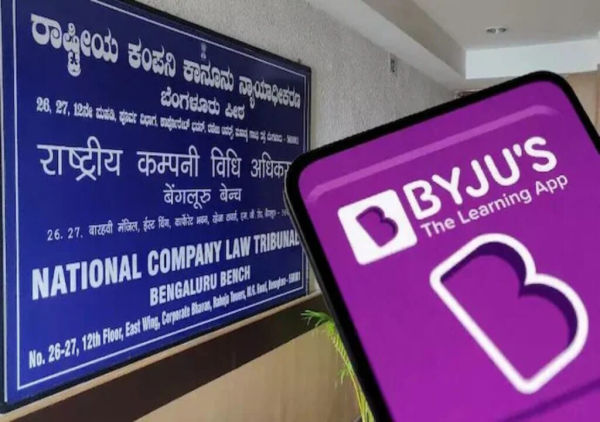
Bengaluru: The Bengaluru Bench of the National Company Law Tribunal (NCLT) has ordered a freeze on assets sold during the insolvency proceedings of Think and Learn Private Limited (TLPL), the parent company of Byju’s, after questions were raised over an auction in which assets reportedly valued at around ₹150 crore were sold for about ₹16 crore.
The tribunal has directed Resolution Professional (RP) Shailendra Ajmera of EY and the successful bidder, Comprint Tech Solutions, to preserve the auctioned assets in their existing condition until the next hearing on September 21.
The order comes amid competing claims over ownership of the assets and allegations that the auction process was completed too quickly. The NCLT has not yet ruled on whether the assets were properly valued, whether all of them belonged to TLPL or whether the auction was legally valid.
NCLT orders preservation of disputed assets
The immediate effect of the NCLT order is that Comprint Tech Solutions cannot dispose of, alter or otherwise deal with the assets it purchased in the disputed auction.
The tribunal has also directed Comprint to submit a detailed inventory of the assets within a week. The inventory must include information about where the assets are currently located, along with physical photographs.
The direction is intended to preserve the status quo while the tribunal examines the competing claims.
According to the India Today report, the NCLT observed that the ownership of several auctioned items “remains in haze”. This raised concerns that assets belonging to other entities could have been included in the sale of TLPL’s property.
Assets valued at ₹150 crore sold for ₹16 crore
One of the central issues before the tribunal is the substantial difference between the reported value of the assets and the amount they fetched at auction.
The assets were reportedly valued at approximately ₹150 crore, while the auction generated only around ₹16 crore.
The large gap has prompted questions about the valuation process and whether the auction provided enough opportunity for competitive bidding.
However, the difference between the valuation and auction proceeds by itself does not establish that the sale was invalid. The tribunal is yet to determine whether the valuation was appropriate or whether the bidding process complied with insolvency regulations.
The issue is therefore broader than the price received. The NCLT is also examining whether the Resolution Professional had the authority to sell all the assets included in the auction.
Questions over ownership of Byju’s group assets
Several parties have challenged the auction on the grounds that not every item sold may have belonged to TLPL.
The dispute is particularly significant because Byju’s corporate structure includes multiple entities, and assets used by one company may not necessarily be owned by another entity undergoing insolvency proceedings.
During the hearing, K3 Education Private Limited, a Byju’s group company, alleged that the Resolution Professional had deprived it of assets that were important to its own resolution process.
The company also argued that inventory records dating back to December 2024, which could potentially help establish ownership, were not placed before the tribunal.
The suspended directors of TLPL also questioned the speed with which the auction was completed.
Four-day auction comes under scrutiny
Lawyers representing TLPL’s suspended directors questioned the decision to complete the auction within only four days.
They argued that such a fast-track sale required a clear and reasoned justification under Regulation 29 of the applicable insolvency regulations.
The challengers have also referred to Section 18(1)(f) of the Insolvency and Bankruptcy Code. The provision concerns the Resolution Professional’s control over assets belonging to the corporate debtor.
This has made the question of ownership central to the dispute. If assets were owned by another entity, questions could arise over whether they could legitimately be included in TLPL’s insolvency sale.
Resolution Professional defends the auction
The Resolution Professional has rejected the allegations surrounding the sale.
According to the RP’s position, the auctioned assets were legally owned by TLPL and formed part of the corporate debtor’s estate. The RP has also maintained that the sale was vetted and approved by the Committee of Creditors (CoC).
The RP further argued that parties challenging the auction had not established a legal title over the disputed inventory.
The defence comes as other stakeholders allege that the auction was conducted in haste and may have included assets that were important to other Byju’s group companies.
The competing positions mean the tribunal will now have to examine ownership records, the valuation process, the circumstances surrounding the auction and the authority under which the assets were sold.
NCLT has not cancelled the auction yet
Importantly, the latest NCLT order does not amount to a final decision cancelling the auction.
Instead, the tribunal has taken an interim approach by directing the parties to preserve the assets while the dispute is examined.
This means the ownership claims and the validity of the sale remain unresolved.
The successful bidder has been asked to document the assets and keep them in their present condition. This will allow the tribunal to examine the disputed inventory without the assets being transferred, altered or disposed of while the proceedings continue.
Another setback in Byju’s prolonged insolvency battle
The latest dispute adds another layer to the long-running insolvency proceedings involving Byju’s and its parent company.
The insolvency process has already involved disputes among creditors, shareholders, former management and different entities within the Byju’s group.
The latest case shifts attention to the handling of physical and other assets during the resolution process. Questions over ownership and valuation can be particularly important in insolvency proceedings because the sale of corporate assets is intended to maximise recovery for creditors while complying with the Insolvency and Bankruptcy Code.
If assets belonging to another entity are mistakenly included, it could create complications for both the resolution process and the eventual distribution of proceeds.
September 21 hearing will be crucial
The NCLT is scheduled to hear the matter again on September 21.
The tribunal is expected to examine the competing ownership claims and the circumstances surrounding the disputed auction.
Until then, Comprint must preserve the assets and provide the requested inventory and photographs.
The next hearing could therefore provide greater clarity on whether the assets were correctly identified as TLPL’s property, whether the auction process followed the required rules and what should happen to the ₹16 crore sale.
Conclusion
The NCLT’s interim order puts the disputed Byju’s asset auction on hold without making a final determination on its validity.
The reported ₹150 crore valuation versus the ₹16 crore auction proceeds has drawn scrutiny, but the more fundamental questions concern ownership, valuation, the speed of the auction and the Resolution Professional’s authority to sell the assets.
For now, the assets must remain preserved. The next significant development is expected when the Bengaluru NCLT considers the matter again on September 21.
-
Historic win for far-right AfD in German state of Saxony-Anhalt

-
BJP defends UP mosque demolition, says it’s based on court order

-
Betis beat Real Madrid as Mbappe misses penalty in first La Liga defeat

-
Haaland heads Man City to the top of Premier

-
India crush Pakistan at T20 Asia Cup with record-breaking bowling display