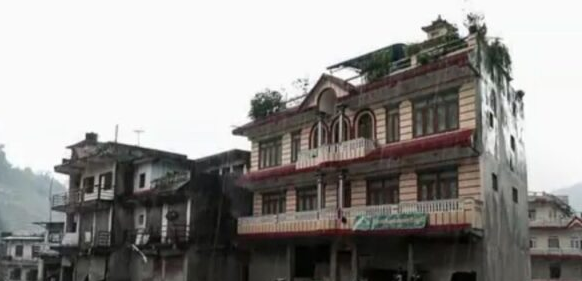
Nepal Flood Tragedy: The impact of floods is also visible on Nepal’s tourism sector. September to November is considered to be the busiest season of tourism in Nepal but after the floods, bookings of hotels and travel companies have started getting cancelled.
Nepal Flood Tragedy: Kathmandu. The massive flood that occurred in Nepal on August 26 has caused massive destruction. According to initial estimates, the flood has caused a loss of about 400 billion Nepali rupees. So far 1,344 bodies have been recovered in the accident. At the same time, about 5 thousand people are still reported missing. Along with the relief and rescue operations, the government now faces a big challenge to rebuild the affected areas.
Impact of flood on tourism business
The impact of floods is also visible on Nepal’s tourism sector. September to November is considered to be the busiest time of tourism in Nepal. During this period, a large number of foreign and domestic tourists arrive.
According to the report, after the news of flood, bookings of hotels and travel companies have started getting cancelled. About 20 percent of the bookings of a hotel in Kathmandu have been cancelled. According to the hotel management, online bookings declined sharply in the first week after the floods.
Increasing threat from glacial lakes
The flood of 26 August has once again exposed the danger of floods coming from glacial lakes in Nepal. The Nepal government is working on a plan to reduce the water level of four extremely sensitive glacial lakes. This project is estimated to cost around $500 million. Its aim is to reduce the risk of devastation caused by bursting of glacial lakes in the future.
Just reducing water will not provide security
Scientists believe that reducing the water in glacial lakes is not enough. For this, separate scientific study of each lake is necessary. Also, the early warning system will have to be strengthened. Measures will also have to be taken to control the flow of water coming out of the lakes. Experts are also highlighting the need to ban new construction in flood prone areas.
Government’s eye on four lakes
Four glacial lakes of Kosi and Gandaki basins of Nepal have been included in the project. These include Lumding Tsho and Hongu-2 of Solukhumbu, Lower Barun of Sankhuwasabha and Thulagi i.e. Dona Lake of Manang. These lakes are counted among the sensitive lakes which may cause major flood threat in future. In the 2020 ICIMOD and UNDP report, 47 glacial lakes in Nepal, Tibet and India were described as extremely dangerous due to bursting. Of these, 21 lakes are located in Nepal.
Rescue of more than 13 thousand people
After the flood, relief and rescue operations are continuing in Nepal. According to the National Disaster Risk Reduction and Management Authority (NDRRMA), 13,101 people had been evacuated safely till 6 pm on Saturday. Despite this, about 5 thousand people are still missing. The work of delivering relief material to the affected areas and taking people to safe places is going on.
Government’s ‘Nepal Calling’ campaign for tourists
After the pictures of the flood surfaced, many foreign tourists got the impression that the whole of Nepal was affected by the disaster. To change this perception, Nepal government has started #NepalCalling campaign. The government says that many major tourist destinations like Kathmandu, Pokhara, Chitwan, Lumbini, Janakpur, Annapurna and Everest are open. Major airports are also in operation. However, some tourist routes like Langtang, Gosainkunda, Helambu Circuit and Tamang Heritage Trail are affected or there are restrictions on movement.
8 billion Nepalese rupees needed for relief
According to preliminary estimates of the Government of Nepal, about 8 billion Nepali rupees will be required in the next six months for rescue, relief and immediate management of flood affected people. The government will use the Post Disaster Needs Assessment or PDNA report to assess the actual situation of the affected areas. On the basis of this report, necessary funds will be arranged for rehabilitation and reconstruction.
Thousands of houses and roads damaged
Initial assessment by NDRRMA has revealed that about 7,570 houses have been affected by the floods. About 55 kilometers of roads have also been damaged. Apart from this, 37 road bridges and 68 suspension bridges were broken or damaged. Due to this damage to the infrastructure, movement and relief operations in the affected areas are also facing challenges.
Big loss to electricity and agriculture too
About 1,806 hectares of agricultural land has been affected by the flood. Apart from this, 13 hydropower projects have also been damaged. A solar project and two power transmission lines were also damaged. Due to these losses, about 783 MW power generation capacity has been affected. Now Nepal faces the challenge of quickly restoring electricity, roads, bridges, agriculture and tourism systems along with relief.
-
Historic win for far-right AfD in German state of Saxony-Anhalt

-
BJP defends UP mosque demolition, says it’s based on court order

-
Betis beat Real Madrid as Mbappe misses penalty in first La Liga defeat

-
Haaland heads Man City to the top of Premier

-
India crush Pakistan at T20 Asia Cup with record-breaking bowling display