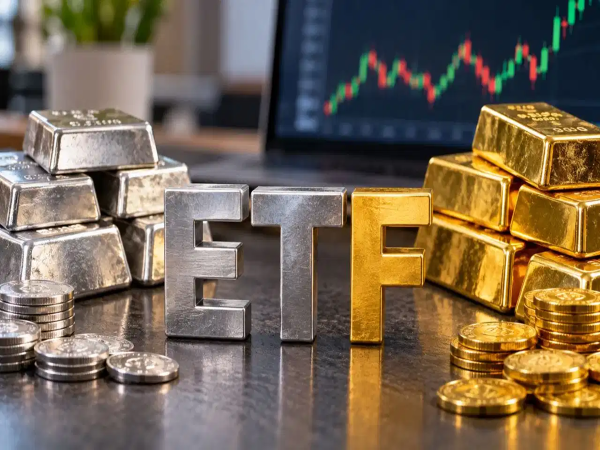
There is a major update for investors in Exchange-Traded Funds (ETFs). New regulations from the market regulator, SEBI, came into effect on September 7. Although these rules were originally scheduled to be implemented on September 1, the deadline was extended by a week to allow exchanges extra time for system updates. The new rules will primarily impact the trading of gold and silver ETFs. Now, even during periods of high market volatility, the ETF's price will not deviate significantly from its underlying value.
**A Major Flaw in the Old System**
Two key figures are associated with every ETF: the Net Asset Value (NAV) and the market price. The market price is determined by transactions between buyers and sellers, whereas the NAV represents the per-unit value of the securities held by the fund. Ideally, there should not be a significant gap between the two. Under the old system, exchanges used the NAV from two days prior (T-2 NAV) to determine the daily base price.
**Who is IAS Neha Marvya Singh, frustrated by her fourth transfer in a year?**
According to Balkrishna Bagaria, founder of Sharp Financials, the old system suffered from a significant flaw. If an ETF's fair value experienced a sudden, sharp spike, trading would be halted due to the 20% circuit limit. Consequently, the ETF could not reach its true value. Furthermore, the same 20% rule applied to all ETFs—ranging from equity and overnight bond funds to gold ETFs—which was not practical.
**New Method for Determining Base Price**
SEBI has now revised the method for calculating the base price. The base price will no longer be determined based on the NAV from two days prior. Instead, it will be calculated using the Volume-Weighted Average Price (VWAP) of trades executed during the final 30 minutes of the previous trading session. Simply put, the new trading range will begin exactly where the ETF concluded its trading the previous evening.
**Key Changes to Price Bands**
SEBI has now established distinct price bands tailored to the nature of each asset class. For equity and debt ETFs, the initial trading range will be 10 percent; this can be gradually expanded to 20 percent if necessary. A 15-minute cooling-off period will be triggered each time a limit is hit.
Rules for gold and silver ETFs have been made more flexible. Trading for these will commence with a 6 percent range. Since global bullion markets operate around the clock, the bands for these ETFs will continue to widen in 3 percent increments without an upper limit. This allows investors to effectively capitalize on overnight global market movements. As the values of overnight and liquid ETFs fluctuate minimally, a fixed band of 5 percent has been set for them. Additionally, similar to stocks, gold and silver ETFs will now undergo a daily pre-open call auction. This ensures the determination of an accurate opening price based on demand and supply before the market officially opens.
**What Has Not Changed**
Despite these significant changes, certain aspects remain unchanged. ETF prices may still trade at a discount or premium relative to their Net Asset Value (NAV). This variance is driven by market liquidity and demand-supply dynamics rather than trading regulations. Consequently, investors must monitor their iNAV during trading and utilize limit orders. There have been no changes to the rules governing taxes, costs, or returns associated with ETFs.
Disclaimer: This content has been sourced and edited from TV9. While we have made modifications for clarity and presentation, the original content belongs to its respective authors and website. We do not claim ownership of the content.
-
Russia Orders Closure Of German Consulate In St Petersburg Amid Diplomatic Row

-
‘A touch of Brazilian flair!’ – Former Chelsea striker Alexandre Pato eyes English club takeover

-
Assam Adopts Green Cess Policy 2026; Khel Maharan 3.0 To Focus On Young Athletes From Nov 1

-
Footballer Arrested Two Weeks Before Wedding Over Alleged Poisoning Death Of Teammate Amid 'Woman' Dispute

-
BGMS Season 5: Nebula Esports Crowned Champions, Win ₹40 Lakh After 18-Match Grand Finals