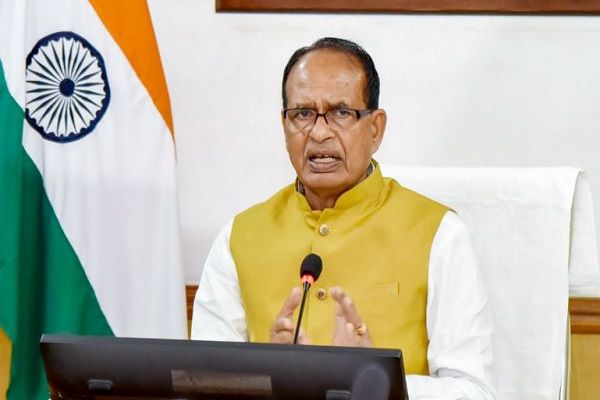
New Delhi, 7 September 2026: Union Agriculture and Farmers Welfare and Rural Development Minister Shivraj Singh Chouhan today chaired a meeting in New Delhi to review the action plan for strengthening Krishi Vigyan Kendras (KVKs) with extended participation of states. The discussion focused on the implementation of key recommendations to KVKs coming out of the 5th Chief Secretaries' Conference 2025 and steps to accelerate their implementation. Union Minister of State for Agriculture and Farmers Welfare Bhagirath Chaudhary, Secretary of the Department of Agricultural Research and Education (DARE) and Director General of the Indian Council of Agricultural Research (ICAR) Dr. Mangi Lal Jat and senior officials of the ministry were present.
The discussions were focused on the action point of upgrading the infrastructure and logistics facilities of 300 priority KVKs by March 2027. Shri Shivraj Singh Chouhan had stressed the need for active participation and timely cooperation of the state governments to achieve this target within the stipulated time frame. Secretary, DARE has interacted with Chief Secretaries of all States and Union Territories to garner financial and institutional support for upgradation of priority KVKs. Some states have started this process through their respective state agricultural universities. Maharashtra, Gujarat, Goa and Chhattisgarh have received Detailed Project Reports (DPRs) from universities/KVKs, while other states are in various stages of preparation and implementation.
The action point to set up Incubation-cum-Skill Centers in all KVKs by December 2028 was also covered. Under this initiative, KVKs are being mapped with agro-based enterprises, technical partner institutions and district-specific agricultural opportunities. KVK-wise incubation plans are being developed for submission to States and Union Territories for funding and implementation support.
Reforms to KVK employees were discussed in more detail. The proposed reforms to salary, allowances and promotion of KVK staff have been approved by the Department of Expenditure (DoE). The role of State Governments in providing NPS contribution and retirement benefits to KVK staff was also emphasised. To ensure adequate manpower for effective functioning of KVKs and delivery of their prescribed activities, States were requested to fill up the vacant posts in a timely manner.
Attention was also drawn to the importance of ensuring timely release of funds to KVKs, especially for seasonal agricultural programmes, so that the planned activities can be implemented in the appropriate agricultural period. Under the Cluster Frontline Demonstrations (CFLD) on Kathol and Telbia program for 2026–27, activities are being implemented by 353 KVKs/districts in 24 states, covering a target area of 12,349 hectares. An area of 9,750 hectares has already been acquired. Issues to mapping of flow of funds and delay in releasing funds in some states were discussed. States were requested to facilitate smooth and timely flow of funds to ATARI and KVK levels, ensure timely availability of recommended quality seeds and varieties and strengthen coordination during planning and implementation of demonstrations.
The review also highlighted the role of KVKs in supporting the Pradhan Mantri Dhan-Dhanya Krishi Yojana (PM DDKY). States were requested to provide adequate funding support to KVKs for implementing their stipulated activities as well as district-specific action plans under PM DDKY. It was further emphasized that the activities undertaken by KVKs at the district level, including capacity-building programmes, should be captured and uploaded on the designated portal to facilitate comprehensive monitoring, reporting and evaluation of the results.
Shivraj Singh Chouhan stressed that the transformation of KVKs requires strong Centre-State coordination, timely financial support, modern infrastructure, adequate manpower and effective implementation of district-specific action plans. He stressed the importance of ensuring that KVKs are equipped with the necessary infrastructure, human resources and institutional support to effectively serve the farming community and address the emerging challenges in agriculture.
Strengthened KVKs will play an important role in taking scientific knowledge, modern agricultural technologies, advanced varieties, skills, innovation and entrepreneurship opportunities closer to farmers and rural communities. The discussion emphasized the need for States and UTs to accelerate implementation of agreed action points and strengthen coordination with the Center and other stakeholders so that KVKs emerge as effective platforms for agricultural technology dissemination, skill development, innovation and rural entrepreneurship, thereby contributing to a developed and prosperous agriculture sector.
-
Manipur to pursue NRC with 1951 base year, will approach Centre

-
Militants attack 3 villages in Manipur’s Kamjong, probe on: Govt
-
Still straining on the toilet? Eat this before bed and go by morning.

-
Soothe your aches with Patanjali ‘Divya Peedanil Roll-On’

-
Today’s Horoscope, September 8, 2026: Check Your Zodiac Sign’s Predictions and Birthday Forecast