When it comes to cleaning and maintenance of appliances, there can be a lot of contradictory advice and home remedy suggestions to sift through. Some solutions will work for one person’s particular situation and not for another’s, and some require particular care or they might do more harm than good.
Of course, everything from your dishwasher to your car have dedicated cleaning materials from so many different brands, but it’s for the user to decide whether they need to buy a premium product, or if a home remedy using household products can be just as effective. Sometimes it will, but you’ve got to know what you’re doing if you want to take that route. In the context of air conditioner maintenance, for instance, you might have heard that vinegar can do an effective job of cleaning certain components.
It can also be extremely harmful, depending on the type, amount, and the way you use it. We’ve already considered the different things that vinegar can do to a washing machine, and now it’s time to explore the same question for air conditioners. We’ll take a look at vinegar generally and more broadly, the effects it can have on an air conditioner unit, and how to use it with the best results.
Vinegar in the context of an air conditioner
Acids like vinegar and alkalis like baking powder have a lot of convenient alternative uses, but this doesn’t mean that you should start emptying the contents of a bottle of malt vinegar into your air conditioner. Speaking of, your air conditioner can actually develop a vinegar-like smell on its own.
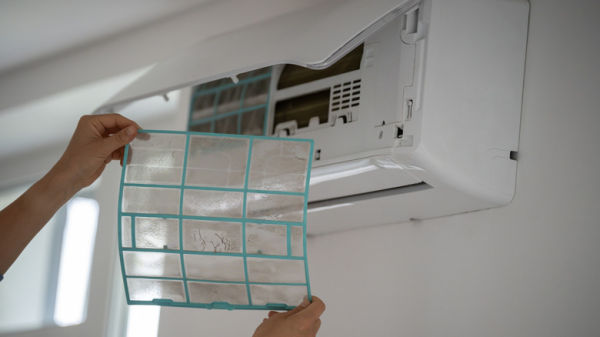
U.K. air conditioner and heat pump specialist Meridian Cooling Ltd. notes that a smell like this is a sign that there could be an issue with your system. The filters and other components of are quite vulnerable to becoming clogged, or simply having small amounts of detritus caught in them. When it accumulates over time, it can become moldy. The company goes on to note that condensation and issues with refrigerant leaking can also cause or exacerbate this issue. Some of the most common problems with air conditioners can stem from these issues too.
If you’ve tried or heard of using vinegar to help in the cleaning or maintenance of an air conditioner, you’ll probably be aware that it’s distilled white vinegar that’s typically used for this purpose. It’s acidic enough to help break down any of that mold or algae that could be threatening to build up, or already has built up within your machine. It’s vital for certain air conditioning systems that they’re able to vent away the condensation through a drain line, and moist environments are perfect spots for these sorts of organic nasties to begin to take hold and multiply.
Some important warnings about using vinegar
An air conditioner has vital seals and other connecting pieces that might be made of much softer rubber. The likes of distilled white vinegar isn’t a potent enough acid to burn straight through these vital elements of your machine, but if it’s used frequently for this purpose, or allowed to sit on these more vulnerable surfaces for extended periods, it can cause damage.
These more delicate seals prevent air from escaping and ensure the system continues to operate smoothly. Gaps in this protection could lead to a reduction in the system’s efficiency. This is why it’s sometimes not recommended to use vinegar or bleach during the cleaning process. This isn’t to say, of course, that it can’t be done, but simply that you should take care if doing so. This includes using the right quantity, in the right area, and not doing so too often or too rarely.
Manufacturer Hitachi suggests that if you’d like to use the vinegar method, “mix one cup of vinegar and half a cup of baking soda in a gallon of water. This solution can be used to clean the air filters, coils, and drain pan.” It’s not intended as a way of combating larger issues that may have built up in your system, and dedicated cleaning supplies and/or a professional servicing may be necessary in some instances. The application of a quantity of vinegar in the drain line of your A.C. system approximately monthly, however, can go a long way towards preventing that build-up from getting worse, potentially increasing the lifespan of your AC unit.