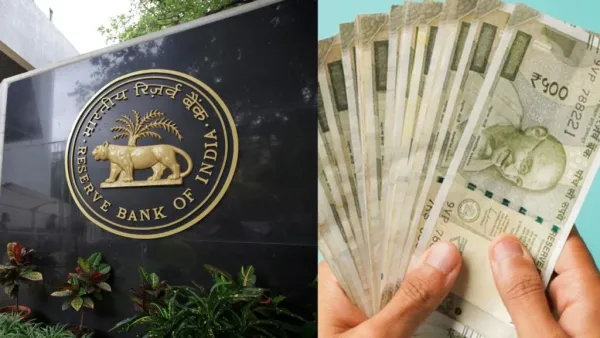
RBI VRRR Auction : Reserve Bank of India (RBI) has been actively using its monetary policy tools to manage liquidity in the Indian banking system. A surge in foreign currency non-resident bank (FCNR(B)) deposits and foreign capital inflows has led to a sudden surge in surplus liquidity in the country’s banking system.
According to reports, accumulation of excess liquidity in the banking system risks short-term money market rates (such as the overnight call money rate) slipping below the repo rate, potentially undermining the RBI’s monetary priorities to control inflation. To absorb this excess liquidity and maintain stability in money market interest rates, the central bank has resorted to variable rate reverse repo (VRRR) auctions. Let us understand this in detail.
What is a VRRR auction?
Variable Rate Reverse Repo (VRRR) is a major short-term instrument used by the Reserve Bank of India to withdraw excess liquidity from the banking system. Under this scheme, commercial banks deposit their excess liquidity with the Reserve Bank for a fixed period (such as 3, 7, or 14 days) and earn interest at a competitive floating rate.
FCNR(B) Flow Increase liquidity in banking system
As a result of deposits of foreign currency in FCNR(B) accounts by non-resident Indians (NRIs) and purchases of dollars by the central bank, there has been significant liquidity in the local currency (rupee) in the banking system. Failure to manage this excess liquidity in a timely manner creates the risk of currency imbalances. It should be noted that banks have received $127 billion through RBI’s FCNRB scheme.
To prevent short-term interest rates from falling
When banks have excess cash, they start lending at very low rates in the inter-banking market. By absorbing this excess cash through VRRR auctions, the RBI ensures that the overnight call money rate and the TREPS (triparty repo) rate remain in line with the central bank’s benchmark policy rate (repo rate).
Inflation Control and Financial Stability
If excess cash remains in the market for a long time, it can fuel demand-pull inflation in the economy. Through VRRR auctions, RBI controls inflation risks and also provides an opportunity to commercial banks to earn safe and manageable returns on their idle funds. Amid liquidity generated by FCNR(B) inflows, this move by RBI shows that the central bank is effectively balancing liquidity generated by foreign capital inflows without causing volatility in financial markets. Until systemic liquidity returns to normal levels, VRRR auctions will remain the primary tool to regulate the Indian money market.
Why is liquidity management important?
Foreign exchange reserves touched $740.8 billion in the week ending August 28, on account of larger FCNR(B) reserves. These reserves will come in handy if the rupee comes under pressure amid the ongoing conflict in West Asia. FCNR(B) deposits and continued government spending have maintained liquidity in the banking system. Meanwhile, India’s economy remains in a strong position.
Despite the geopolitical crisis, real GDP grew by a better-than-expected 7.8 percent in the April-June quarter. Meanwhile, inflation stood at 4.45 percent in April compared to 4.38 percent in June. There are concerns that it could rise further in August due to geopolitical tensions and weaker-than-expected El Niño rains. Consequently, the RBI has to balance growth and inflation while controlling liquidity.
Is VRRR the only way?
It is not so. The central bank can use various methods to absorb liquidity, says Sonal Verma, chief economist for India and Asia (excluding Japan) at Nomura. These options include continued VRRR operations, an incremental increase in the cash reserve ratio (CRR) for 2-3 months (CRR is the minimum cash balance that banks must maintain), and sell-buy swaps. Under a sale-purchase swap, the RBI sells foreign currency to commercial banks and agrees to buy it back at a specified date in the future.
RBI is facing liquidity problem
The RBI is facing a liquidity problem as banks raising dollars through the scheme now have excess liquidity, Verma said. As a result, the weighted average call rate (interest rate charged on short-term loans between banks) has fallen below the policy repo rate. Increased cash demand in the coming festive season, maturity of forward contracts and possible forex interventions (dollar sales) by the RBI will reduce the excess liquidity in the banking system, though the RBI may have to use various liquidity-absorbing measures to offset this surplus. However, it will be interesting to see how much interest is generated in these long-term VRRR auctions.