Why Data Centres Generate So Much Heat
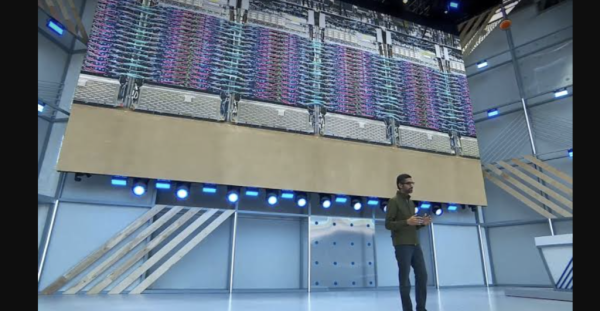
The rapid expansion of artificial intelligence and cloud computing is pushing data centres to unprecedented scales. Facilities approaching 1 gigawatt of power capacity are now being planned, including Google’s proposed data centre in Visakhapatnam and TCS’s HyperVault facility.
The basic physics is straightforward: almost all the electrical power consumed by computing equipment eventually becomes heat. A 1-GW data centre could therefore need to remove roughly 1 GW of heat continuously.
How Air Cooling Works
In conventional air cooling, fans push cool air through server racks while hot air is collected and cooled before being circulated again. Technologies such as computer-room air conditioners, air handlers and hot-aisle/cold-aisle containment are commonly used.
Air cooling has major advantages. It is a mature technology, requires comparatively simpler infrastructure and generally has lower upfront costs than liquid cooling. Most importantly for water-stressed regions, it can significantly reduce the amount of water required for cooling.
That is particularly relevant to Google’s Visakhapatnam project, where concerns have been raised about the water requirements of a large data centre.
The “Thermal Wall” of Air Cooling
The problem is that air is not particularly effective at carrying away large amounts of heat. Modern AI processors are becoming increasingly power-dense, creating racks that can produce far more heat than conventional air-cooling systems can efficiently handle.
According to the explanation, air cooling can handle roughly 40 kW per rack under practical conditions, while racks using high-end AI processors can reach around 120–150 kW. At such densities, enormous airflow, fans and cooling equipment would be required.
This increases electricity consumption, space requirements and noise, while also potentially reducing computing efficiency through thermal throttling.
Why Liquid Cooling Is Gaining Ground
Liquid cooling addresses the problem by bringing a coolant much closer to the heat-producing components. In direct-to-chip systems, liquid flows through cold plates attached to processors, absorbing heat before carrying it to a heat exchanger.
Immersion cooling goes further by placing electronic components directly into a non-conductive liquid.
Liquids generally have much higher heat capacity than air, making them considerably more effective for high-density computing. The downside is higher upfront cost, specialised infrastructure and additional maintenance requirements.
The Likely Future: Hybrid Cooling
The choice is therefore not simply between air and liquid. Modern large data centres increasingly use hybrid approaches.
Lower-density equipment can continue using air cooling, while rear-door heat exchangers can handle somewhat higher densities and direct-to-chip liquid cooling can be deployed for extremely demanding AI clusters.
Liquid-cooled facilities can cost roughly 7–10% more to build, but the additional investment may be justified by improved efficiency and higher computing density.
Google and TCS Show the Bigger Challenge
Google’s decision to use air cooling at its Visakhapatnam facility highlights the growing importance of water conservation. At the same time, TCS’s 1-GW HyperVault project is being designed around higher-density computing and direct-to-chip cooling.
The contrast demonstrates a larger challenge facing the AI industry: data centres need enormous amounts of electricity, but they also need increasingly sophisticated ways to manage the heat that electricity generates.
Summary: Gigawatt-scale data centres are making cooling a critical engineering challenge. Air cooling can reduce water consumption and has lower initial costs, but struggles with the extreme heat density of modern AI hardware. Liquid and hybrid cooling systems offer greater efficiency, making them increasingly important as AI infrastructure expands.
-
Giuntoli takes a swipe at Juventus over ‘his’ Nico Gonzalez, Koopmeiners and Douglas Luiz: “Very happy for them”

-
Assam CM Himanta Biswa Sarma Visits 1,200-Year-Old Negheriting Shiva Doul; What Makes This Ancient Temple Special?

-
Satya Niketan PG Collapse: Supreme Court To Hear Case On Friday; May Consider Pan-India Building Safety Checks

-
Supreme Court Bars Appointment Of Unqualified Teachers In Schools, Colleges; Qualifications Under RTE, NCTE, UGC Acts Required
-
Thousands Of Jawhar Ashram School Students Launch Sit-In, Demand Scrapping Of Central Kitchen System Over Food Quality Concerns