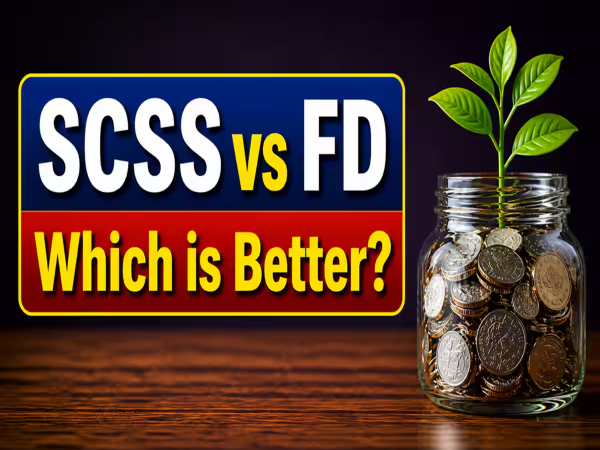
FD vs. SCSS: A regular income is a primary need after retirement. Senior citizens have two key options for this: Fixed Deposits (FD) and the Senior Citizen Savings Scheme (SCSS). Money remains largely safe in both, but there are differences in interest rates and payout methods.
Currently, SCSS offers an annual interest rate of 8.2%, with payouts made on a quarterly basis. In contrast, FD interest rates vary depending on the bank and the tenure; interest can be paid monthly, quarterly, or annually.
How much can you earn by investing ₹10 lakh in SCSS?
If ₹10 lakh is invested in SCSS at an 8.2% rate, the annual interest earned would be ₹82,000. This translates to approximately ₹20,500 being credited to the account every quarter.
The biggest advantage for senior citizens is the regular income. Since interest is paid every three months, the funds can be used to cover household expenses after retirement.
How much interest is earned on a ₹10 lakh FD?
Earnings from an FD depend on the bank and the chosen tenure. For instance, assuming an annual interest rate of 7.05%, a ₹10 lakh FD would generate approximately ₹70,500 in annual interest.
Thus, the annual interest earned would be ₹82,000 from SCSS and ₹70,500 from an FD, meaning SCSS yields about ₹11,500 more in earnings.
Investment | Interest Rate | Annual Interest on ₹10 Lakh
SCSS | 8.20% | ₹82,000
FD | Example at 7.05% | ₹70,500
What is the major difference between SCSS and FD?
SCSS has a tenure of 5 years, with an option to extend it thereafter. It is particularly useful for those who do not require the invested funds for the next few years.
FDs offer greater flexibility regarding tenure; you can choose a duration that best suits your specific needs. It is also possible to split the amount across multiple FDs. However, bank rules apply if an FD is broken prematurely, which can affect the interest earned.
There is also an investment limit for the SCSS.
Another important point to note is that the maximum deposit allowed in a single SCSS account is ₹30 lakh. At the current rate of 8.2%, an investment of ₹30 lakh generates an annual interest of ₹2.46 lakh; this translates to approximately ₹61,500 per quarter.
If you have a larger amount to invest, you might need to consider FDs or other alternatives. This approach ensures regular income while keeping funds accessible when needed.
How and how much pension is received from NPS after retirement? Understand the full calculation.
So, should senior citizens choose FD or SCSS?
If your goal is regular income and higher interest, SCSS is the better option. An investment of ₹10 lakh earns ₹82,000 in annual interest, paid out quarterly.
On the other hand, the biggest advantage of an FD is flexibility. It offers the option to choose from various tenures, and the investment amount can be split across multiple FDs based on your needs. Interest earned on both options is taxable.
Disclaimer: This content has been sourced and edited from Money Control. While we have made modifications for clarity and presentation, the original content belongs to its respective authors and website. We do not claim ownership of the content.
-
No need for a juicer-blender, get nutritious fruit juice with these 5 kitchen tools

-
Delighted to join Adani Group as a partner in the next growth journey of India's aviation sector: Premji Invest

-
Indian Men blunts South Korean challenge – Tezzbuzz

-
Tilak Verma's dream broken at 99, 1 run away from century; All out on South Zone 336

-
Tilak Verma OUT on 99, missed a century in Duleep Trophy final, East Zone's victory confirmed!