9 September 2026
We are moving towards that stage of the season when it starts to feel socially acceptable for the Premier League’s more trigger-happy clubs to think about making an early managerial change in the hope of altering the direction of their campaign.
It may sound a bit absurd, but the current set of Premier League managers who are still in their jobs have already survived longer than the first Sack Race casualty in two of the last five seasons.
And it is not difficult to identify possible early casualties this time. Alvaro Arbeloa already appears out of his depth at Fulham, Oliver Glasner has taken just two points from three matches under the ever-restless gaze of Mr Marinakis at Nottingham Forest, and Roberto De Zerbi looks close to exploding under the relentless and unstoppable Spursiness of Spurs.
But does making an early managerial switch actually deliver results? A quick review of the first manager to be shown the door in each of the last five seasons does not offer especially convincing proof that it is a successful strategy.
Did it work?
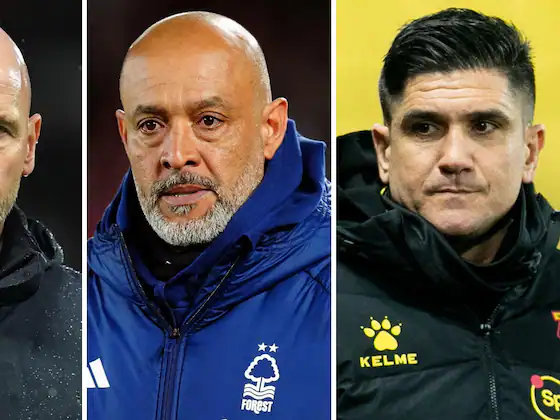
Not really, no. The fractures in Nuno’s relationship with the unpredictable Forest owner Mr Marinakis had first become visible at the end of the 24/25 season, most notably when an angry Marinakis marched on to the pitch to confront Nuno after a draw with Leicester damaged their Champions League hopes.
The key words there should really have been ‘Champions League hopes’, but by that stage Forest and Marinakis had got completely carried away. A shaky truce was reached and lasted through the summer, but only three matches into the new season, after one win, one draw and one defeat, Nuno was sacked.
Ange Postecoglou, who had lost his job at Spurs despite winning the Europa League at the end of the previous season, arrived the very next day. He lasted only six weeks and eight matches, winning none of them. His final game was a 3-0 home defeat to Chelsea, and he was dismissed less than 20 minutes after the final whistle.
Sean Dyche was then appointed as a firefighter, by which point Forest were in a relegation scrap and sitting in the bottom three when Postecoglou was removed.
Dyche did manage to steady things, but he himself lasted only until February, before Vitor Pereira guided Forest to fairly comfortable Premier League safety and also into the semi-finals of the Europa League. His reward, naturally, was to be sacked in the summer. He was replaced by Oliver Glasner, who for now remains in the role.
To be absolutely clear: all of those managerial changes have happened within the last year and a day.
Did it work?
No. That said, getting rid of Ten Hag itself could hardly be described as a mistake. If anything, he should have been dismissed earlier. The reprieve he earned through an against-the-odds win over Man City in the 2024 FA Cup final turned out to be a major error of judgement by Manchester United’s decision-makers, and it would not be the last.
He survived only until October, when a defeat at West Ham that left United down in 14th proved to be the final straw. He departed, and Ruud van Nistelrooy came in for a short spell that went reasonably well overall, largely because two of those games came against Leicester, it should be noted. The Foxes were sufficiently impressed to appoint Van Nistelrooy themselves, which also did not end well.
Then came what was widely seen at the time as a major coup: convincing Ruben Amorim, a long-term target and the highly rated manager of an adventurous Sporting side that had just thrashed City in the Champions League, to leave his excellent situation in Portugal and join United in mid-season.
He somehow managed to perform even worse than Ten Hag, giving Manchester United supporters a harsh and unexpected lesson that even when you think you have reached rock bottom, things can still deteriorate further.
Despite an exhilarating and ultimately misleading late comeback win at City early in his tenure, Amorim’s stubborn commitment to his preferred back three made United alarmingly easy to play against for everyone except perhaps the Premier League’s weakest teams. Between that mid-December victory and a final-day win over Aston Villa, United won only four league matches: one against Fulham, and one each against three historically dreadful relegated sides in Southampton, Ipswich and Leicester.
To grasp the full misery of Amorim’s spell at United, he managed to lose three matches in three different competitions to Tottenham, including the deepest humiliation of all by doing so in an actual final. Many had started to think that was physically impossible.
He held on to his job through the summer, but survived only until halfway through the 25/26 season before he was shown the door and replaced by Michael Carrick, who introduced tactical masterstrokes such as ‘picking Kobbie Mainoo’ and helped drive United from mid-table to ultimately comfortable Champions League qualification.
2023/24: Paul Heckingbottom (Sheffield United)When: December 5
Replaced by: Chris Wilder
Did it work?
In a sense, perhaps. True, the returning Wilder could not produce a miracle and save a side rooted to the bottom, one that had collected only one win and five points from 14 games before Heckingbottom was dismissed. But he did at least scrape together 11 points from the remaining 24 matches, lifting them all the way to... well, still bottom, but at least enough to destroy Derby County’s hopes of remaining forever untouchable as the Premier League’s worst-ever team.
They did, however, equal Derby’s goal difference from the notorious 2007/08 season (-69) and also set a new Premier League record by conceding 104 goals in a single campaign.
Wilder is still the Sheffield United manager now, having been sacked in the summer of 2025 and then swiftly reappointed in September after his replacement Ruben Selles lost all five of his Championship matches in charge.
Replaced by: Gary O’Neil
Did it work?
Yes. It actually did. After leading Bournemouth back to the top flight, Parker had in fact opened the season with a 2-0 win over Aston Villa. That sounds especially impressive now, but it is worth remembering that, despite not feeling all that long ago, this was still the period when Villa were managed by Steven Gerrard and were, in truth, not very good.
That became even clearer because of the results that followed and ultimately finished Parker off. Three successive defeats to Man City, Arsenal and Liverpool by an aggregate score of 16-0.
It was the 9-0 loss at Liverpool that ended Parker’s reign, but not in quite the obvious way one might expect a 9-0 defeat to do so. It was not simply that Parker lost 9-0, but that he chose that moment of indescribable weakness to go on the offensive against the higher-ups and declaring he was ‘not surprised’ by the result because he had been burdened with an ‘ill-equipped’ squad.
He darkly suggested that Bournemouth would face more days like that unless things changed. Bournemouth decided they wanted none of that and, with some justification, concluded that the thing most urgently requiring change was Parker himself.
Gary O’Neil came in, first in an interim role and then permanently. The scale of what O’Neil achieved may have become slightly overstated over time because of the loud grumbling that followed Bournemouth’s decision to immediately move him on after survival in favour of Andoni Iraola. Looking back, that too appears to have been a fairly sound call. It also reflected the extent to which Parker had overplayed his hand and exaggerated the weakness of the squad at his disposal.
In fact, after an initial six-match unbeaten run, Bournemouth slipped back into genuine trouble, winning only once in a nine-match stretch that straddled the 2022 World Cup break in November and December.
They were even briefly bottom of the table as late as March before a surprise win sparked a spring revival that eventually secured safety with a little room to spare. The team they beat in that shock March victory? Naturally, Liverpool.
Replaced by: Claudio Ranieri
Did it work?
Not really. As everyone knows, Watford absolutely love a managerial change, and there was a certain neat symmetry in the fact that each of their three managers in the 21/22 season ended up with two Premier League wins apiece.
Xisco actually had seven points from his seven matches when he was dismissed. Ranieri collected a few more points overall but also managed only the same pair of victories as Xisco, though they did include memorable 5-2 and 4-1 wins over Everton and Manchester United respectively, bright flashes of light in a season otherwise filled with relentless rubbish.
He was gone before January and replaced by Roy Hodgson, whose appointment had almost no meaningful effect in either direction as he merely oversaw the formalities of what soon became an inevitable return to the Championship.
Hodgson himself left that summer, and Watford have had nine permanent managers plus one caretaker in the four and a bit years since. And it has to be said, that is magnificent.
-
Supreme Court Questions BCCI's Exclusion From Sports Governance Act
-
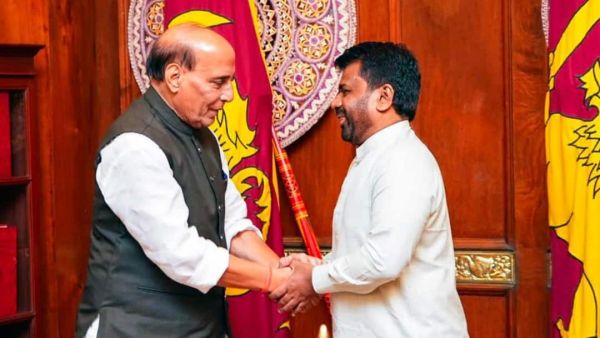
‘India Will Always Stand Firmly With Sri Lanka’: Rajnath Meets President Dissanayake
-
What is brewing inside IKEA Hyderabad on September 12?
-
No weekend plans? Here are 6 events lined up in Hyderabad

-
Jamia Nizamia files complaint against Hyderabad local news channel