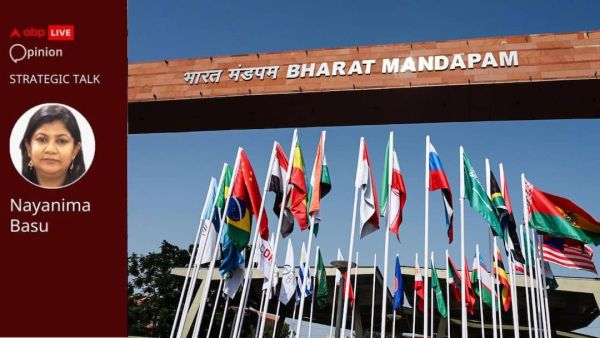
India is set to host the 18th BRICS Summit this weekend on September 12 and 13 in New Delhi. In preparation for the event, the city has been heavily fortified, reminiscent of the extensive security measures implemented during the recent G20 Summit. The BRICS Summit will bring together the leaders of the BRICS member countries-Brazil, Russia, India, China, and South Africa-as well as partner nations, outreach invitees, and heads of several international organizations.
India assumed the BRICS Chairship on January 1, 2026, marking a notable achievement as this is the country's fourth time in this leadership role. India previously chaired BRICS in 2012, 2016, and 2021, reflecting its ongoing commitment to fostering collaboration and dialogue among member states.
The theme for this year's BRICS Leaders' Summit, ‘Building Resilience, Innovation, Cooperation and Sustainability,’ highlights key areas of focus for the participating nations. This theme is not only timely but also underscores India's strategic approach in forging meaningful partnerships at multilateral levels. Historically, India has demonstrated its ability to propose insightful themes for major summits, thereby setting the agenda for discussion.
However, the pressing challenge remains in translating these visionary themes into actionable outcomes that unify the member countries around a consensus and further progress.
Despite India’s proven diplomatic capabilities in articulating compelling themes and rallying member nations around a shared vision, achieving tangible results during the implementation phase has been a struggle in previous summits. As the leaders convene in New Delhi, the world will be watching closely to see if India can successfully navigate these complexities and follow through on its ambitious goals, ultimately fostering a spirit of cooperation and unity among BRICS nations.
A common challenge that face the BRICS member countries today is how to deal with the West keeping the body “non-West” instead of “anti-West”.
OPINION | Nepal Seeks Compensation From India, China-This Is Time To Talk, Not Squabble
BRICS was formalised during the BRIC Foreign Ministers’ Meeting held on the margins of the United Nations General Assembly in New York in September 2006. The first BRIC Summit was held in Yekaterinburg, Russia on 16 June, 2009. Today BRICS has 11 major emerging and developing economies: Brazil, China, Egypt, Ethiopia, Indonesia, India, Iran, Russia, Saudi Arabia, South Africa, United Arab Emirates (UAE).
The BRICS Partner countries are: Belarus, Bolivia, Cuba, Kazakhstan, Malaysia, Nigeria, Thailand, Uganda, Uzbekistan, and Vietnam.
BRIC-Brazil, Russia, India and China-became BRICS with the addition of South Africa in September 2010. Thereafter, in January 2024, the group further expanded as full membership was accorded to Egypt, Ethiopia, Iran, Saudi Arabia and UAE. In January 2025, Indonesia joined the grouping as a full member.
This steady expansion of BRICS over the years has given further heft to the grouping. What started as a purely an economic platform has now also gained political connotations even as the world order undergoes a complete transformation, particularly looking at how the United States under President Donald Trump is taking a decisive turn.
India can, therefore, boost the BRICS Summit’s impact and success through a mix of strategic preparation, robust coordination, and thoughtful engagement.
The United States has raised several concerns about the BRICS bloc even as it focuses on strategic, economic, and geopolitical issues. These concerns shape U.S. diplomatic strategy toward BRICS, often resulting in efforts to maintain alliances with traditional partners, counter the BRICS‑associated financial initiatives, and push for greater transparency and alignment with U.S. trade and human‑rights norms.
As India works its way out in standing firm into not giving an anti-West look to the body – something that China and Russia have been heavily batting for – New Delhi needs to come up with a solid agenda that brings both vision and purpose to the multilateral body.
It will be pertinent to leverage the security aspect of the grouping as well as economic in an effort to build a stronger and more robust value chains, supply networks and a common security apparatus. This is the only way the West will sit up and take notice of an emerging and powerful Global South.
EXCLUSIVE | Javelin Deal: India-US Ties Enter New Chapter, Atmanirbharta Takes Backseat
-
Declan Rice gives Arsenal a lift after putting fitness frustration behind him with England at the World Cup

-
Rashford returns to United as Barcelona opt for €70m Anthony Gordon

-
Thread Bangles: Make your look even more special

-
NYC kids ditch designer clothes for second-hand fashion

-
Dwayne Johnson shares his weight loss journey
