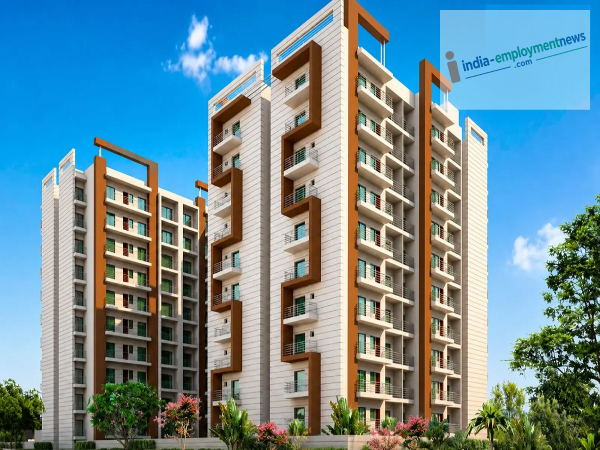
Planning to buy a home? You can avail benefits of up to ₹1.80 lakh on your home loan by leveraging government schemes and tax exemptions. Find out how to save lakhs of rupees.
If you are preparing to buy a home, a bank loan isn't the only way to manage costs; the financial burden of purchasing a home or servicing a loan can also be reduced through specific government schemes and regulations. The most significant benefit is available under the Pradhan Mantri Awas Yojana-Urban 2.0 (PMAY-U 2.0).
1. PMAY-U 2.0: Benefits of up to ₹1.80 lakh on home loans
If you are buying a home in an urban area and intend to take a home loan, the Interest Subsidy Scheme under PMAY-U 2.0 is crucial for you. Eligible families can avail a 4% interest subsidy on the first ₹8 lakh of their home loan. The maximum interest subsidy payable is ₹1.80 lakh. To qualify, the family's annual income must be up to ₹9 lakh, the home loan amount up to ₹25 lakh, and the cost of the house up to ₹35 lakh. The carpet area of the house must also fall within the prescribed limits.
2. PMAY-G for building a home in a village
If you reside in a rural area and your family does not own a *pucca* house (a permanent structure), you can receive assistance under the Pradhan Mantri Awas Yojana-Gramin (PMAY-G). This is not a standard scheme for purchasing ready-made urban flats; its primary objective is to assist eligible rural families in constructing permanent homes. Therefore, if you are planning to build a new house in a village, checking your eligibility for PMAY-G is essential.
3. Tax exemption on home loan interest
After purchasing a home, you pay a monthly EMI. This EMI consists of two components: the principal amount and the interest. Eligible taxpayers opting for the old tax regime can claim a deduction of up to ₹2 lakh under Section 24(b) of the Income Tax Act on the interest paid on a home loan for their self-occupied house.
4. Tax benefits on the home loan principal amount
A portion of your EMI goes towards repaying the principal amount of the home loan. Under the old tax regime, the principal repayment of an eligible home loan can be claimed as a deduction under Section 80C. The overall deduction limit under Section 80C is ₹1.50 lakh, which also encompasses various other investments and payments.
5. Funds can be withdrawn from the EPF account for a home
If you are employed and an EPFO member, you may be eligible to withdraw funds from your EPF account to purchase or construct a home, subject to certain conditions. The EPF Scheme includes provisions for withdrawals to buy a dwelling house/flat or to build a home. In some instances, the payment can be made directly to the agency or promoter.
6. Stamp Duty relief for homes purchased in a woman's name
This is not a uniform scheme across the country; many states offer concessions on Stamp Duty for properties purchased in the name of women. Therefore, if your family plans to buy a home, it is worth checking whether your state offers lower Stamp Duty rates for female buyers. This can reduce the costs incurred during the home registration process.
7. State governments also have their own housing schemes
Apart from the central government's PMAY, various state governments run housing schemes for low-income families, the EWS/LIG categories, government employees, or specific groups. These schemes may offer assistance for home construction, provide affordable housing, or offer concessions on land or housing projects.
7 major benefits for homebuyers at a glance
| Scheme / Benefit | Benefit Amount | Who Is It For? | How Is the Benefit Received? |
|---|---|---|---|
| PMAY-U 2.0 Interest Subsidy | Up to ₹1.80 lakh | Eligible urban home-loan buyers | Interest subsidy on home loan |
| PMAY-G | Assistance as prescribed for rural areas | Eligible rural families | Financial assistance for house construction |
| Section 24(b) | Deduction up to ₹2 lakh | Eligible home-loan borrowers under the old tax regime | Tax deduction |
| Section 80C | Overall deduction limit up to ₹1.50 lakh | Eligible taxpayers | Deduction on eligible payments, including home-loan principal |
| EPF Housing Withdrawal | Based on eligibility and EPF balance | EPFO members | Withdrawal from EPF as per applicable rules |
| Women’s Stamp Duty Concession | Varies by state | Buyers purchasing property in a woman’s name or joint name | Reduction in property registration costs |
| State Housing Schemes | Varies by state | People meeting the respective state’s eligibility criteria | Assistance for housing, construction, subsidies, etc. |
-
Arsenal to seek answers from Pro Ref over Sunderland penalty after officials admit Manchester derby VAR mistake

-
WATCH: Bihar Minister On Mohsin Naqvi, Asia Cup Trophy Row: ‘Keep Politics Out Of Sports’

-
Delhi-NCR Schools May Postpone November-December Sports Competitions Amid Air Pollution
-
US Admits It Has Deployed A Weapon In Space, Citing Threats From Russia, China

-
Aditi Singh, Rita Bahuguna Joshi To Support Rahul Gandhi In 2027 UP Polls? Here's How Congress Can Gain