There was a time when enjoying food from your favorite restaurant meant getting dressed, beating the traffic and waiting for a table. But today, all it takes is a few taps on a smartphone. Food delivery apps have made eating your favorite dishes from the comfort of your home easier than ever. However, that convenience comes with an added cost. Now, a viral post on social media has pointed out the price gap between ordering food online and purchasing the same items directly from a restaurant.
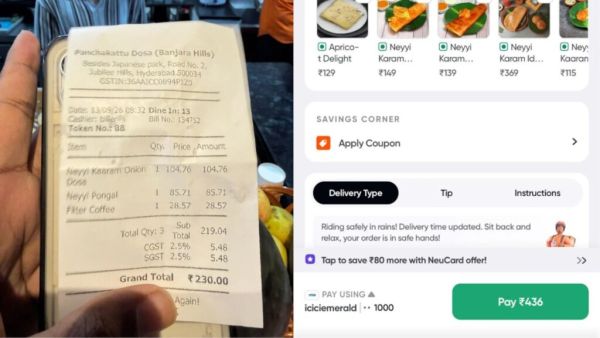
In a post shared by @idlebrainjeevi, the As per the picture, the bill seems to be from a restaurant in Hyderabad. The user ordered three items on the menu: Neyyi Kaaram Onion Dosa, Neyyi Pongal and filter coffee.
When eaten at the restaurant, the bill for the three items came out to be Rs 230. But when he ordered the same items online on the food delivery platform Swiggy, the bill amounted to Rs 436. So, the price gap between the two experiences was Rs 206.
In the caption, the user wrote, “Difference between visiting the outlet and using Swiggy!”
Watch the full post below:
Several internet users reacted to the viral post. While many people criticized the difference, others pointed out why online food deliveries are more expensive.
Why does food on online platforms like Swiggy cost more than at restaurants?
Food ordered through platforms such as Swiggy can cost more than the same dish at a restaurant because the online price often includes the restaurant's platform costs, packaging and other charges. The menu price you see on Swiggy may also simply be higher than the restaurant's in-house price.
Here are the main reasons:
1. Restaurant commissions
Food-delivery platforms charge restaurants a commission on orders. Depending on the restaurant and arrangement, this can be significant. Restaurants may increase their online menu prices to recover some of that cost.
2. Different online and dine-in prices
A restaurant is free to price a dish differently on a delivery platform. So a Rs 300 dish at the restaurant could be listed at Rs 340 or Rs 350 online. This is one reason the difference can appear even before delivery charges are added.
3. Packaging costs
Delivery requires containers, bags, seals, cutlery and sometimes specialized packaging. Restaurants may add these costs to the online order.
4. Platform fees
Customers may pay a platform or service fee in addition to the food price and delivery fee. There can also be small charges such as handling or surge- fees, depending on the order and location.
5. Delivery charges
Getting the food from the restaurant to your doorstep has a cost. The amount can vary according to distance, demand, weather and other factors.
6. Discounts may not help
An online platform may show a coupon or discount, but the original online menu price can still be higher than the restaurant's direct price. That's why comparing the final amount payable is more useful than comparing just the discount.
-
CPRI Recruitment 2026: Short notice issued for 110 posts; opportunities ranging from engineering graduates to 10th-pass candidates..

-
UPSSSC: Apply for 132 Senior Instructor posts; selection will be based on PET scores..

-
ISRO Vacancy: Recruitment for numerous posts, including Technician and Fireman; 10th-pass and ITI-qualified candidates can apply..

-
Chest Heaviness After Fever: Is It Weakness Or A Sign Of Pneumonia?

-
Period Pain So Severe You Miss Work? Here’s When To Get Checked For Endometriosis