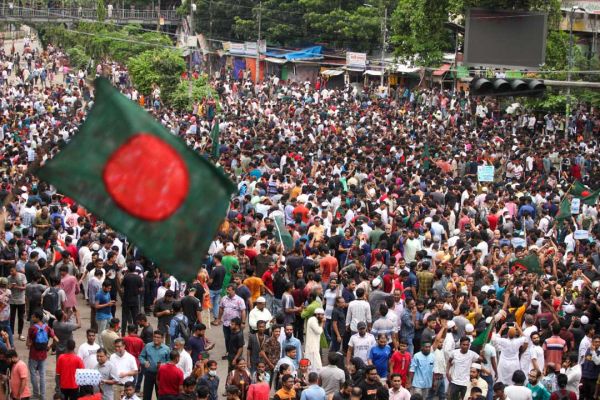
Bangladesh Unrest: In recent discussions around South Asian geopolitics and human rights, allegations have emerged linking Pakistan’s so-called deep state to growing incidents of communal violence in Bangladesh. These claims, voiced by prominent Baloch human rights activist Mir Yar Baloch, have sparked debate about regional stability, minority safety, and the long-term impact of external interference on fragile societies. The issue has gained attention not only because of its seriousness but also due to its implications for peace, democracy, and pluralism in the region.
Background of the Allegations
According to Mir Yar Baloch, the recent surge in mob lynching, hate-driven attacks, and targeted violence against the Hindu community in Bangladesh is not an isolated phenomenon. He argues that these incidents escalated following the political changes that occurred after the fall of the Awami League government led by former Prime Minister Sheikh Hasina. In his view, the timing and nature of the unrest suggest external manipulation rather than purely domestic causes.
Baloch has openly accused Pakistan’s understanding of power structures, often referred to as the deep state, of encouraging instability beyond its borders. He believes that Pakistan’s history of regional involvement demonstrates a recurring pattern where peace and social harmony deteriorate in areas influenced by its military or intelligence networks.
Human Rights and Minority Safety in Bangladesh
The core concern raised in these allegations is the safety of religious minorities, particularly Hindus, in Bangladesh. Acts of violence targeting any community undermine the foundations of a pluralistic society. Human rights defenders argue that when fear spreads among minorities, it weakens democratic values and damages social trust.
Baloch has described the current situation as a serious human rights crisis, emphasizing that communal harmony in Bangladesh has historically been one of its strengths. Any systematic attempt to provoke unrest threatens not only one group but the nation as a whole. Observers stress that protecting minority rights is essential for long-term stability and international credibility.
Pakistan’s Regional Record and Historical Context
In his statements, Mir Yar Baloch has drawn comparisons between different regions where Pakistan has maintained influence. He has cited Afghanistan as an example, claiming that prolonged interference contributed to prolonged conflict and destruction in Kabul and other areas. Similarly, he has highlighted Balochistan, alleging that decades of forced control have resulted in widespread human rights abuses, including disappearances and violence against civilians.
He also referenced historical events from the 1971 Bangladesh Liberation War, pointing to documented atrocities committed during that period. By invoking this history, Baloch argues that past actions should serve as a warning when evaluating present-day developments and alliances.
Claims of Proxy Politics and Regional Destabilization
Another key aspect of the allegations is the idea that Bangladesh could be used as a proxy to destabilize neighboring countries, particularly India. Baloch claims that renewed influence in Dhaka could create insecurity, social division, and near civil-conflict conditions. From this perspective, communal violence is not random but part of a broader strategy to weaken regional cooperation and trust.
While these claims are contested and require thorough investigation, they have intensified discussions about the role of foreign actors in domestic unrest. Analysts emphasize the importance of evidence-based assessments and transparent inquiries to separate facts from political rhetoric.
Call for Unity, Peace, and Regional Friendship
Beyond criticism, Mir Yar Baloch has issued an appeal to the people of Bangladesh to remain united and vigilant. He has urged citizens to resist any form of externally sponsored violence and to uphold values of coexistence and justice. In his view, regional peace depends on mutual respect and learning from history rather than repeating it.
He has also reminded Bangladesh of India’s support during its struggle for independence, portraying regional friendship as a counterbalance to forces that thrive on division. The broader message centers on solidarity, dialogue, and the rejection of hatred as tools of political influence.
Conclusion
The allegations surrounding Pakistan’s deep state and communal violence in Bangladesh highlight complex issues involving human rights, geopolitics, and historical memory. Whether these claims are ultimately proven or challenged, they underscore the fragile nature of social harmony and the need for constant vigilance to protect minority communities. For Bangladesh and the wider region, the path forward lies in transparent governance, peaceful coexistence, and a firm commitment to justice over conflict.
-
NEET 2025 Face Biometric Trial Successful, Live Photo to be Mandatory in NEET-JEE from 2026; Know the Full Details

-
TECH EXPLAINED: How Much Water is AI Consuming? A New Study Reveals Shocking Findings. Here's the Full Information

-
We use these words every day, but do you know the meaning of "mobile" and "bank"?

-
Your WhatsApp account will be completely safe from hackers and scams, just follow these tips

-
This Healthcare Company is Launching the Last IPO of the Year; Find Out When You Can Bid.